- Utah's reservoir-based state parks face challenges due to this year's record-low snowpack.
- Water levels at some parks, like Piute and Yuba, are already very low.
- Officials advise checking conditions and considering alternative activities as heat and drought persist.
SALT LAKE CITY — Utah's water-based state parks were a big draw last year.
About two dozen of Utah's state parks are either centered around reservoirs or natural lakes or feature them as a major element.
Combined, they accounted for nearly two-thirds of the more than 12.2 million visits the system received last year, according to data from the Utah Division of State Parks. Sand Hollow State Park, centered around a reservoir in Washington County, drew almost 1.4 million visitors last year, leading all state parks in visitation yet again.
However, this year's record-low snowpack — following an awful year for most of central and southern Utah — could create challenges for many of these popular destinations this summer.
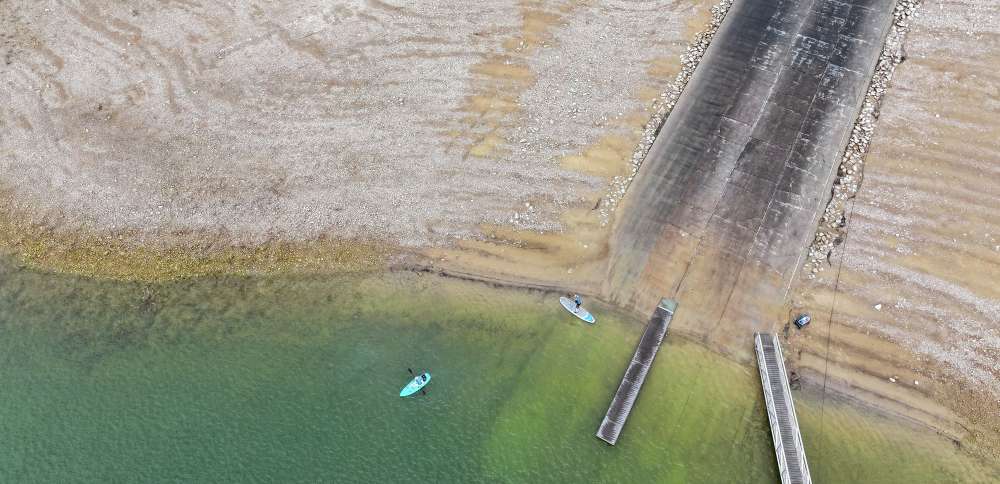
"Water levels at many Utah state parks are experiencing extreme lows. When reservoirs reach these levels, some parks are forced to close their boat launch ramps in order to help better protect visitors and their property," the Utah Division of Water Resources noted on Thursday.
It's a situation that Utah State Parks officials have prepared for because it's a challenge that can develop any given year.
Why some state parks could struggle
Approximately 95% of the state's water supply is tied to snowpack, and this year's collection was unlike anything ever seen before.
The statewide snowpack peaked a little more than half of its median average, and the lowest total since at least the 1980s. Its level on April 1 was the lowest since at least 1930, which is when hydrologists began tracking snowpack.
About 94% of that has since melted during various heat waves this spring, leaving very little for reservoirs to gain. Utah's entire system remains 71% full, matching the May median, but reservoirs typically top out in June and July before receding from consumptive use.
Some reservoirs might be fine this year, but others, especially those that rely on one or two years of good snowpack, could struggle this year, state water experts warned last month.
Early impacts
These include Piute State Park, which was the second least-visited state park last year. It has fallen to 31% capacity, about half of where it was in May 2025. The reservoir at Yuba State Park in central Utah has fallen to 22% capacity, leading to concerns there.
A few other state park reservoirs have already tumbled to 60% capacity or below, which could pose some challenges as they continue to drop this summer:
- Echo: 60%
- Willard Bay: 55%
- Steinaker: 49%
- Millsite: 45%
- Otter Creek: 40%
- Red Fleet: 40%
"(Some) might not seem like too crazy of a level, but when you look at where we are in the year right now, the beginning of the outdoor recreation season, it can paint the picture for you for what type of year we're looking at," said Devan Chavez, deputy director of Utah State Parks.
As of Thursday, the division has already issued advisories for 12 ramps at these state parks and for others with lower elevations. That means a ramp is running at reduced capacity, only allowing smaller watercraft to launch or may be at risk of closing soon.
Antelope Island State Park's main ramp is closed, as the Great Salt Lake remains at least 6 feet below its minimum healthy level.
Utah State Parks has had conversations with the Utah Division of Outdoor Recreation on how to handle some of these challenges, Chavez told KSL. The other division has already partnered with the National Park Service to address a vital ramp within Lake Powell, Utah's crown jewel of reservoir-based parks that remains just 24% full.
What we don't want is for people to show up at a park and be surprised that the boat ramp has been impacted.
–Devan Chavez, deputy director for Utah Division of State Park
The two state agencies plan to expand their life jacket loaner station program this year to 23 state parks.
More impacts are possible, if not likely. Visitors should check boating conditions before traveling to a state park, or consider changing their summer activity plans, Chavez said. That could mean switching to a different park with more water or using smaller watercraft, which many parks offer through rental services.
"What we don't want is for people to show up at a park and be surprised that the boat ramp has been impacted," he said.
The division's budget is mostly funded through park fees, so it is a situation the agency is following closely, he added. Leaders are cautiously optimistic this year, but their budget includes contingencies for potential years like this.
Finding alternatives
What helps is that state tourism officials have worked for years to promote different parks and outdoor activities to reduce overcrowding. They were already thinking about reservoir recreation challenges when they met at the Utah Capitol in February, as outdoor recreation factors heavily in Utah's $12.7 billion tourism industry.
"We've been leaning in with communities to help them diversify their visitor economy, so as they're facing these uncertainties, they're prepared," Natalie Randall, managing director of the Utah Office of Tourism and Film, told KSL at the time.
Lower levels at Lake Powell and Utah's reservoir-related parks could bring more traffic toward Utah's "Mighty 5" or less water-oriented state parks, like Dead Horse Point, Snow Canyon or many of the other elements on Antelope Island.
Utah State Parks plans to highlight all the other activities its parks offer, from hiking to golfing to night-sky viewing, this year, Chavez said. It could come with different challenges, though.
Long-range weather outlooks call for more above-normal heat to start summer, while monsoons could kick in later. That requires additional messaging for people to stay hydrated while hiking or doing other daytime activities, and planning for likely fire restrictions as drought concerns continue.
Thus, being prepared will be vital this year.
"Staying flexible is going to be a big thing," Chavez said.