Estimated read time: 4-5 minutes
- Utah faces fishing challenges due to drought stemming from this year's record-low snowpack.
- Drought affects fish by reducing water levels, increasing temperatures and decreasing oxygen, Trina Hedrick of the Utah Division of Wildlife Services said.
- DWR plans to stock fewer fish in drought-impacted areas and reallocate fish to other places.
SALT LAKE CITY — Fishing, of course, requires a body of water or waterway. Water in Utah is in short supply this year after a record-low snowpack. And fisheries are among the many areas in the state where drought will manifest itself.
So, anglers beware.
"Fishing may not be the same this year in some areas. Fish may be found in different locations throughout a waterbody than usual, and especially later in the season," according to Trina Hedrick, Utah Division of Wildlife Resources sportfish coordinator. "Anglers should also be ready to try different locations and different fishing techniques than in past years to have success during a low-water year."
Drought reduces the amount of water available in lakes, reservoirs and streams, which affects fish in multiple ways.
"This smaller amount of water heats more quickly and warms to higher temperatures than when there is more water available," Hedrick said. "Warm water also holds less oxygen than colder water. The combination of high temperatures and low oxygen can stress many cold water fish species — like trout — which causes poor growth and disease. Fish can also die when temperatures are too warm or the oxygen levels get too low."
Trout in mid-elevation waterbodies have the greatest likelihood of being impacted by the drought conditions in southern Utah this year, but low water levels and high water temperatures can affect all fish species.
How drought impacts fish stocking
DWR stocked 11.6 million fish in Utah waterbodies last year, with rainbow trout the primary species.
Because of low water levels, the division intends to stock fewer fish in areas anticipated to be heavily impacted by drought and reallocate the fish to other places. It will also change the species stocked in some areas, including raising more cool and warm water sportfish that better tolerate warmer water.
"As part of our 30-year plan for the future of fishing in Utah, we are also working to adapt our management strategies to ensure the long-term health and viability of our aquatic resources," Hedrick said. "Part of this includes raising and stocking additional warm water species — including channel catfish, walleye and wipers at our Logan Fish Hatchery — into various waterbodies as these waterbodies become less tolerable for cold water species. Warm water fish are better adapted to warmer temperatures and slightly less oxygen in their environment."
The changes, she said, will provide additional angling opportunities and allow Wildlife Resources to maintain fishing in areas that might be more prone to hot, drought conditions.
Fishing from a boat
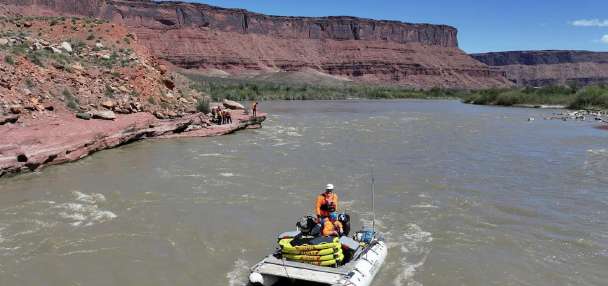
People who enjoy fishing from a boat should try to get to their favorite lakes in southern Utah as soon — and as often — as they can in the spring and early summer, per DWR.
Water levels in various parts of the state could be low enough later in the summer that boat ramps may not be functional.
Up to 1 million acre-feet of water is being delivered from Flaming Gorge Reservoir to Lake Powell between now and April 2027 to help prevent critical water levels at Lake Powell. As a result, anglers who want to fish Flaming Gorge Reservoir and the Green River should check the Bureau of Reclamation website for the latest information about the water releases and for boat ramp elevations and operability information.
Anglers who want to fish at Lake Powell should check the Glen Canyon National Recreation Area website for boat ramp conditions.
A little help for the fish
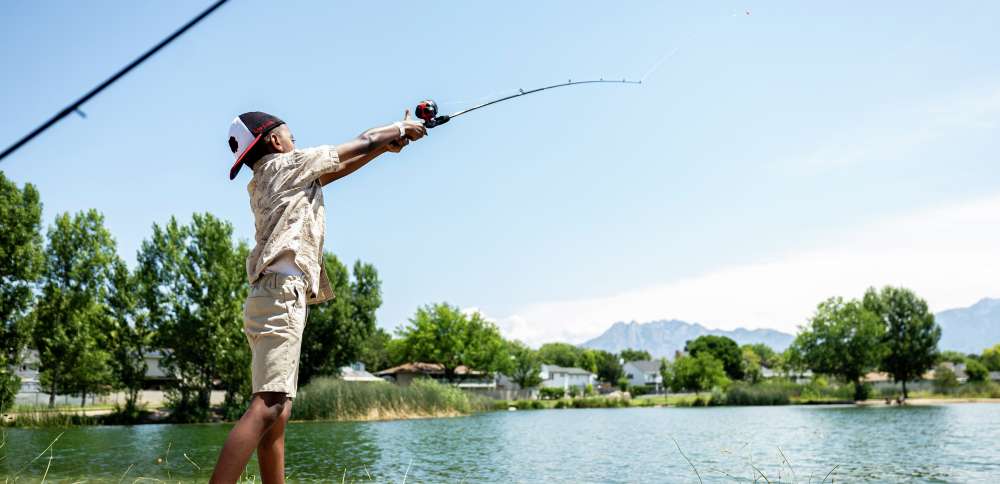
For anglers who want to practice catch-and-release as temperatures warm up, DWR suggests fishing in the morning and evenings.
Another way to help fish is to choose a fishing spot that has deeper, cooler water, so you can release any caught fish into an area where they are more likely to survive.
"Basically, try not to fish near little coves that have shallow, stagnant warm water," Hedrick said. "Instead, pick a spot where you can release your fish into better-quality water to increase their survival rates during this hot, drought year."
DWR also offers tips to decrease stress on fish:
- Use single hooks on lures and bend down the barbs for easy release.
- Minimize the time you spend "fighting" the fish and any hands-on handling.
- Use rubber or coated nylon nets to protect a fish's slime layer and scales.
- Quickly remove the hook with forceps or needle-nosed pliers.
- Try to release the fish without removing it from the water. If you do have to remove it from the water to free it, minimize the amount of time the fish is exposed to the air. Keep your hands wet when handling the fish.
- If the fish is deeply hooked, don't pull on the line. Instead, cut the line as close as possible to where it is hooked and leave the hook.
- Allow the fish to recover in the net before you release it.
- If the fish doesn't stay upright when you release it, gently move it back and forth or consider harvesting it, if it's within your statewide limit for that species.