'%3e%3cpath%20d='M34.1406%205.85938C30.3906%202.10547%2025.3047%200%2020%200C14.6953%200%209.60938%202.10547%205.85938%205.85938C2.10938%209.61328%200%2014.6953%200%2020C0%2025.3047%202.10547%2030.3906%205.85938%2034.1406C9.61328%2037.8906%2014.6953%2040%2020%2040C25.3047%2040%2030.3906%2037.8945%2034.1406%2034.1406C37.8906%2030.3906%2040%2025.3047%2040%2020C40%2014.6953%2037.8945%209.60938%2034.1406%205.85938ZM37.0117%2023.543H31.1602V13.5391H27.6328V19.9414C28.1211%2020.6914%2028.3711%2021.582%2028.3711%2022.5625V22.625C28.3711%2023.668%2028.1172%2024.6055%2027.6328%2025.4297V26.6094H36.082C33.4883%2032.9375%2027.2891%2037.3789%2020.0039%2037.3789C10.3711%2037.3789%202.62109%2029.6289%202.62109%2020C2.62109%2010.3711%2010.3711%202.62109%2020%202.62109C29.6289%202.62109%2037.3789%2010.3711%2037.3789%2020C37.3789%2021.1484%2037.2617%2022.2656%2037.0508%2023.3477C37.0391%2023.4141%2037.0234%2023.4766%2037.0117%2023.543Z'%20fill='white'/%3e%3cpath%20d='M22.3086%2018.5352C20.4336%2018.125%2019.9531%2017.8398%2019.9766%2017.1836V17.1406C19.9766%2016.6992%2020.3477%2016.2148%2021.4023%2016.2148C22.582%2016.2148%2023.8867%2016.6797%2025.0781%2017.4766L26.8516%2015.0195C25.4453%2013.8906%2023.707%2013.3398%2021.5547%2013.3398C18.5195%2013.3398%2016.4375%2015%2016.4063%2017.4766V17.5352C16.3633%2020.2617%2018.5859%2020.9805%2021.293%2021.6016C23.0391%2021.9766%2023.5703%2022.3164%2023.5703%2022.9609L23.5469%2022.9766C23.5469%2023.3906%2023.2578%2023.7031%2022.7852%2023.8359C22.5742%2023.9062%2022.1289%2023.9727%2021.5156%2023.9727C20.7617%2023.9727%2019.7539%2023.8633%2018.6328%2023.4844C18.0898%2023.2891%2017.4727%2023.0039%2016.8047%2022.6133L20.1406%2026.625C20.2813%2026.6602%2021.0977%2026.8516%2021.7734%2026.8516C25.0039%2026.8516%2027.0859%2025.2461%2027.1094%2022.6328V22.5703C27.1602%2020.1133%2025.2148%2019.1719%2022.3086%2018.5352Z'%20fill='white'/%3e%3cpath%20d='M5.24219%2013.5664V26.6133H8.75391V23.7578L10.2969%2021.9531L14.2031%2026.6133H18.3867L12.3555%2019.5195L17.4023%2013.5664H13.4531L8.75391%2019.0586V13.5664H5.24219Z'%20fill='white'/%3e%3c/g%3e%3cdefs%3e%3cclipPath%20id='clip0_97_2430'%3e%3crect%20width='40'%20height='40'%20fill='white'/%3e%3c/clipPath%3e%3c/defs%3e%3c/svg%3e)


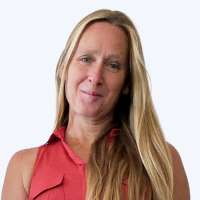

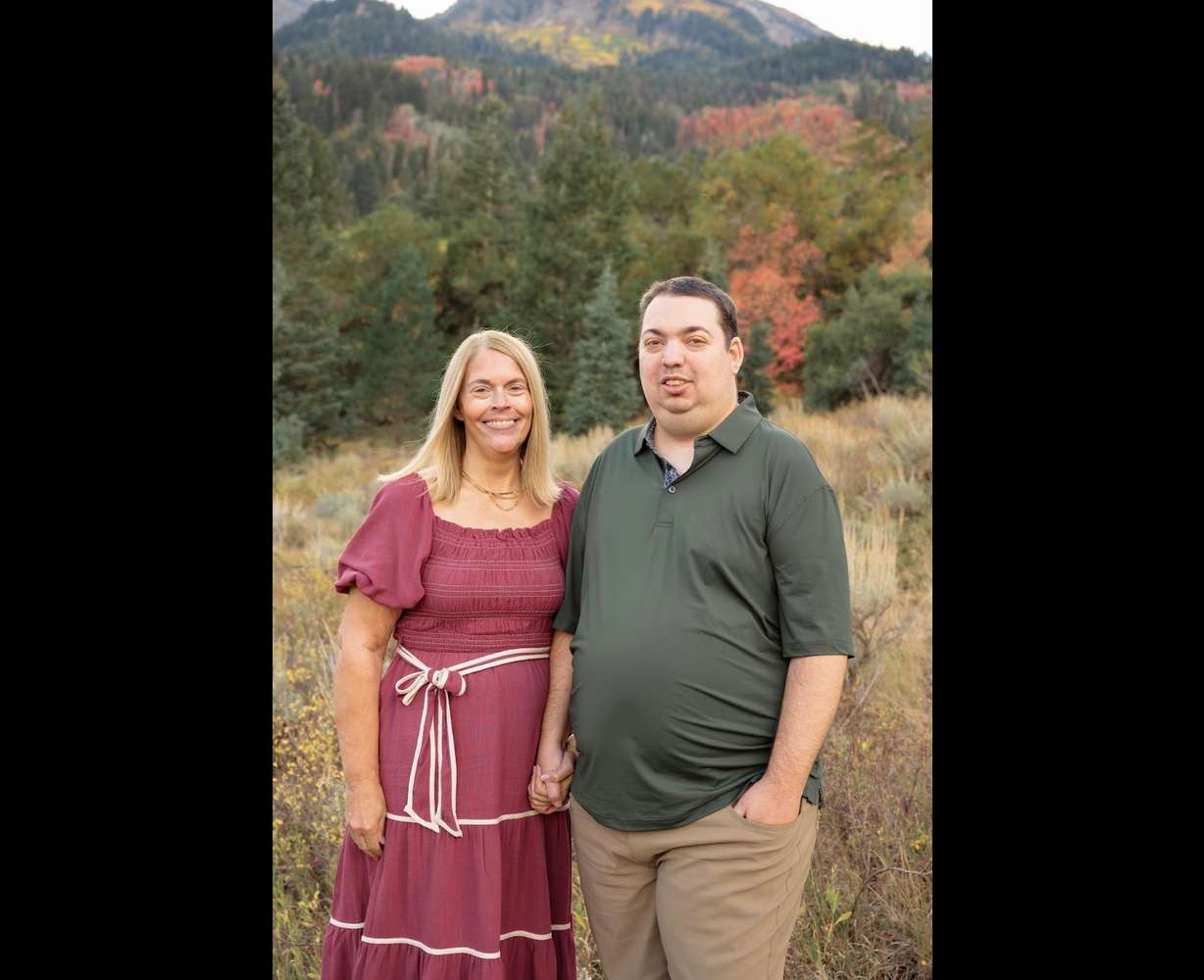
- Keri Beardall shares experiences raising her adult son Austin, who has epilepsy.
- Austin, 32, faces challenges due to intractable epilepsy and developmental delays.
- Beardall finds support through community connections and her podcast on special needs parenting.
SPRINGVILLE— When Keri Beardall looks at her life as a mother of an adult son with special needs, she is equally thankful and upset for how things have turned out.
"My therapist said to me once that I could be angry at God for what happened with Austin, and at the same time be so grateful for what I have, and I think that was really a turning point for me," Beardall said.
Her son Austin is 32 years old and has been living with intractable epilepsy his whole life. This form of epilepsy, also known as drug-resistant or uncontrolled epilepsy, cannot be stopped with the use of standard anti-seizure medications.
Beardall said that along with the seizures, Austin also has some learning and speech delays that make it difficult for him to communicate well.
"Things started pretty normal, and then at about four months old Austin had his first seizure," she recalled. "At first, we just thought he had this hyperstartle effect, but then it happened many times in less than 12 hours, and I knew something's not right."
Beardall is a registered nurse at Utah Valley Hospital, working at the NICU, so she had quite a bit of training in the medical world. She knew that early intervention was critical, but with her son's condition not being responsive to medication, it would take acquiring new skill sets.
It also meant letting go of expectations and dreams she had for her son.
Grieving what life could have been
"You go through the motions trying to figure out how to best help them, and as he started maturing and going through different phases of life, we started to see more and more the delays that he had," she said. "As my younger daughter started catching up to him, I really started to see that this isn't just going to be a learning disability that we'll get through; this is going to be lifelong."
As Austin got older and aged out of school at age 22, Beardall said a new challenge presented itself: raising an adult child with special needs.
"He is 32, but academically, he's a kindergartener or first-grader," she said. "He doesn't really read or write, but socially he's more like a teenager. With his epilepsy, it's hard for him to have a job."
Beardall said that about 15 years after applying, Austin was able to get assistance from the Division of Services for People with Disabilities. She said that Austin's dad and her daughters all work together as a support system, adding that grief is still very much a part of her journey.
"As a parent of a child with special needs, you go through different phases of grief," she said. "You see their peers pass them up in grade school. Then they get to high school and realize that he'll never drive a car, and then he'll never get married and he'll never have children. Those are the times in life that you're like, 'This kind of sucks and it's not fair.'"
She also spoke to the constant worry she has as an aging parent, and the possibility of dying before her son does — which coincides with the worry of who will care for Austin if that happens.
"You never want to have to bury your own children," she said. "Where I work in the NICU, I've watched many families do that over the years. I've also been in the special needs world and have watched many families do that, and it's hard. However, as his mom, there is sometimes a part of me that thinks that if he went before me, I wouldn't have to leave that burden for my other kids to take care of — even though they tell me it's not a burden."
Letting herself have those moments of grief, while also holding space for the joyous parts of being a special needs parent, Beardall said, is helpful.
Connecting with others and holding space for joy
"My younger daughter works for the company that I employ for Austin for DSPD, and she's been able to make a career out of it," Beardall said. "It's because she grew up with a brother with special needs. ... I also run a special needs sports league and have met so many amazing people."
The people Beardall has met over the years through the special needs world are who she calls some of her closest friends. Recently, she has opened up a space for them to speak freely about their experiences through a podcast she calls "The Unexpected Parenting Podcast."
"My overall goal is to share people's stories because everybody's story is different," she said. "One mom's story with a Down syndrome child to the next Down syndrome child is completely different. My story of Austin with epilepsy is completely different than another parent with a child with epilepsy. I feel like we don't get to share our stories enough, and I just want people to be able to share their story."
Opening up about her journey with others, she said, has allowed her to see her son for the man he is. She said it has also helped Austin find his voice in his own way.
"Austin loves people," she said. "He loves to give hugs and high-fives. He loves 'Star Wars' and any superhero. He loves BYU."
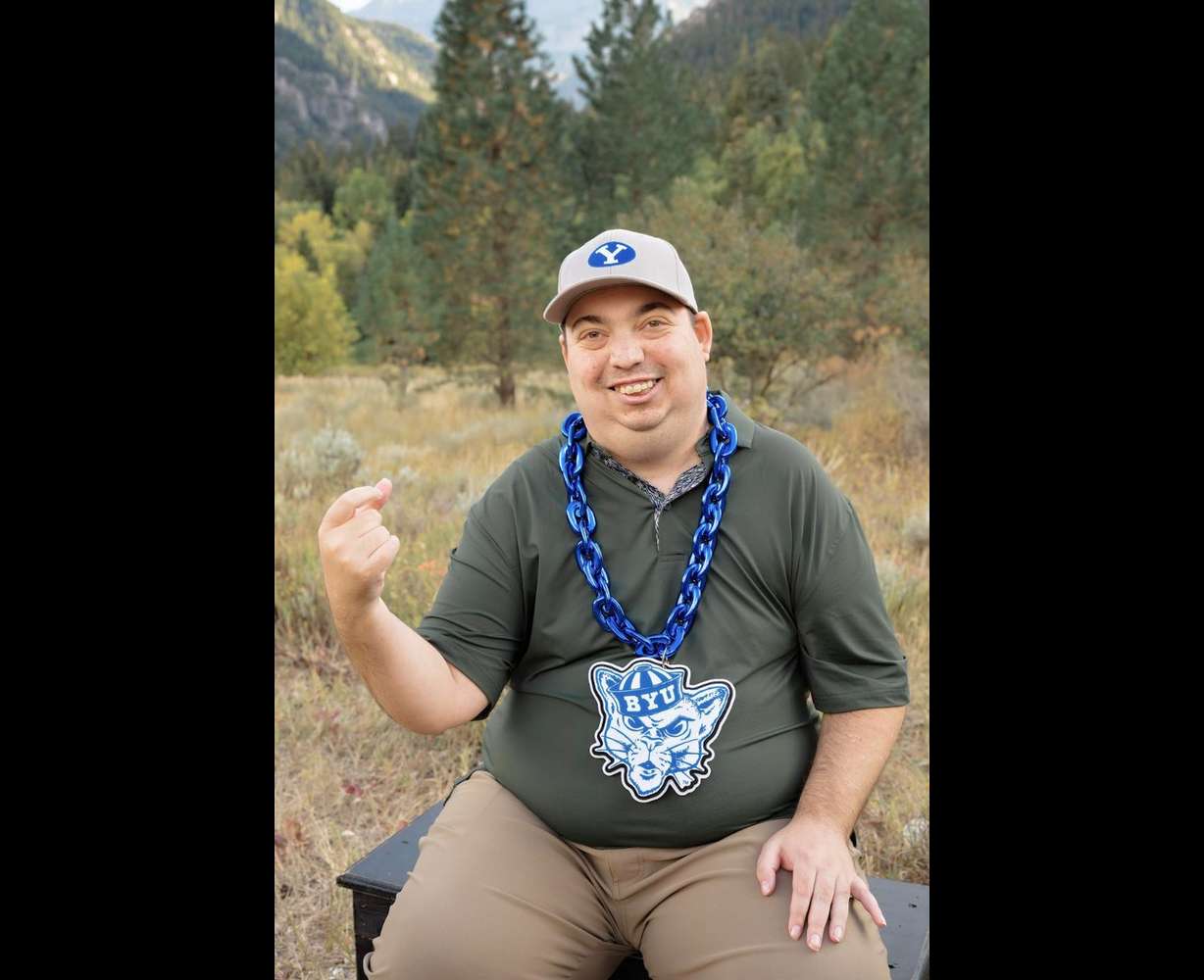
Showcasing his love for BYU has been commemorated by a "Y" tattoo that Beardall said Austin begged for.
'My older daughter said to me, 'Mom, what you did is you allowed your adult son with disabilities some autonomy to choose something for himself,'" she recalled. "I was like, 'OK, then.' It is now his pride and joy. He shows everyone."
Beardall said that if she could sum up her life with one word, it would be "and," as she explained the many lessons she has learned in duality.
"It's not, 'I'm angry, but I'm happy;' it's really an 'and,'" she said. "Now as I'm in my later years and my children are all adults, I will never live alone. I won't be able to just freely retire and just go do whatever I want because I will always have Austin with me, and that's hard, but at the same time, I am so grateful for that. Without him, I wouldn't have the life I've had."