- Experts are expressing concerns about "heat island effects" from The Stratos Project.
- The proposed data center's carbon footprint could increase Utah's greenhouse gas emissions by 50%, a Utah State University professor said.
LOGAN — Increases in temperatures around so-called urban heat domes, or heat islands, could apply to a massive data center that is proposed for the northwestern side of Box Elder County.
Project Stratos, headed by "Shark Tank" star Kevin O'Leary's company, would span some 40,000 acres and produce up to 9 gigawatts of power at full scale, all to help serve artificial intelligence to the military and cloud-computing needs.
Wei Zhang is a professor of climate science at Utah State University and is part of a national panel studying extreme heat and developing models of rising temperatures, particularly in urban areas. He said the proposed city-sized data center could have effects similar to what they see in those areas.
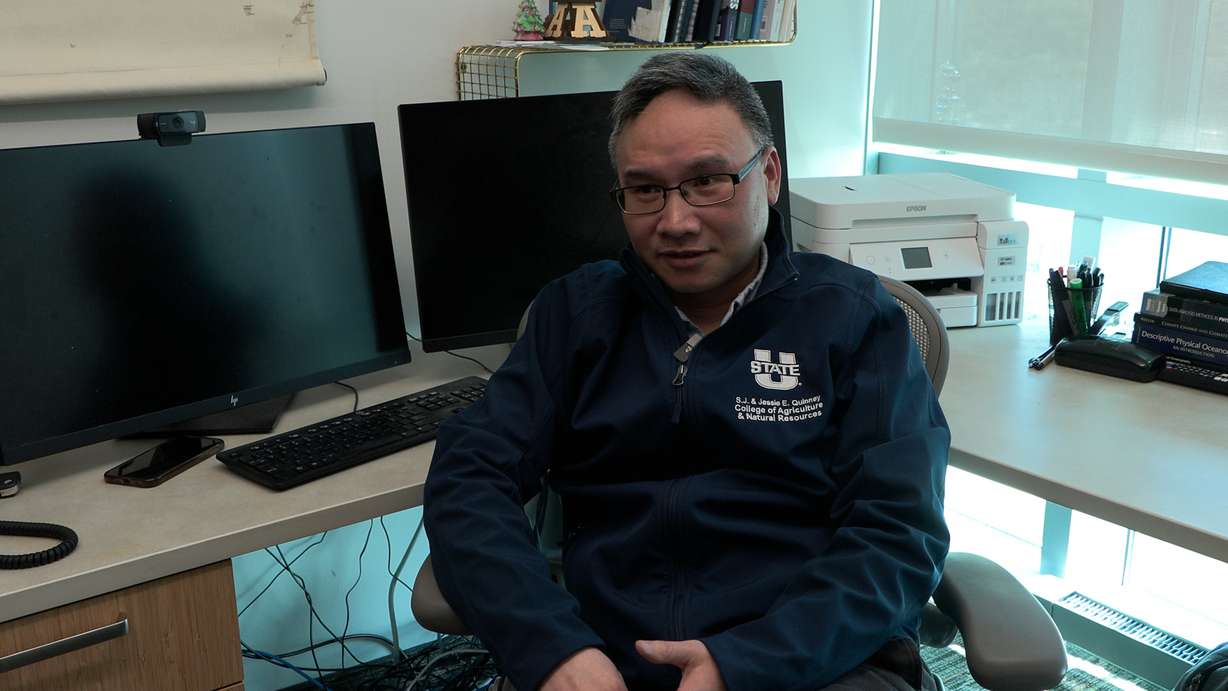
"If that heat is strong enough, that can modulate the local circulations," Zhang said. "(It) might create its own local circulation to cause something called urban heat island effect, or in urban climate field, what we call urban dome. So those heat by itself can cause some local circulation."
Ultimately, those heat increases by 3 to 4 degrees could be enough to cause changes to the wind in the area, potentially impacting area storm systems. Zhang adds however, that the exact impact is unclear, and requires more study. He says the temperature changes could also be blown to other areas.
"It will affect the local climate, but I don't know how how far that can be aggregated to a larger area," Zhang explained. "That will need more evaluation."
But he says it is enough of an impact to be concerned. In the meantime, Robert Davies, a professor of physics at USU, added that an even greater concern than the heat created, is the potential for a massive carbon footprint.
"Generating 9 gigawatts of power from natural gas will raise Utah's current total greenhouse gas production by about 50%," Davies said.
Patrick Belmont, a professor in watershed sciences added, "Every car, truck, bus, motorcycle, all of those emissions combined (in Utah). This plant will be putting out more than that."