- Closed-loop cooling systems save water but increase electricity usage in data centers.
- The University of Utah's Cloud Lab tests these systems, highlighting water savings and power trade-offs.
- O'Leary Digital's proposed system aims for minimal water use, raising questions about feasibility.
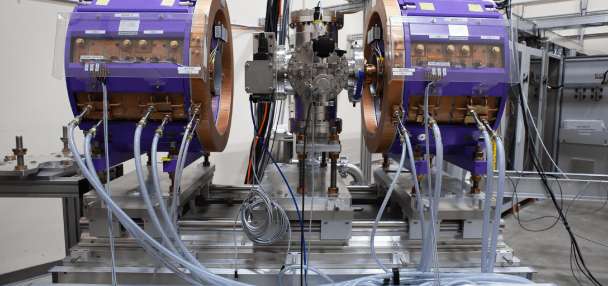
SALT LAKE CITY — Inside what is, in many ways, a tiny data center that pales in comparison to modern counterparts, the University of Utah runs what it calls Cloud Lab. The lab allows researchers to study ways to improve the efficiency and effectiveness of data centers.
While it runs on kilowatts of power, Robert Ricci, a professor in the school's school of computing, said some of its systems are similar to what's being proposed for a 3 to 9 gigawatt data center in Box Elder County, including a closed-loop cooling system.
"Basically, what we have is … a supply of chilled water that enters from another room, another building actually on campus," Ricci said, pointing to a set of pipes along the back wall. "However, what you do have to do then is take the heat that the water picked up in this room, and actually the term in the industry is 'reject that heat' — basically put it out into the atmosphere in one way or another."
Ricci said how that second part is accomplished is important in determining how much water and how much electricity is used. More or less, you save one and expend the other. But compared to the simpler evaporative cooling system that can dump millions of gallons of water a day, Ricci said closed-loop systems provide big savings.
"That system, typically once it's filled, doesn't need a lot of extra water," Ricci explained. "It might need a little bit of maintenance or that kind, but generally speaking, doesn't use a lot of water once it's initially filled."
Representatives at O'Leary Digital said its proposed system would have to be capped off from time to time and would use a water and glycol solution. Its power would be generated from a gas pipeline that is separate from any Utah utilities. While production of power from natural gas can typically use large amounts of water, O'Leary Digital said it is aiming for a system that will use little to no water. What's not clear, Ricci said, is how that will be accomplished, or whether those types of promises will be kept.
Related:
Box Elder County data center opponents pursuing ballot initative to challenge plans
Opponents of the Box Elder County data center proposal are taking steps to challenge one of the resolutions allowing the project to proceed."The thing that we, kind of, would like a bigger picture of, though, is how is that heat removed into the environment? How is that water cooled?" Ricci queried.
He said closed-loop systems are particularly effective during the winter months, where at times very little is needed to cool off the water. During warmer months, however, systems typically have to use either water, or a compressor type system, similar to air conditioning, that uses a lot of power.
"You can burn more natural gas in order to do more compressive cooling, or you can evaporate water to do evaporative cooling. And those are the two kind of big choices," Ricci said.
Ricci added that more advanced systems that use very little water at all are only being used today in limited quantities, and have not been tested anywhere near the scale that O'Leary Digital is proposing.
"We need to learn more about their actual plans; the systems that claim to use zero water for data center cooling are relatively new," Ricci said. "This is something we would really need fairly detailed, unbiased studies to understand what the water usage of this thing would actually be."