'%3e%3cpath%20d='M34.1406%205.85938C30.3906%202.10547%2025.3047%200%2020%200C14.6953%200%209.60938%202.10547%205.85938%205.85938C2.10938%209.61328%200%2014.6953%200%2020C0%2025.3047%202.10547%2030.3906%205.85938%2034.1406C9.61328%2037.8906%2014.6953%2040%2020%2040C25.3047%2040%2030.3906%2037.8945%2034.1406%2034.1406C37.8906%2030.3906%2040%2025.3047%2040%2020C40%2014.6953%2037.8945%209.60938%2034.1406%205.85938ZM37.0117%2023.543H31.1602V13.5391H27.6328V19.9414C28.1211%2020.6914%2028.3711%2021.582%2028.3711%2022.5625V22.625C28.3711%2023.668%2028.1172%2024.6055%2027.6328%2025.4297V26.6094H36.082C33.4883%2032.9375%2027.2891%2037.3789%2020.0039%2037.3789C10.3711%2037.3789%202.62109%2029.6289%202.62109%2020C2.62109%2010.3711%2010.3711%202.62109%2020%202.62109C29.6289%202.62109%2037.3789%2010.3711%2037.3789%2020C37.3789%2021.1484%2037.2617%2022.2656%2037.0508%2023.3477C37.0391%2023.4141%2037.0234%2023.4766%2037.0117%2023.543Z'%20fill='white'/%3e%3cpath%20d='M22.3086%2018.5352C20.4336%2018.125%2019.9531%2017.8398%2019.9766%2017.1836V17.1406C19.9766%2016.6992%2020.3477%2016.2148%2021.4023%2016.2148C22.582%2016.2148%2023.8867%2016.6797%2025.0781%2017.4766L26.8516%2015.0195C25.4453%2013.8906%2023.707%2013.3398%2021.5547%2013.3398C18.5195%2013.3398%2016.4375%2015%2016.4063%2017.4766V17.5352C16.3633%2020.2617%2018.5859%2020.9805%2021.293%2021.6016C23.0391%2021.9766%2023.5703%2022.3164%2023.5703%2022.9609L23.5469%2022.9766C23.5469%2023.3906%2023.2578%2023.7031%2022.7852%2023.8359C22.5742%2023.9062%2022.1289%2023.9727%2021.5156%2023.9727C20.7617%2023.9727%2019.7539%2023.8633%2018.6328%2023.4844C18.0898%2023.2891%2017.4727%2023.0039%2016.8047%2022.6133L20.1406%2026.625C20.2813%2026.6602%2021.0977%2026.8516%2021.7734%2026.8516C25.0039%2026.8516%2027.0859%2025.2461%2027.1094%2022.6328V22.5703C27.1602%2020.1133%2025.2148%2019.1719%2022.3086%2018.5352Z'%20fill='white'/%3e%3cpath%20d='M5.24219%2013.5664V26.6133H8.75391V23.7578L10.2969%2021.9531L14.2031%2026.6133H18.3867L12.3555%2019.5195L17.4023%2013.5664H13.4531L8.75391%2019.0586V13.5664H5.24219Z'%20fill='white'/%3e%3c/g%3e%3cdefs%3e%3cclipPath%20id='clip0_97_2430'%3e%3crect%20width='40'%20height='40'%20fill='white'/%3e%3c/clipPath%3e%3c/defs%3e%3c/svg%3e)




- SNAP benefits saw changes on Thursday, including inflation adjustments and stricter eligibility.
- States must now cover 75% of administrative costs, increasing their financial burden.
- New work requirements could further reduce SNAP rolls, affecting 5 million Americans.
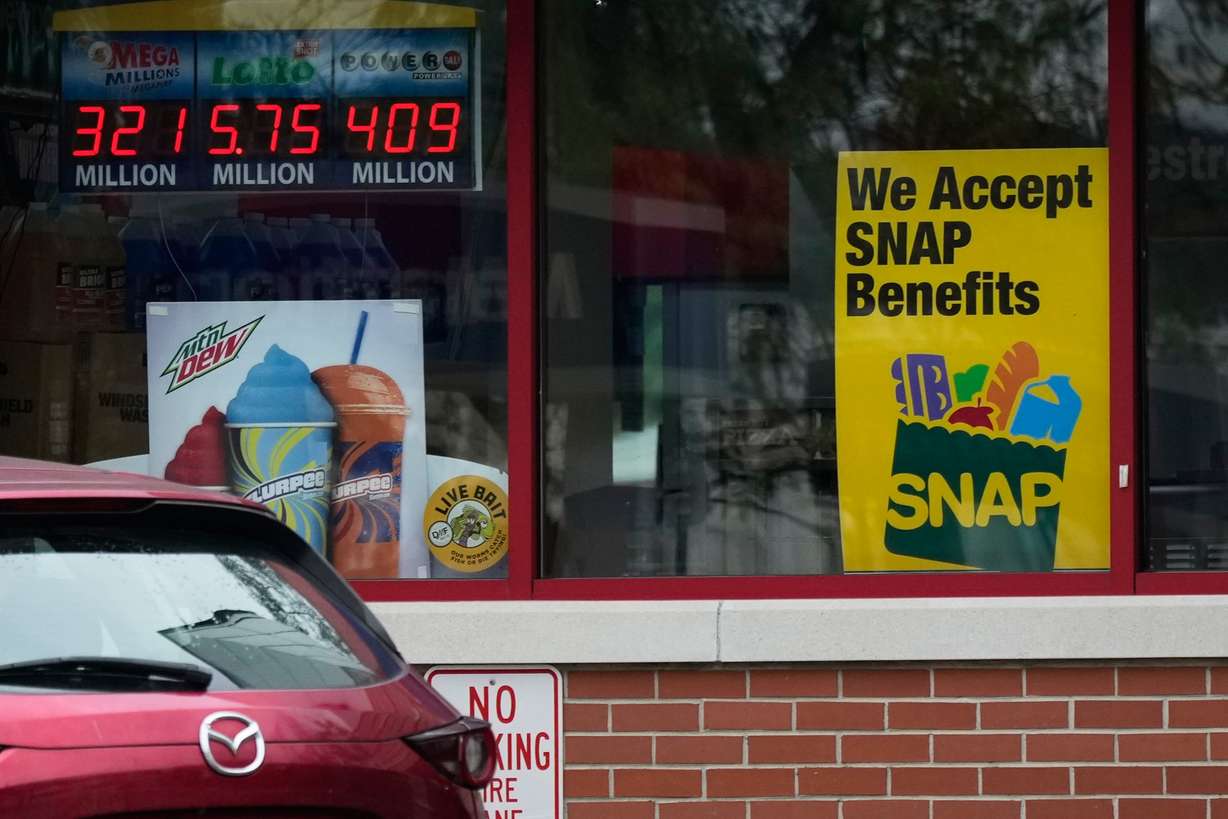
SALT LAKE CITY — Major changes to the Supplemental Nutrition Assistance Program — food stamps — took effect Thursday, including small upward adjustments to account for inflation. But the biggest effects are expected to be seen in the future, as potentially millions lose access to the food assistance benefits due to new requirements.
And states are bracing for increased costs they will be required to bear.
USA Today reports that about 37 million people in the U.S. receive SNAP benefits.
Many of the changes were part of the Trump administration tax-and-spending law, the One Big Beautiful Bill Act, that passed in July 2025, but the inflation adjustments are not.
The maximum benefit for a one-person household in the 48 contiguous states and Washington, D.C., increased $8 a month, while a four-person household got $29 more. The minimum monthly benefit in the contiguous states and Washington, D.C. rose $1 to $25. Hawaii's benefits are decreasing slightly, but like those in Alaska, Guam and the U.S. Virgin Islands, are higher than in the contiguous group, as Boston 25 News reported.
The Hill noted increases could also reflect not only where a person lives, but also age and disability status.
Why states will pay more
States now must pay 75% of the program's administrative costs, where it had been split between the states and federal government 50-50. The federal government believes that will reduce its spending on SNAP by $16.9 billion over five years, or $3.4 billion annually. But that's money that states will have to pick up.
According to NPR, "The Food Research & Action Center, an anti-hunger advocacy group, estimates that states would need to shore up anywhere between $3 million and $670 million to fully offset the loss in federal funding for administrative costs. California, New York, Pennsylvania, Texas and Michigan are expected to be especially hard hit."
And starting next Oct. 1, states with a 6% or higher error rate will be required to pay up to 15% of benefits issued in their state, though some states may be allowed to delay implementation. Error rates include both over- and underpayments. The Center on Budget and Policy Priorities predicts nearly half of states could each pay at least $100 million if they don't lower their error rate, per the article. "California and New York could each be on the hook for over $1 billion if they are unable to do so," according to the think tank.
It's possible that states would be forced to cut money to other programs or reduce access to SNAP.
Katie Bergh, a senior policy analyst with the Center on Budget and Policy Priorities, told NPR that states might decide to leave the program entirely.
New eligibility requirements
ABC News reported that roughly 5 million Americans, 1 million of them children, have already stopped receiving SNAP assistance in the past year. The stricter eligibility requirements are likely to shrink the rolls further.
Work requirements now apply to able-bodied adults without dependents between the ages of 18 and 64, where the previous upper age was 54. And having a youngest dependent child age 14 or older no longer, by itself, qualifies an adult for an exemption from the time-limit work requirement, although that individual may be eligible for a different exemption, such as for a disability.






