- ESPN's "College GameDay" visited BYU for the first time in 17 years.
- Over 200 people coordinate the live broadcast, showcasing campus and game atmosphere.
- The show highlights college football's biggest personalities, with extensive behind-the-scenes work.
PROVO — The cameras are rolling, the crowd is watching and Pat McAfee is doing what Pat McAfee does best.
For the fans packed around ESPN's "College GameDay" set at BYU, the early Saturday morning broadcast is a chance to see some of college football's biggest personalities in person, hear their predictions and be part of the atmosphere surrounding one of the sport's biggest games of the week.
But just beyond the cameras, another operation is unfolding.
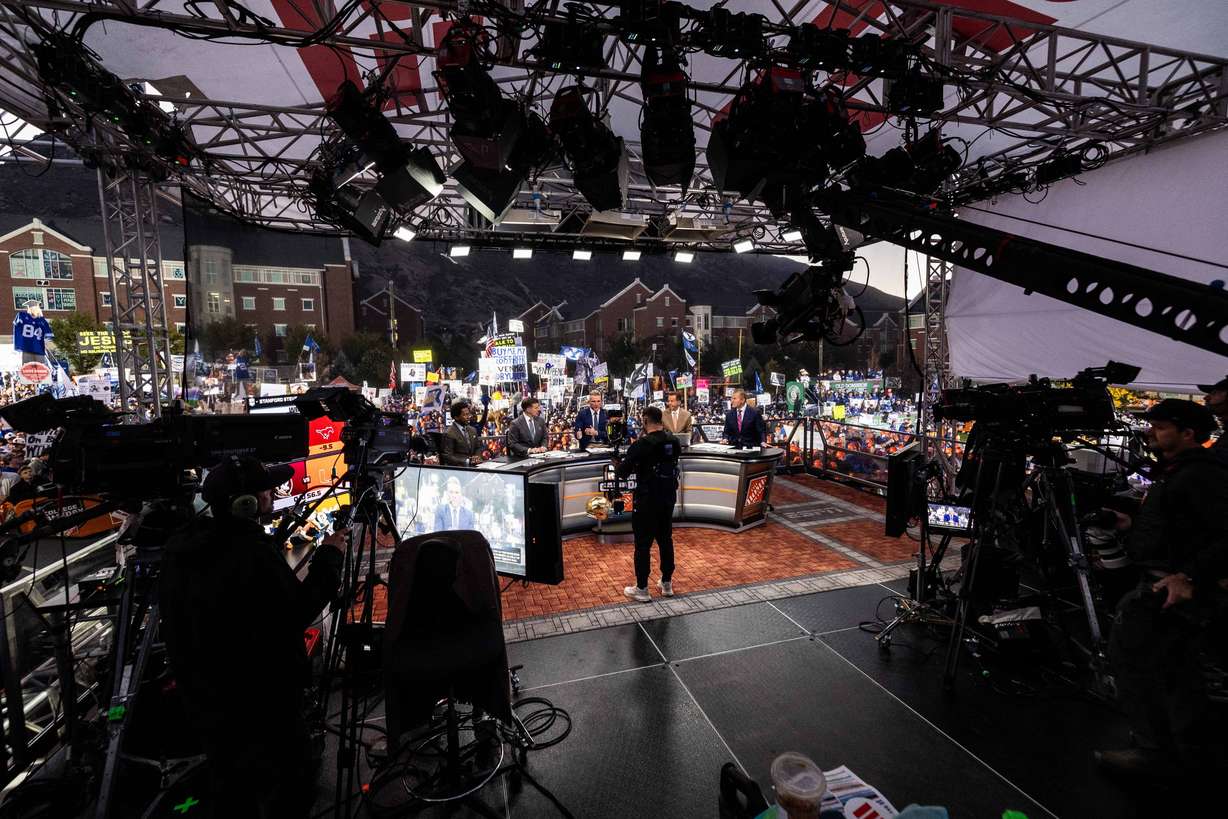
During the show's first stop in Provo in 17 years, a handful of studio cameras captured the beautiful mountain backdrop beyond the stage while a much larger crew worked around the set. A couple television monitors, each roughly 40 inches, sat in front of the stars of the show — McAfee, Kirk Herbstreit, Nick Saban, Desmond Howard and longtime host Rece Davis.
An enormous orange camera crane extended above the energized pit of students, giving the production team an amazing overhead view, while two giant Home Depot screens helped them follow along with the broadcast.
There were also the smaller moments that viewers at home might never notice. During commercial breaks, people on stage talked and reviewed their notes. A crew member refilled coffee as temperatures hovered in the mid-40s.
It was a glimpse of the coordination required to make a live television broadcast look effortless — and the work that starts well before the first camera goes live.
"It's a massive undertaking," an ESPN spokesperson said of bringing the show to a new campus each week. "There are a lot of moving pieces behind what fans ultimately see on Saturday morning, and it takes an incredibly experienced and talented team to bring them all together."
More than 200 people are involved in bringing "GameDay" to life on the road each week, along with the trucks and equipment needed to build the production. The operation includes production, on-air talent, audio and technical crews, security, marketing, communications, social media and so many more that go into the effort.
For fans, the show may be defined by its familiar set, star personalities and its much-speculated celebrity guest picker. Behind the scenes, it is a traveling show that has to be rebuilt in a different location nearly every week.
Before the cameras roll
The weekly setup may look like a fast-moving operation, but the planning begins well before the season kicks off.
ESPN conducts site visits at a number of schools before the start of the football year, allowing the production team to prepare for potential destinations before knowing which one will ultimately host the show.
As soon as the location is locked in, things move fast.
The final decision for the location typically comes just six days before the next Saturday broadcast. That leaves the team with less than a week to coordinate the logistics, move equipment and turn a campus space into a national television set.
After more than 500 shows on the road, the team has developed a process for managing that turnaround.
It starts normally on Wednesdays, with different parts of the operation arriving throughout the week. Teams work toward that Saturday morning, when the production has to be ready to deliver a live three-hour show.
What you see on television is just the tail end of a massive group effort. Equipment needs to get delivered, the stage has to be built out, all the tech gear needs testing, and local staff have to sync up with ESPN long before anyone goes live.
The size of the operation is easy to underestimate when looking through a television screen. On the set out in front of Heritage Halls at BYU, roughly 15 crew members were visible, while approximately 25 to 30 local media members worked in the surrounding area around them.
"It's truly a well-oiled machine," the spokesperson said.
No 'GameDays' are the same
Every stop brings a different set of circumstances.
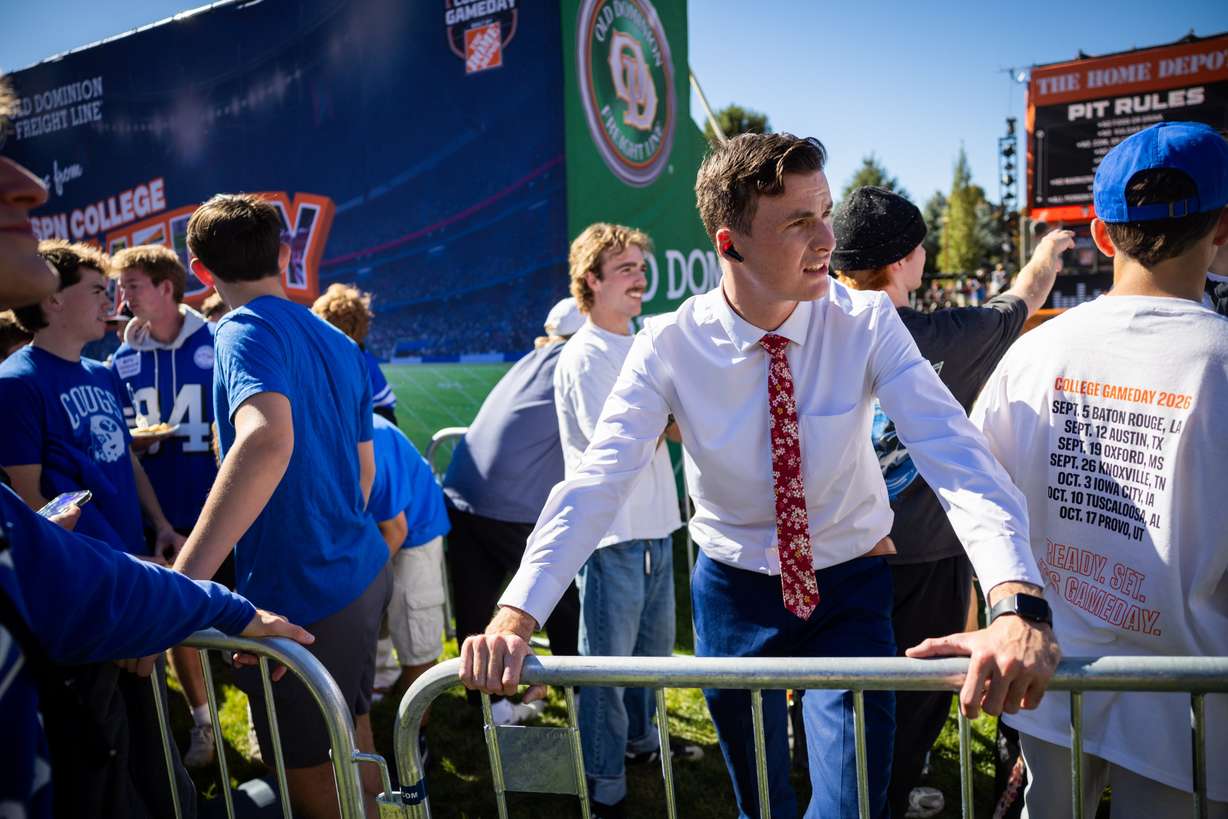
Things like campus layout, available space, weather and crowd size all factor in to how everything comes together. The "GameDay" crew has to roll with those changes while keeping the prestige of the show.
"No two campuses are exactly alike, and that's part of what makes 'GameDay' special," the spokesperson said.
They noted the team's years of experience help it prepare for a wide range of environments. There are also contingency plans in place each week, with the safety of the crew and fans remaining a major priority.
That kind of prep is huge when you're putting on not only a live but outdoor show. Those factors bring all sorts of random variables that you don't always have to account for in a regular studio up at Bristol.
At the Provo set, though, you could really see how much equipment it takes to pull everything off. The overhead cameras seamlessly traveled on the wires from the large crane, while the giant screens kept the crowd tuned in for highlights such as BYU student Carter Smith winning McAfee's "Kicking Is Easy" contest dressed as Spider-Man and Cosmo parachuting into the venue.
ESPN links up with the host school's athletic department, campus staff and local crews early on to get everything squared away. Those local partnerships are a huge deal when it comes to keeping things running smoothly.
High stakes with live TV
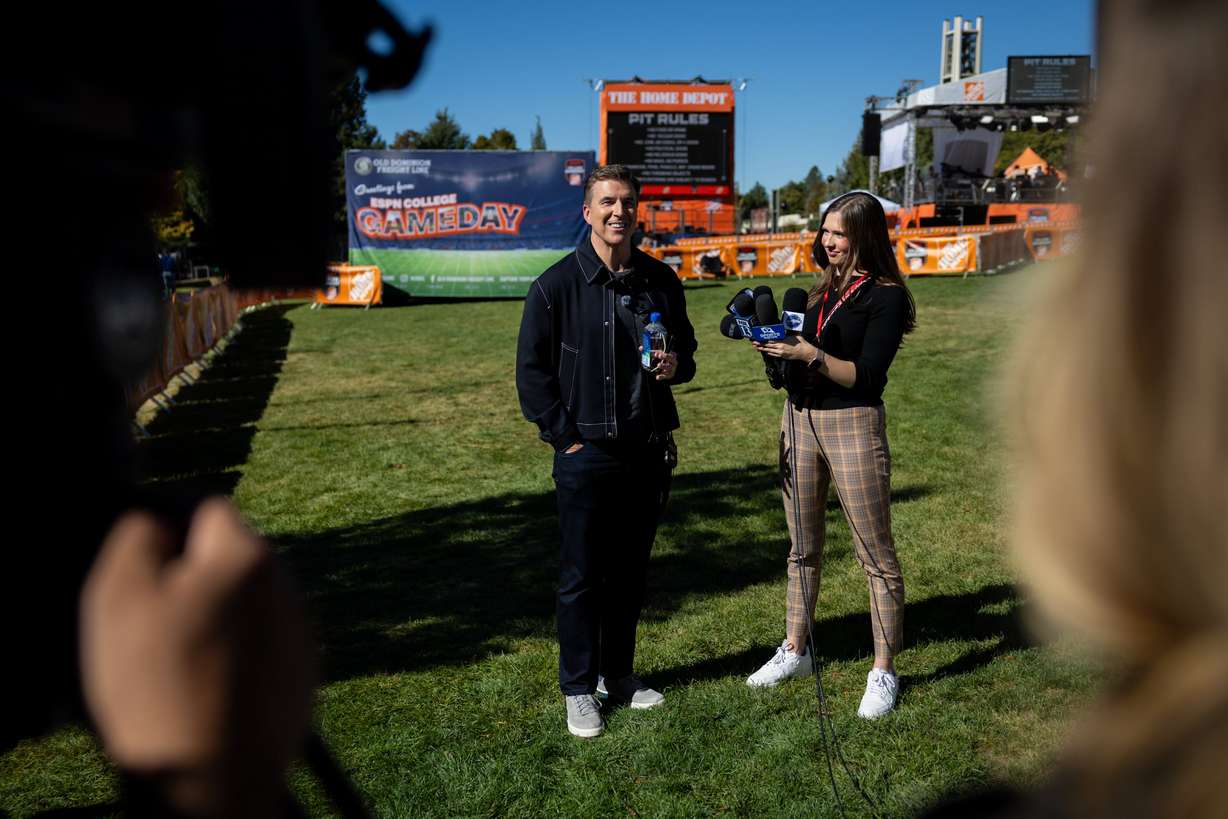
Once the show goes live, the coordination continues.
The broadcast might look conversational on screen, with Davis moving from one topic to the next, but there are teams working hard behind the scenes. Desks behind the cameras are littered with colorful broadcast clocks to keep everyone on schedule. During breaks, you could see between segments how everyone on stage chatted and checked their notes — there's basically no downtime ever.
Whenever McAfee took over the show, one moving camera operator was right on him, showing off the kind of natural rhythm that makes a live broadcast look so smooth.
The production has also evolved as the program has grown with the entertaining McAfee-Saban double act. The show's footprint is larger, its technology and capabilities have advanced and more people and elements are involved in creating the show each week.
Still, the goal remains the same: "showcasing the campus, the fans and the atmosphere that make college football Saturdays so special."
That atmosphere is part of what makes the weekly move worthwhile. The equipment and production process may be familiar to the crew, but the setting and the people surrounding it change from one stop to the next.
Not so fast, my friend!
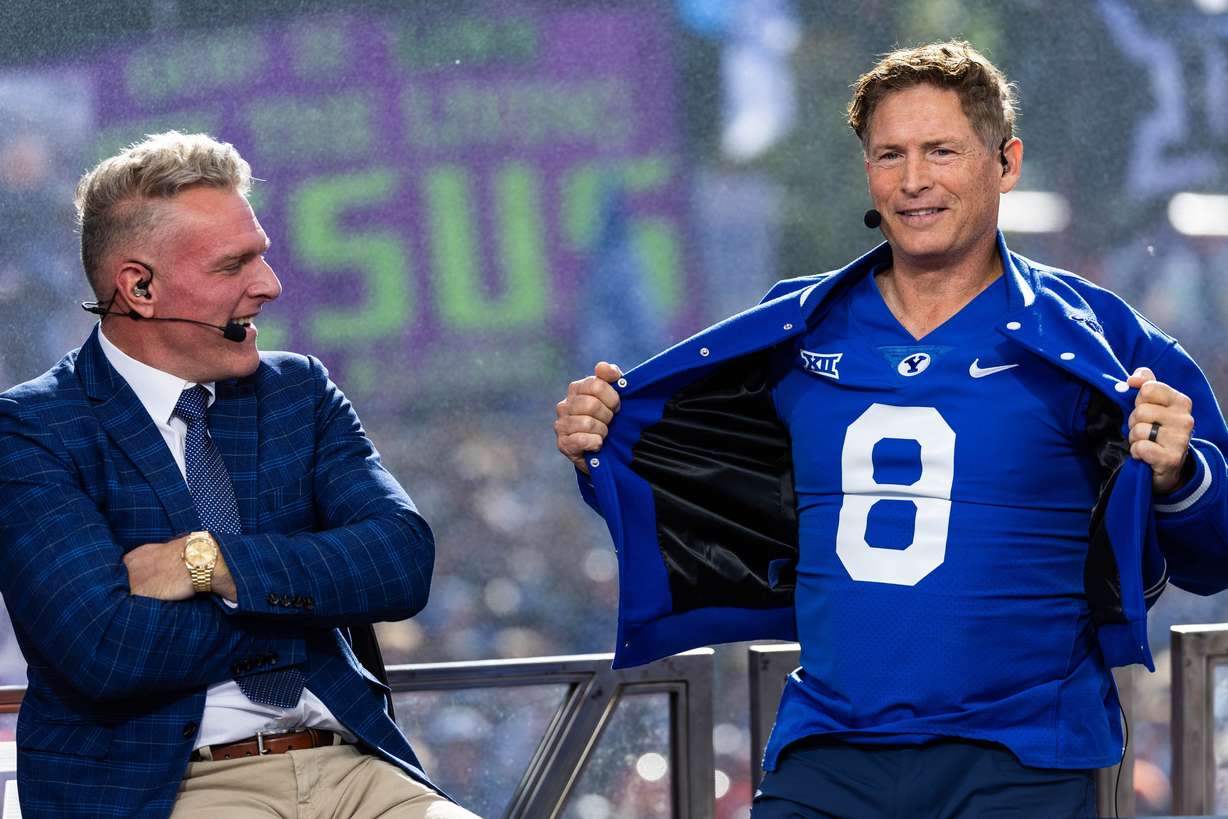
That changing backdrop has brought "GameDay" back to the Beehive State in consecutive weeks, giving the region another turn in the national spotlight.
Fresh off a wild finish where No. 2 BYU topped Notre Dame, the crew is heading to Salt Lake City as the No. 10 Utes host No. 14 Houston at Rice-Eccles Stadium, the most expensive ticket matchup in this week's AP Top 25 lineup.
The back-to-back visits also offer a reminder of how much the setting matters to the show.
"Our aim is to always take 'GameDay' to the best matchups with the most compelling storylines," said the ESPN spokesperson.
By the time the cameras stop rolling, the next destination is already approaching. The set will be packed up, the crews will move on and another campus will begin preparing to host the traveling production.
The show may last only a few hours on Saturday morning. Bringing it to life takes a team of more than 200 people, several days of work and a process built to do it all over again the following week.