'%3e%3cpath%20d='M34.1406%205.85938C30.3906%202.10547%2025.3047%200%2020%200C14.6953%200%209.60938%202.10547%205.85938%205.85938C2.10938%209.61328%200%2014.6953%200%2020C0%2025.3047%202.10547%2030.3906%205.85938%2034.1406C9.61328%2037.8906%2014.6953%2040%2020%2040C25.3047%2040%2030.3906%2037.8945%2034.1406%2034.1406C37.8906%2030.3906%2040%2025.3047%2040%2020C40%2014.6953%2037.8945%209.60938%2034.1406%205.85938ZM37.0117%2023.543H31.1602V13.5391H27.6328V19.9414C28.1211%2020.6914%2028.3711%2021.582%2028.3711%2022.5625V22.625C28.3711%2023.668%2028.1172%2024.6055%2027.6328%2025.4297V26.6094H36.082C33.4883%2032.9375%2027.2891%2037.3789%2020.0039%2037.3789C10.3711%2037.3789%202.62109%2029.6289%202.62109%2020C2.62109%2010.3711%2010.3711%202.62109%2020%202.62109C29.6289%202.62109%2037.3789%2010.3711%2037.3789%2020C37.3789%2021.1484%2037.2617%2022.2656%2037.0508%2023.3477C37.0391%2023.4141%2037.0234%2023.4766%2037.0117%2023.543Z'%20fill='white'/%3e%3cpath%20d='M22.3086%2018.5352C20.4336%2018.125%2019.9531%2017.8398%2019.9766%2017.1836V17.1406C19.9766%2016.6992%2020.3477%2016.2148%2021.4023%2016.2148C22.582%2016.2148%2023.8867%2016.6797%2025.0781%2017.4766L26.8516%2015.0195C25.4453%2013.8906%2023.707%2013.3398%2021.5547%2013.3398C18.5195%2013.3398%2016.4375%2015%2016.4063%2017.4766V17.5352C16.3633%2020.2617%2018.5859%2020.9805%2021.293%2021.6016C23.0391%2021.9766%2023.5703%2022.3164%2023.5703%2022.9609L23.5469%2022.9766C23.5469%2023.3906%2023.2578%2023.7031%2022.7852%2023.8359C22.5742%2023.9062%2022.1289%2023.9727%2021.5156%2023.9727C20.7617%2023.9727%2019.7539%2023.8633%2018.6328%2023.4844C18.0898%2023.2891%2017.4727%2023.0039%2016.8047%2022.6133L20.1406%2026.625C20.2813%2026.6602%2021.0977%2026.8516%2021.7734%2026.8516C25.0039%2026.8516%2027.0859%2025.2461%2027.1094%2022.6328V22.5703C27.1602%2020.1133%2025.2148%2019.1719%2022.3086%2018.5352Z'%20fill='white'/%3e%3cpath%20d='M5.24219%2013.5664V26.6133H8.75391V23.7578L10.2969%2021.9531L14.2031%2026.6133H18.3867L12.3555%2019.5195L17.4023%2013.5664H13.4531L8.75391%2019.0586V13.5664H5.24219Z'%20fill='white'/%3e%3c/g%3e%3cdefs%3e%3cclipPath%20id='clip0_97_2430'%3e%3crect%20width='40'%20height='40'%20fill='white'/%3e%3c/clipPath%3e%3c/defs%3e%3c/svg%3e)




Estimated read time: 4-5 minutes
- Utah lawmakers considered a bill to raise water rates for infrastructure funding.
- The study behind the proposal didn't account for existing water provider revenues.
- Critics argue for transparency, questioning the $1.2 billion expense claim's accuracy.
SALT LAKE CITY — Water is one of Utah's most basic needs and one of the biggest concerns. And, seemingly, like everything else, it could get more expensive.
During the 2026 legislative session, lawmakers considered a measure that would pressure water and sewer suppliers to increase rates if they want to receive taxpayer funds from the state to help pay for future water infrastructure projects.
HB501 suggests water providers should be collecting revenue equivalent to 1.5% of their service area's median household income for drinking water service, or 3% for bills that include both drinking water and wastewater service.
Some communities already pay that much or more. But for many Utahns, the proposal would drive up the cost of water.
"So, it's a tax in a water bill," said Zach Frankel with the Utah Rivers Council.
HB501 got close this year but ultimately didn't pass. During the interim, lawmakers are still considering ways to address water funding.
Frankel opposes the measure and says his organization is skeptical about the data being used to support it.
"We're trying to raise the flag of concern," Frankel said.
The bill is based on a water infrastructure projects fee study that cost the state $170,000 and identified an annual $1.2 billion spending need. The study was prepared by Zions Public Finance, Inc., in partnership with Bowen Collins and Associates and Cohne and Kinghorn.
Related:
Utah bill to address water infrastructure needs advances, but not everyone's happy with it
A new bill that seeks to chip away at Utah's water infrastructure needs cleared its first legislative hurdle, but not without a fierce debate.Division of Water Resources Director Joel Williams presented that figure to lawmakers in May.
But the Utah Rivers Council is challenging the accuracy of that figure.
"They ignored all of the revenues in coming up with this $1.2 billion expense claim," Frankel said.
The Utah Rivers Council spent the summer reviewing financial disclosures from 76 Utah water suppliers, he added. According to its analysis, those providers reported roughly $1.2 billion in expenses but more than $2 billion in revenue, leaving nearly $780 million in net revenue after expenses were paid.
KSL Investigators asked Williams whether the study considered the current revenue water providers already collect.
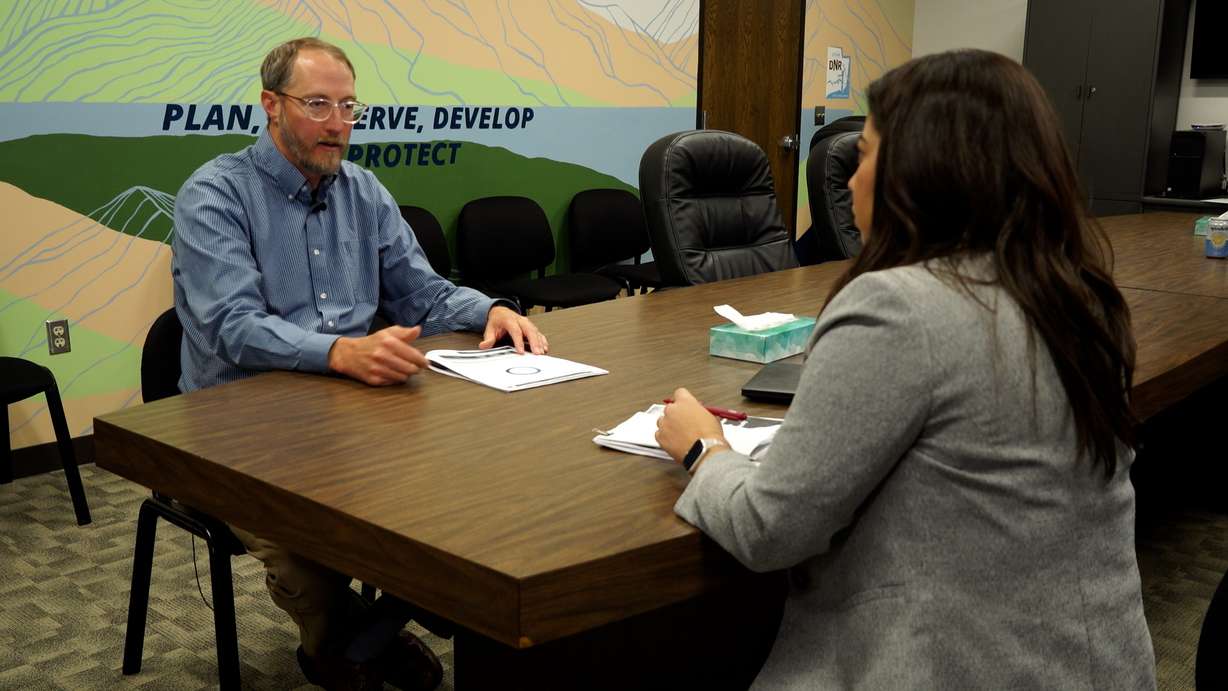
"They may have not gotten into trying to collect revenue from every water provider in the state," Williams said.
When asked how a funding gap could be calculated without knowing what is coming in, Williams responded, "Yeah, that's a great point," and said he would look into the question further.
The next day, Williams met with the KSL Investigators again and explained the study was designed to estimate future infrastructure costs and evaluate how those costs might be funded through mechanisms such as fees and rate increases.
"This study is looking forward at future anticipated expenses," Williams said. "We're going to assume anything that's in (a utility provider's) existing revenue is for existing expense."
That means the Utah Rivers Council was correct that the study did not consider current revenue when calculating future funding needs.
When asked whether Utahns should accept a claim of a funding gap without seeing the revenue side of the ledger, Williams said, "I think on a system-by-system level, that that system should be able to show what their gap is."
One example is the Central Utah Water Conservancy District. Its latest financial disclosure shows it generated nearly $270 million in revenue in 2025 and finished the year approximately $95 million ahead after expenses.
Because the state's study did not verify or analyze current revenue, it is unclear how much of that money may be available or earmarked for future projects.
Williams acknowledged that revenues were not verified and that the study relied on assumptions about the funds water suppliers already have.
"That assumption that any existing revenue is for existing expense," he confirmed.
Frankel said he tried to raise the issue before lawmakers during an opportunity for public comment on HB501 earlier this year.
"The figures we've been presented today about $1.2 billion a year don't include revenues," Frankel told a legislative committee in February.
Frankel said lawmakers should not rely on the study when considering policies that could increase water bills.
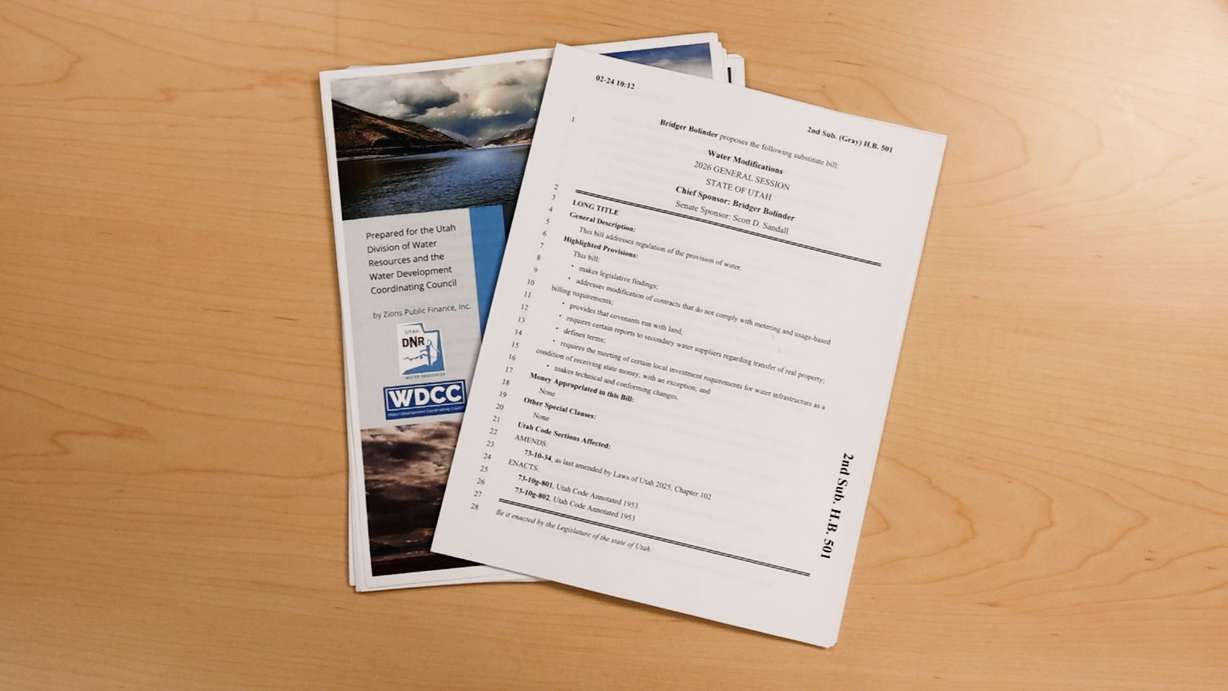
"We're trying to bring to the floor concerns about embellishment of financial information that's being used to impose a tax," Frankel said.
Williams said the proposal to spur water rate increases is an effort to encourage water suppliers to start setting aside money now, before Utah's aging water infrastructure becomes a crisis.
"It's being good stewards and saying, let's start trying to prepare for that rather than wait for everything to start failing," he said.
Frankel said Utahns deserve more transparency about cash already on hand before they're asked to pay more.
"The goal is to have transparency and accountability in Utah's water sphere because we don't have it today," he said.