'%3e%3cpath%20d='M34.1406%205.85938C30.3906%202.10547%2025.3047%200%2020%200C14.6953%200%209.60938%202.10547%205.85938%205.85938C2.10938%209.61328%200%2014.6953%200%2020C0%2025.3047%202.10547%2030.3906%205.85938%2034.1406C9.61328%2037.8906%2014.6953%2040%2020%2040C25.3047%2040%2030.3906%2037.8945%2034.1406%2034.1406C37.8906%2030.3906%2040%2025.3047%2040%2020C40%2014.6953%2037.8945%209.60938%2034.1406%205.85938ZM37.0117%2023.543H31.1602V13.5391H27.6328V19.9414C28.1211%2020.6914%2028.3711%2021.582%2028.3711%2022.5625V22.625C28.3711%2023.668%2028.1172%2024.6055%2027.6328%2025.4297V26.6094H36.082C33.4883%2032.9375%2027.2891%2037.3789%2020.0039%2037.3789C10.3711%2037.3789%202.62109%2029.6289%202.62109%2020C2.62109%2010.3711%2010.3711%202.62109%2020%202.62109C29.6289%202.62109%2037.3789%2010.3711%2037.3789%2020C37.3789%2021.1484%2037.2617%2022.2656%2037.0508%2023.3477C37.0391%2023.4141%2037.0234%2023.4766%2037.0117%2023.543Z'%20fill='white'/%3e%3cpath%20d='M22.3086%2018.5352C20.4336%2018.125%2019.9531%2017.8398%2019.9766%2017.1836V17.1406C19.9766%2016.6992%2020.3477%2016.2148%2021.4023%2016.2148C22.582%2016.2148%2023.8867%2016.6797%2025.0781%2017.4766L26.8516%2015.0195C25.4453%2013.8906%2023.707%2013.3398%2021.5547%2013.3398C18.5195%2013.3398%2016.4375%2015%2016.4063%2017.4766V17.5352C16.3633%2020.2617%2018.5859%2020.9805%2021.293%2021.6016C23.0391%2021.9766%2023.5703%2022.3164%2023.5703%2022.9609L23.5469%2022.9766C23.5469%2023.3906%2023.2578%2023.7031%2022.7852%2023.8359C22.5742%2023.9062%2022.1289%2023.9727%2021.5156%2023.9727C20.7617%2023.9727%2019.7539%2023.8633%2018.6328%2023.4844C18.0898%2023.2891%2017.4727%2023.0039%2016.8047%2022.6133L20.1406%2026.625C20.2813%2026.6602%2021.0977%2026.8516%2021.7734%2026.8516C25.0039%2026.8516%2027.0859%2025.2461%2027.1094%2022.6328V22.5703C27.1602%2020.1133%2025.2148%2019.1719%2022.3086%2018.5352Z'%20fill='white'/%3e%3cpath%20d='M5.24219%2013.5664V26.6133H8.75391V23.7578L10.2969%2021.9531L14.2031%2026.6133H18.3867L12.3555%2019.5195L17.4023%2013.5664H13.4531L8.75391%2019.0586V13.5664H5.24219Z'%20fill='white'/%3e%3c/g%3e%3cdefs%3e%3cclipPath%20id='clip0_97_2430'%3e%3crect%20width='40'%20height='40'%20fill='white'/%3e%3c/clipPath%3e%3c/defs%3e%3c/svg%3e)



- Salt Lake City is seeking to transfer 1,000 wetland acres, but it could be delayed.
- Public concerns focus on hunting and conservation easement terms for the wetland area near the airport.
- City officials consider slowing the process to address public and ecological concerns.
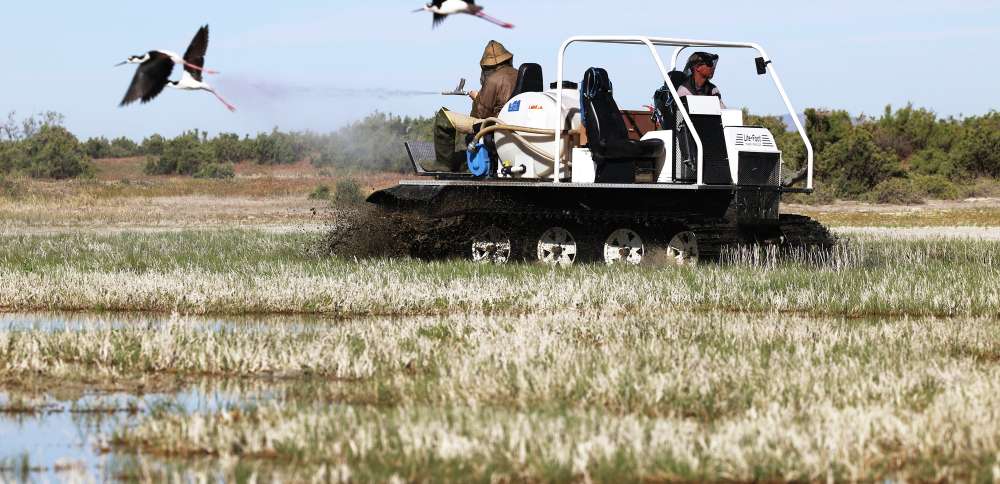
SALT LAKE CITY — Watching thousands of birds flying over the wetlands north of Salt Lake City International Airport is a sight that Justin Matkin has fond memories of.
He described it to the Salt Lake City Council on Tuesday as he discussed the importance of nearly 1,000 acres northwest of the airport that the city has owned for several decades.
"These ponds have become a critical rest area for the birds, especially during the fall migration when it's hunting season," the city resident said, before pleading to city leaders to postpone a proposal to transfer the land to the state.
He wasn't alone in that request, as more than a dozen people showed up to a public hearing on the matter to request a pause to allow for more ground rules about a proposed conservation easement tied to the land.
The city signaled its willingness to hold off over the concerns, as well.
"We want to preserve this property because … if we don't do this right, we're not doing ourselves a service and our kids and grandkids," said Salt Lake City Councilman Dan Dugan, after hearing the feedback.
Salt Lake City acquired the land in 1995 to make up what was lost when a new airport runway was constructed at the time. The city estimates that it spends approximately $70,000 to maintain the property, even though there is little access to it.
Related:
Why Salt Lake City is seeking to sell over 950 acres near its airport to the state
Utah's capital city is seeking to sell nearly 1,000 acres of land it owns near Salt Lake City International Airport as part of a plan to preserve the Great Salt Lake's wetlands.Discussions between the city and state began two years ago, as state natural resources leaders sought to improve protections for the Great Salt Lake's surrounding wetlands. The land was valued at between $3.8 million and $5.1 million ahead of a potential sale, which would be waived in favor of a conservation easement granted to Utah Open Lands to protect the land from future development.
Utah Division of Wildlife Resources biologists would be tasked with managing the parcel, said Chelsea Duke, wildlife lands coordinator for the agency. Initial work would include removing invasive phragmites, which are considered a key problem across the lake's ecosystem.
"The DWR's main goal in this acquisition is to protect, conserve and enhance the wetlands across the Great Salt Lake," she said, adding that land would be protected from development and closed off during crucial times of the year, like the nesting season.
Many of those who attended Tuesday's public hearing on the proposal weren't concerned about the transfer, but what types of activities could be permitted should the land fall into the state's hands.
Hunting was at the crux of that argument, along with other provisions that ensure the birds that rely on the land are protected.
Since public access has been limited for over three decades, the land has been an unofficial resting spot for shorebirds and waterfowl alike. However, that could change with the change in ownership.
Several people requested that the easement contain language prohibiting hunting on the land. Those calls came from members of the Great Salt Lake Audubon Society, but also from hunters, including leaders of the Harrison Duck Club, who contend that hunt-free zones are beneficial for the sport.
"I've spent enough time to see how these airport wetlands are as a rest area for waterfowl and other migratory birds," said Walker Newman, a local waterfowl hunter. "I believe these particular wetlands should remain hunt-free. These birds need somewhere they can rest without hunting pressure."
Some asked the city to make these terms public before approving any land sale. It's ultimately up to the Salt Lake City Mayor's Office to approve the sale, but the Salt Lake City Council has authority to grant the easement and approve the $0 sale price.
While an easement could be voted on later this month, city officials say they're in no rush to complete the transfer. The deal must include other complexities, including consent from the Federal Aviation Administration and the U.S. Army Corps of Engineers.
"We are currently taking in all of the concerns, continuing to work with Utah Open Lands and (Utah Division of Wildlife Resources) on the conservation easement terms and potential property transfer," said Andrew Wittenberg, a spokesman for the mayor's office, in a statement to KSL on Wednesday.
Multiple city councilors agreed that it might be good to slow-walk the measure in order to match the public concerns. Some of the proposed plans appear to be in "conflict with each other" while there's also a huge demand to preserve the Great Salt Lake's ecosystem, Dugan said, which factors into the concerns.
It's unclear how it will affect any of the process timelines.
"I look forward to more thoughtful conversations," he added.