'%3e%3cpath%20d='M34.1406%205.85938C30.3906%202.10547%2025.3047%200%2020%200C14.6953%200%209.60938%202.10547%205.85938%205.85938C2.10938%209.61328%200%2014.6953%200%2020C0%2025.3047%202.10547%2030.3906%205.85938%2034.1406C9.61328%2037.8906%2014.6953%2040%2020%2040C25.3047%2040%2030.3906%2037.8945%2034.1406%2034.1406C37.8906%2030.3906%2040%2025.3047%2040%2020C40%2014.6953%2037.8945%209.60938%2034.1406%205.85938ZM37.0117%2023.543H31.1602V13.5391H27.6328V19.9414C28.1211%2020.6914%2028.3711%2021.582%2028.3711%2022.5625V22.625C28.3711%2023.668%2028.1172%2024.6055%2027.6328%2025.4297V26.6094H36.082C33.4883%2032.9375%2027.2891%2037.3789%2020.0039%2037.3789C10.3711%2037.3789%202.62109%2029.6289%202.62109%2020C2.62109%2010.3711%2010.3711%202.62109%2020%202.62109C29.6289%202.62109%2037.3789%2010.3711%2037.3789%2020C37.3789%2021.1484%2037.2617%2022.2656%2037.0508%2023.3477C37.0391%2023.4141%2037.0234%2023.4766%2037.0117%2023.543Z'%20fill='white'/%3e%3cpath%20d='M22.3086%2018.5352C20.4336%2018.125%2019.9531%2017.8398%2019.9766%2017.1836V17.1406C19.9766%2016.6992%2020.3477%2016.2148%2021.4023%2016.2148C22.582%2016.2148%2023.8867%2016.6797%2025.0781%2017.4766L26.8516%2015.0195C25.4453%2013.8906%2023.707%2013.3398%2021.5547%2013.3398C18.5195%2013.3398%2016.4375%2015%2016.4063%2017.4766V17.5352C16.3633%2020.2617%2018.5859%2020.9805%2021.293%2021.6016C23.0391%2021.9766%2023.5703%2022.3164%2023.5703%2022.9609L23.5469%2022.9766C23.5469%2023.3906%2023.2578%2023.7031%2022.7852%2023.8359C22.5742%2023.9062%2022.1289%2023.9727%2021.5156%2023.9727C20.7617%2023.9727%2019.7539%2023.8633%2018.6328%2023.4844C18.0898%2023.2891%2017.4727%2023.0039%2016.8047%2022.6133L20.1406%2026.625C20.2813%2026.6602%2021.0977%2026.8516%2021.7734%2026.8516C25.0039%2026.8516%2027.0859%2025.2461%2027.1094%2022.6328V22.5703C27.1602%2020.1133%2025.2148%2019.1719%2022.3086%2018.5352Z'%20fill='white'/%3e%3cpath%20d='M5.24219%2013.5664V26.6133H8.75391V23.7578L10.2969%2021.9531L14.2031%2026.6133H18.3867L12.3555%2019.5195L17.4023%2013.5664H13.4531L8.75391%2019.0586V13.5664H5.24219Z'%20fill='white'/%3e%3c/g%3e%3cdefs%3e%3cclipPath%20id='clip0_97_2430'%3e%3crect%20width='40'%20height='40'%20fill='white'/%3e%3c/clipPath%3e%3c/defs%3e%3c/svg%3e)



Estimated read time: 2-3 minutes
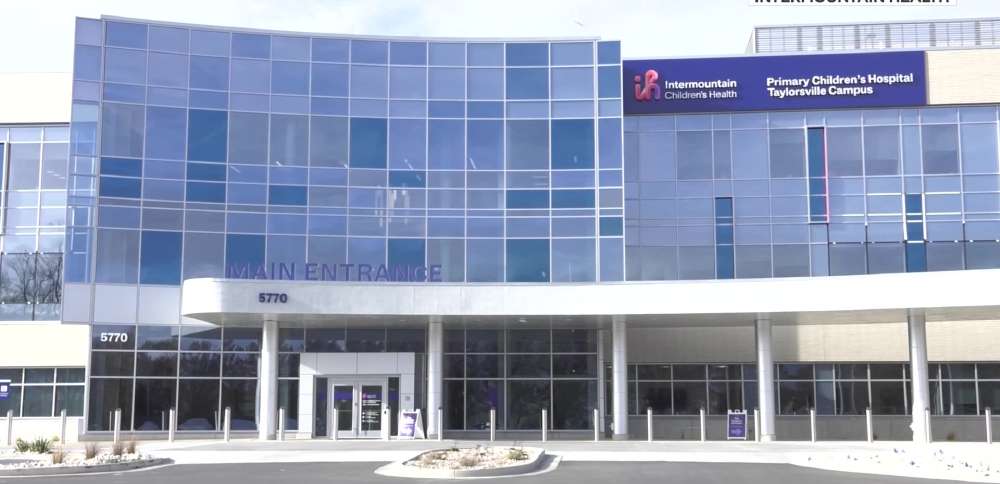
- Intermountain Primary Children's Behavioral Health Center in Taylorsville marks one year.
- It served nearly 10,000 children offering various mental health services.
- The center includes a 24/7 crisis center, aiding 1,100 children so far.
TAYLORSVILLE — When Megan Alsop's son Roman started sixth grade, school became a daily struggle.
"He was calling me multiple times a day," she said.
Their pediatrician suggested the Partial Hospitalization Program at Intermountain Primary Children's Behavioral Health Center in Taylorsville.
"Like any parent, that's the last thing I want to hear," Alsop said.
Roman spent about eight to ten weeks in the program, attending school on the Taylorsville campus while also receiving individual and group therapy and other support. Alsop said having a multidisciplinary team work with her son helped identify the areas where he needed the most help.
"I'm not going to lie, I cried when he got discharged because it made such a positive impact on his life," she said.
A year later, Roman is 12, in seventh grade and attending a typical junior high.
His story is one of thousands since the Taylorsville behavioral health campus opened one year ago.
"We've served nearly 10,000 unique kids and their families in our first year of opening," hospital president Amanda Choudhary said. "We know there's so much need in our community for youth mental health services."
"Kids are so resilient," she added. "If we can just provide a little bit of support and a little bit of care while they're young, the future is bright."
The campus offers several levels of behavioral health care under one roof, including outpatient therapy, daytime and after-school programs, partial hospitalization and inpatient care.
It also includes a walk-in crisis center that is open 24 hours a day, seven days a week, with no appointment required.
Heather Shotwell, assistant service director and director for crisis services, said the walk-in crisis center has served approximately 1,100 children and adolescents during its first year.
"Prior to this crisis center opening, what would those kids have done? They would have gone to the emergency department. They might have called law enforcement," Shotwell said.
When families walk into the crisis center, they can meet with nurses, behavioral health clinicians and psychiatric providers. The team can assess the child, discuss coping strategies, create a safety plan and help determine the appropriate next step.
Shotwell said parents do not have to wait until a situation becomes an emergency to reach out.
"If you have concerns about your child, call us. Walk in the door. We are happy to see you," she said. "We want this to be an experience where you feel hopeful, and you feel healing."
Families can also call 988 and request help from Primary Children's Stabilization and Mobile Response team, which can respond to families in their homes.
For Alsop, getting to this point wasn't easy. She hopes her family's experience can help others.
"I was incredibly nervous. I didn't know what to expect. People don't talk about it," she said. "I hope that other parents know that it's OK to ask for help."