Estimated read time: 6-7 minutes
- The Sunshine Protection Act passed in the House of Representatives, seeking to make daylight saving time permanent.
- The U.S. last tried year-round daylight saving time in 1974, causing significant public backlash in Utah and elsewhere.
- Congress later reverted to standard time before the year ended.
SALT LAKE CITY — A bill that would make daylight saving time permanent cleared the House of Representatives with overwhelming support this week, potentially ending the cycling of Americans having to change their clocks twice a year.
The Sunshine Protection Act received bipartisan support with a 308-117 vote, including the support of three of Utah's four representatives.
Supporters, Reuters explained, have argued that changing the clocks disrupts sleep, increases workplace injuries and contributes to other challenges. Keeping clocks on daylight saving time would provide more evening daylight and boost economic activity during the winter months.
The law still needs Senate approval before heading to President Donald Trump's desk.
As that plays out, the argument has reminded some of the last time the U.S. went to year-round daylight saving time.
Daylight saving time was first used in the U.S. over a century ago as a way to conserve energy in the summer months. However, it's been used year-round a handful of times, usually during war. In late 1973, in the middle of an oil crisis, President Richard Nixon signed the Emergency Daylight Saving Time Energy Conservation Act of 1973, seeking to solve an oil shortage at the time.
The bill called for two years of year-round daylight saving time and other measures to save oil. It was widely supported at the time, with nearly 80% approval in December 1973 in one poll, according to Newsweek. That support quickly faded, however, when the clocks jumped ahead on Jan. 6, 1974.
Utah's newspapers captured the downfall as it unfolded.
Utah's time dilemma
Time wasn't the only change. Speed limits were lowered to 55 mph on all state roads at the same time for the same reason, as Utah was among the first states to adopt a federal limit.
"Utahns Sunday will turn their clocks ahead and their speedometers back. … Utahns must remember to turn the clocks AHEAD one hour when they go to bed Saturday night. Otherwise they'll be an hour late for everything Sunday," the Deseret News reported on the day before the change.
Utah reportedly considered delaying school an hour to account for the super dark mornings, but they decided that doing so created "too many problems," the outlet added.
Then, the switch happened — and it went poorly. Salt Lake City's sunrise came at 8:52 a.m. on Jan. 6, 1974, and that proved to be a crucial detail in how many Utahns and Americans reacted to the change.
Americans either didn't know or forgot the change was happening, and some had safety concerns about starting the day out in the dark, the Associated Press wrote in wire stories picked up in Utah. In rural parts of the country, people were worried about more conflicts with wildlife. Airlines had to reprint schedules after trying to work around areas exempted from the change, like Boise, Idaho.
Children returned to school the following day, taking flashlights with them to walk to school. Parents apparently continued to squabble over whether or not to delay schools, but that raised concerns about people then delaying when work started for some parents.
"You would think the safety and welfare of the children would take precedent over the convenience of working parents," one frustrated mother of two children in the Granite School District told the Tribune.
These types of conversations played out in school districts across the state, per other newspaper archives. There were reports of a few injuries and many more near collisions, prompting police to enhance enforcement of crosswalks in some areas. Schools in Spanish Fork were also kept at 68 degrees to comply with energy guidelines, the city's local paper noted.
Some questioned whether it was even saving energy if schools had their lights on and more people were driving their children to school. Experts tried to clear the air on how the adjustment helped, noting that the shift aimed to reduce the stress on the energy grid during its afternoon peak.
That didn't seem to quell the anger, frustration and confusion in Utah. In letters to newspaper editors, some Utah residents blamed the federal government for the issue or questioned if the oil shortage was even real.
"Benjamin Franklin, with all else you invented, why did you invent daylight saving time?" one Ogden resident lamented in the Deseret News.
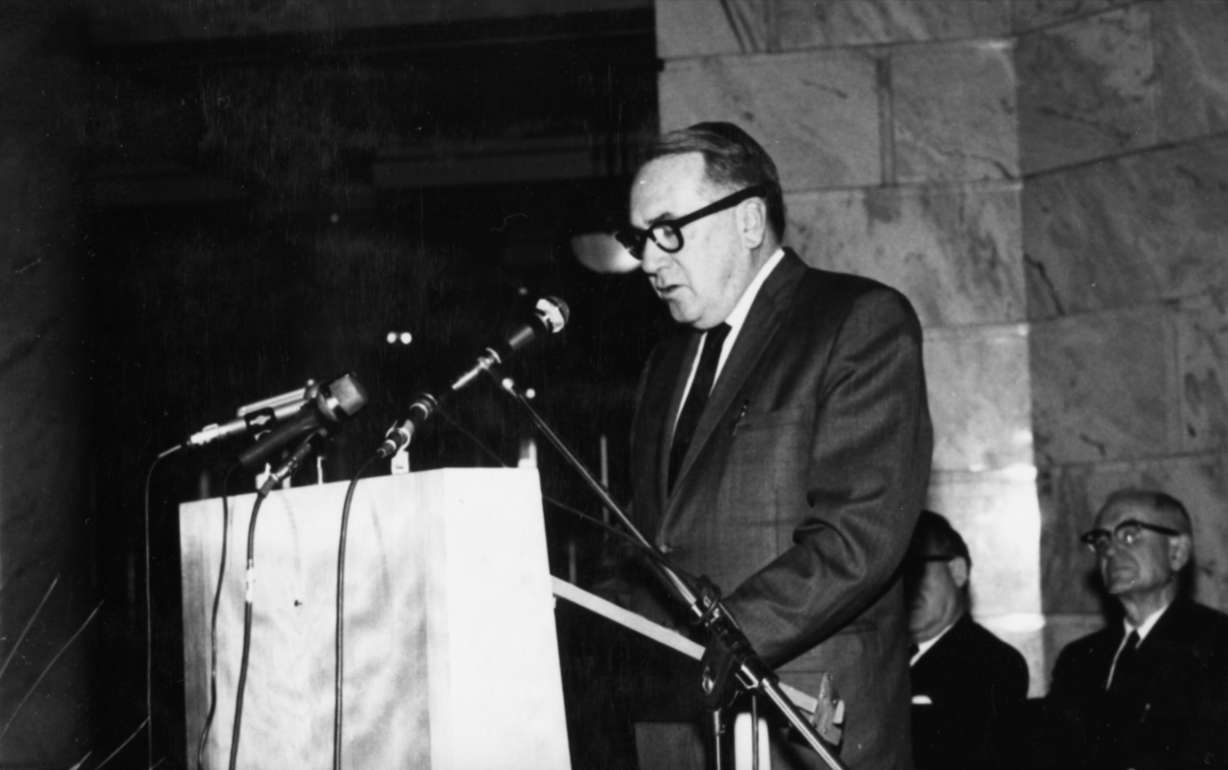
The first week wasn't even over when then-Gov. Calvin Rampton requested the attorney general to explore ways to get Utah on the list of states exempt from daylight saving time, the Ogden Standard-Examiner reported.
"Rampton said conditions do not warrant his applying to the president for exemption, but he said many people have been inconvenienced by the nationwide move to conserve energy," it wrote.
Utah lawmakers nearly unanimously passed a resolution criticizing the federal bill that year, calling it a "threat to the safety of children required to travel to school in the pre-dawn hours" while also not solving fuel shortage concerns. It initially called for year-round standard time, but that was ultimately killed in the Senate, newspapers reported at the time.
The final version called on the federal government to take "immediate action to afford relief" by allowing Utah to jump off daylight saving time from the first Sunday in October to the last Sunday in March.
Ending the experiment
The public outrage eventually tapered off, likely because Utah and other states eventually reached the time of the year when it normally jumped ahead an hour. Nixon's resignation amid the Watergate scandal that garnered headlines at the same time also consumed attention.
But the damage was done. Utah Sen. Wallace Bennett and other members of Utah's congressional delegation were some of the early supporters of killing the year-round experiment, as legislation emerged that winter.
Congress ultimately compromised, letting states go back to standard time on Oct. 27, 1974, in exchange for going back to daylight saving time in February 1975, slightly earlier than usual. After that, the usual spring and fall clock dance that Americans are used to today resumed.
As the Salt Lake Tribune put it on the day before standard time resumed: "As so often happens, the solving of one problem just creates another."
Perhaps that's the moral of the story, as the debate plays out in the Senate again over 50 years later. There's a separate bill floating around Congress seeking to keep all clocks on year-round standard time.
Only time will tell if either effort succeeds, and if a permanent switch to one time format can go over more smoothly.