

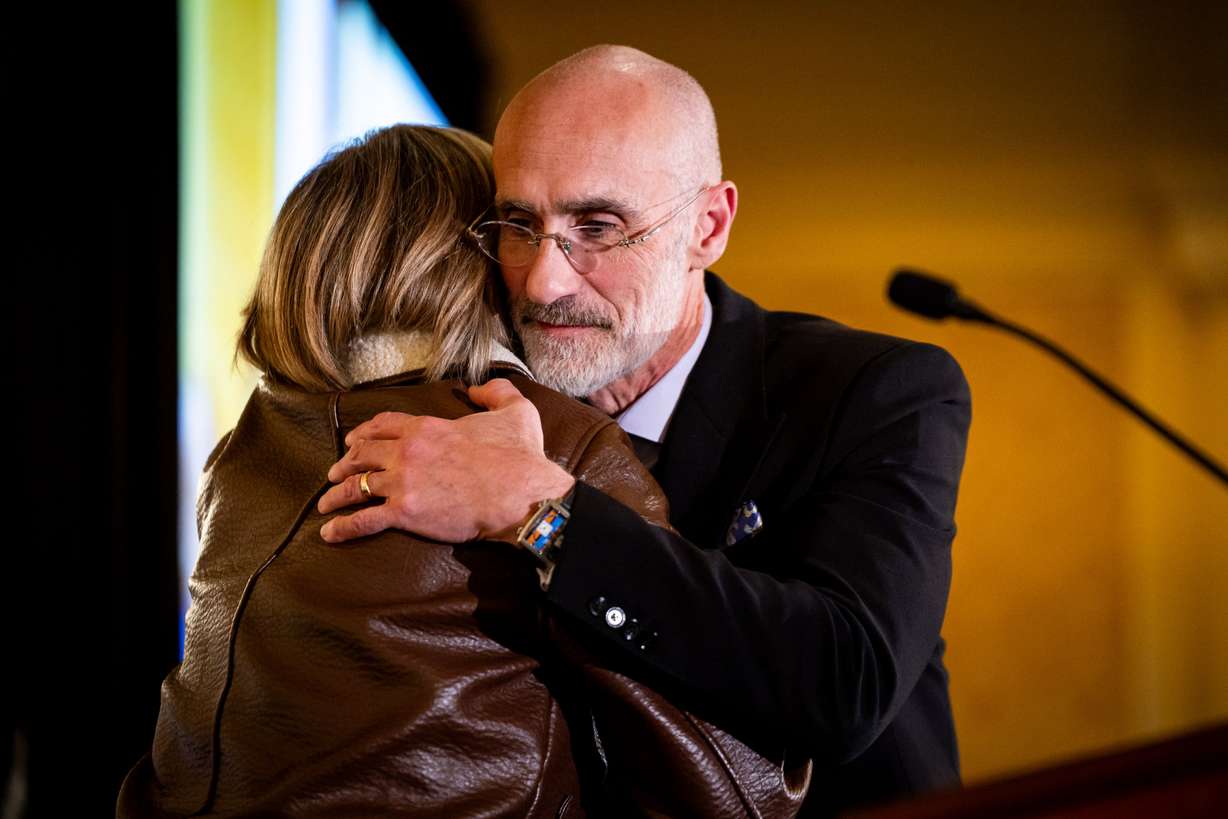
- At a the 2026 Sutherland Institute Awards Dinner this week, author Arthur Brooks emphasized happiness as a balance of enjoyment, satisfaction and meaning.
- He warned tech distractions hinder true happiness and suggested phone-free family meals.
- Brooks posed two questions on life's meaning and noted tech's impact on students' answers.
SALT LAKE CITY — Feeling happy?
That's not, by definition, possible, asserts Arthur Brooks — the nation's go-to guy on those enigmatic emotional states called "happiness" and "meaning."
Feelings are fleeting. They come. They go. So if happiness isn't a feeling, then what is it?
"Happiness is a combination of enjoyment, satisfaction, and meaning," answered Brooks at Thursday's Sutherland Institute Awards Dinner.
"Those are the macronutrients of the happiest life. The protein, carbohydrates, and fat of living a happy life. You need these things in balance and abundance to live well."
Meanwhile, he warned, phones and other tech distractions in the pursuit of temporary pleasure often obstruct true happiness.
A bestselling author, columnist and Harvard business professor, Brooks was awarded the institute's George A. Sutherland Award.
The Sutherland Institute — a Utah conservative think tank anchored to faith, family and freedom — also presented its Family Values Award to former Utah Gov. Mike Leavitt and his wife, former first lady Jacalyn Leavitt.

Brooks is no stranger to the Beehive State. He first visited Utah in 2007 to speak at Brigham Young University on the importance of charitable giving. Utah's become something of a second home since then.
Now a University of Utah Impact Scholar, Brooks delivered the keynote address at the school's 2026 commencement exercises. And last year the Deseret News honored Brooks with its inaugural Civic Charity Award for championing efforts to lift societies by promoting civil dialogue and identifying pathways to personal well-being and happiness.
"Utah is a wonderful place," Brooks said in his remarks Thursday after receiving the award. "My belief is that if America were more like Utah, we'd have a lot fewer problems. We'd have a lot more happiness."
2 'happiness-defining' questions
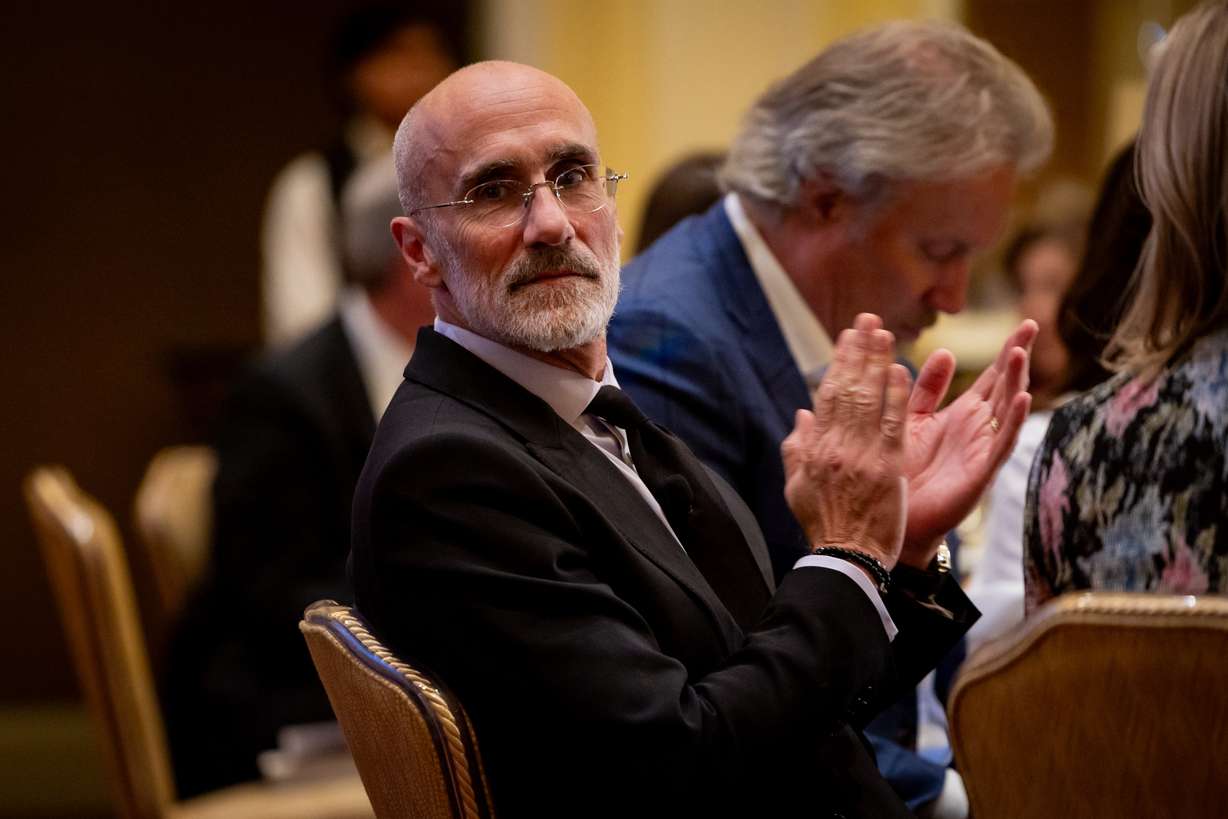
Supporting faith and freedom makes Utah better, declared Brooks, who was introduced Thursday by Kem C. Gardner Policy Institute Director Natalie Gochnour.
"This is the example that we need," he said. "This is a laboratory of the greatest ideas that this country can possibly have. Your support for the Sutherland Institute is a patriotic act that supports all of us in these values around the United States."
For the past three decades, Brooks has given his students a two-question "happiness-and-meaning" exam:
- "Why are you alive?"
- "For what would I give my life?"
"The answer to 'Why are you alive?' is what is your mission and who is your maker. That's something we all have to grapple with in different ways over the course of our life," he said.
But for many students, answering the second question's a bit tougher. Sacrificing one's life for, say, one's children or grandchildren are obvious answers. But what else?
"Considering the question opens your mind and your heart to the meaning of your life," said Brooks. "Just the consideration of that: Would you give your life for your country, for your values, for your faith? Would you be a martyr?

"Answering that question … is a gift actually."
For many years, Brooks' students typically had answers to those two questions. They passed the exam. But then things changed. Failure rates began creeping up.
"Today, 50% of my students can't answer those questions," he said. "Something happened after 2008. Some force seemed to enter our lives — some colorless, odorless gas that made it harder for us to consider our relationships, understand our relationships with God.
"What is it? Well, you know what it is. It's in your pocket right now."
Today's technology — primarily ubiquitous smartphones — has been both a blessing and a curse, said Brooks. Tech has become a quick remedy for boredom, particularly for young people.
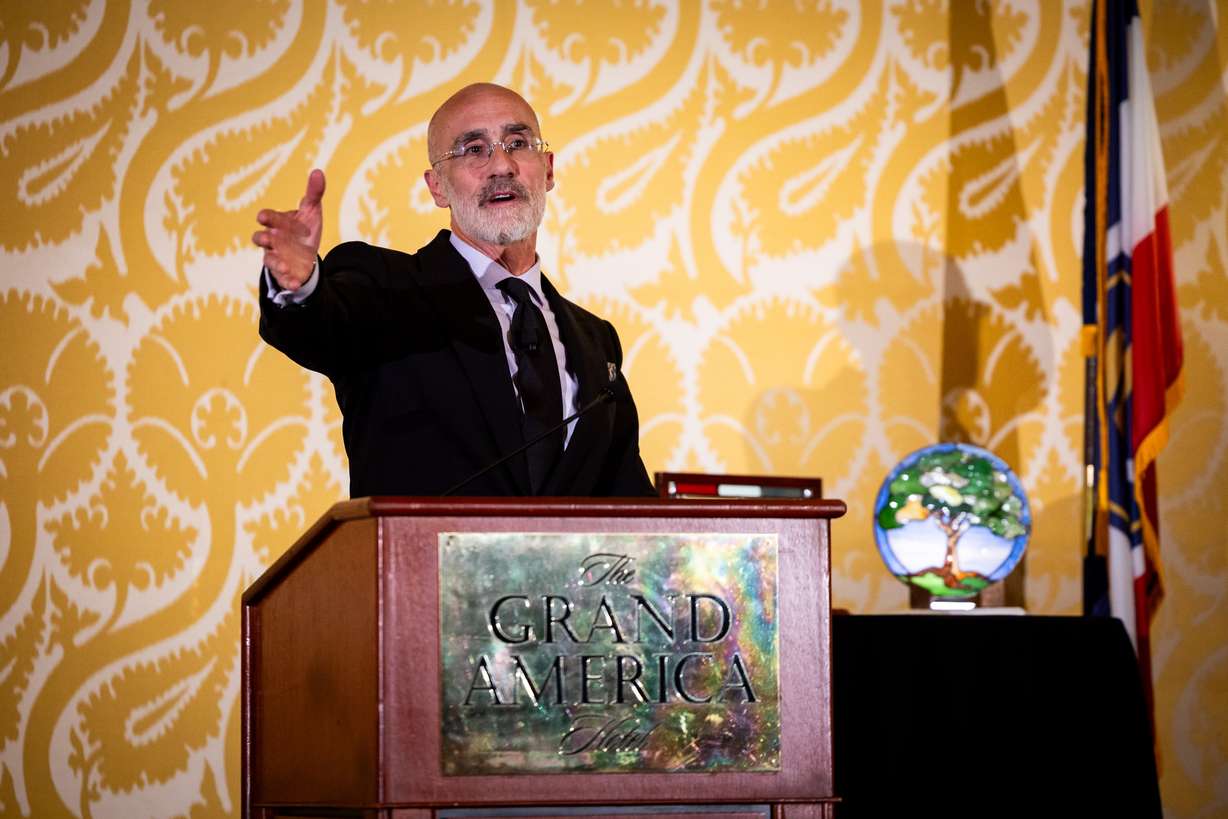
"My students have eradicated every moment of boredom from their lives — and their lives are boring," marveled Brooks.
"They don't remember a single thing that they looked at on the YouTube algorithm or the reels that they scrolled on TikTok or Instagram. It's just keeping them in a state of distraction."
The irony: "The less bored you are, moment to moment, the more boring your life gets. But that's kind of how things work when we go against nature."
Brooks then set forth solutions to today's tech-driven challenges to happiness: faith, family and freedom.
Step away from the phone during meals — and 'magic time'
Brooks knows that cellphones are here to stay. But there are things that can counter their perpetual pull.
Start by protecting each day's "magic time," he said. Find freedom by setting aside phones for the first and final hours of the day. Then make family meals "phone-free."
"Your brain, when you eat and make eye contact with your family and your loved ones, creates oxytocin," he said. "It's a neuropeptide that is also known in my business as the 'love molecule.'
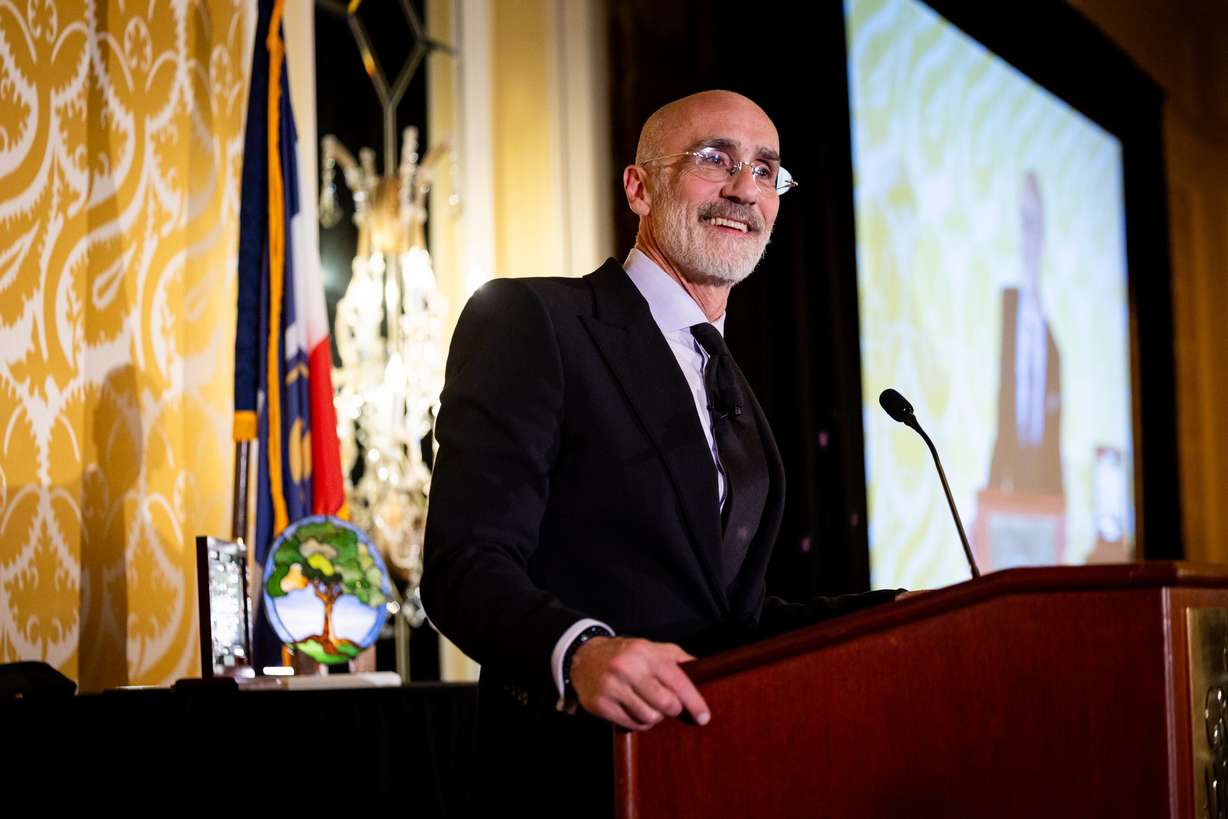
"You want to know how to turn that off? The phone."
Getting kids to step away from their phones during family meals is a tough ask.
"But the No. 1 predictor of your kids looking at their phones at the table is you having your phone at the table," he said. "Even if sitting facedown on the table, you look at it. It will cut off the oxytocin that you actually need."
Family and faith, he emphasized, remain integral to meaning and happiness.
"My life is all about what I do when I'm on my knees in the presence of the Lord," said Brooks. "That's the most important thing in my life."
The professor challenges his students to rediscover or find their own faith. Doing so will not only allow them to find the meaning of their life. Instead, "the meaning of their life will find them."
Brooks concluded by saying it's easy to rail against what's going on in America.
"But the ultimate truth and the ultimate goodness that we can actually bring is to live our lives with the answers to those (two) questions — and to be unapologetic and open about it so that everybody sees it, and they want it, too."
Mike Leavitt: In today's AI world, utilize EI, CI and SI

Latter-day Saint Apostle Elder Gérald Caussé introduced Mike Leavitt prior to the former governor's Thursday remarks, saluting the Leavitts for their "total integrity, their humility, their selfless love and their commitment to the Lord and to serving others."
Elder Caussé also lauded the Leavitts' ongoing leadership of the Tabernacle Choir at Temple Square.
At a moment increasingly defined by AI, said Leavitt, it's essential that Americans draw upon their historical legacy of EI (emotional intelligence), CI (collaborative intelligence) and SI (spiritual intelligence).
"There is nothing artificial about that type of intelligence," he said. "And if we're going to be talking about what the building blocks are for the next 250 years we need to start there, because those are the cornerstone.

"They are the cornerstones of American exceptionalism on which we have based our success over the last 250 years."
The nation's founders were navigated by selfless collaboration and measured emotion, said Leavitt. And spiritual intelligence "is just the humility to seek guidance beyond us."
A strong military, tech dominance and economic strength will be key markers over the next 250 years. "But EI, SI and CI are what it takes to make a nation," he added.
Leavitt reminded his audience Thursday that the Declaration of Independence ends with a promise: "We mutually pledge to each other our Lives, our Fortunes and our sacred Honor."
That same promise, said Leavitt, "must be pledged over and over again."
Thursday's event was moderated by Sutherland Institute President and CEO Todd Weiler and also included a musical number by Utah Attorney General Derek Brown and his wife, Emilie.