'%3e%3cpath%20d='M34.1406%205.85938C30.3906%202.10547%2025.3047%200%2020%200C14.6953%200%209.60938%202.10547%205.85938%205.85938C2.10938%209.61328%200%2014.6953%200%2020C0%2025.3047%202.10547%2030.3906%205.85938%2034.1406C9.61328%2037.8906%2014.6953%2040%2020%2040C25.3047%2040%2030.3906%2037.8945%2034.1406%2034.1406C37.8906%2030.3906%2040%2025.3047%2040%2020C40%2014.6953%2037.8945%209.60938%2034.1406%205.85938ZM37.0117%2023.543H31.1602V13.5391H27.6328V19.9414C28.1211%2020.6914%2028.3711%2021.582%2028.3711%2022.5625V22.625C28.3711%2023.668%2028.1172%2024.6055%2027.6328%2025.4297V26.6094H36.082C33.4883%2032.9375%2027.2891%2037.3789%2020.0039%2037.3789C10.3711%2037.3789%202.62109%2029.6289%202.62109%2020C2.62109%2010.3711%2010.3711%202.62109%2020%202.62109C29.6289%202.62109%2037.3789%2010.3711%2037.3789%2020C37.3789%2021.1484%2037.2617%2022.2656%2037.0508%2023.3477C37.0391%2023.4141%2037.0234%2023.4766%2037.0117%2023.543Z'%20fill='white'/%3e%3cpath%20d='M22.3086%2018.5352C20.4336%2018.125%2019.9531%2017.8398%2019.9766%2017.1836V17.1406C19.9766%2016.6992%2020.3477%2016.2148%2021.4023%2016.2148C22.582%2016.2148%2023.8867%2016.6797%2025.0781%2017.4766L26.8516%2015.0195C25.4453%2013.8906%2023.707%2013.3398%2021.5547%2013.3398C18.5195%2013.3398%2016.4375%2015%2016.4063%2017.4766V17.5352C16.3633%2020.2617%2018.5859%2020.9805%2021.293%2021.6016C23.0391%2021.9766%2023.5703%2022.3164%2023.5703%2022.9609L23.5469%2022.9766C23.5469%2023.3906%2023.2578%2023.7031%2022.7852%2023.8359C22.5742%2023.9062%2022.1289%2023.9727%2021.5156%2023.9727C20.7617%2023.9727%2019.7539%2023.8633%2018.6328%2023.4844C18.0898%2023.2891%2017.4727%2023.0039%2016.8047%2022.6133L20.1406%2026.625C20.2813%2026.6602%2021.0977%2026.8516%2021.7734%2026.8516C25.0039%2026.8516%2027.0859%2025.2461%2027.1094%2022.6328V22.5703C27.1602%2020.1133%2025.2148%2019.1719%2022.3086%2018.5352Z'%20fill='white'/%3e%3cpath%20d='M5.24219%2013.5664V26.6133H8.75391V23.7578L10.2969%2021.9531L14.2031%2026.6133H18.3867L12.3555%2019.5195L17.4023%2013.5664H13.4531L8.75391%2019.0586V13.5664H5.24219Z'%20fill='white'/%3e%3c/g%3e%3cdefs%3e%3cclipPath%20id='clip0_97_2430'%3e%3crect%20width='40'%20height='40'%20fill='white'/%3e%3c/clipPath%3e%3c/defs%3e%3c/svg%3e)


- Students in Utah face housing scams during summer lease transfers.
- Detective Sgt. Nick Patterson, of Provo, police reports an increase in online housing scams.
- Victims include Bradley Kakazu and Isaac Wright, who encountered suspicious buyers.
SALT LAKE CITY — Summertime in a college town brings an annual game of musical chairs with housing contracts.
Many students leave for a summer internship; others leave for much-needed time with family. Some stay in the area but change apartments with new friends or their newlywed spouse.
No matter their reason, these students all have one thing in common: They must sell their existing lease quickly or be forced to pay double rent on an already tight college budget. This desperation makes them easy prey for online scammers.
For students like Bradley Kakazu, Isaac Wright and Giulia Tesoriere, being wary of scammers can be challenging.
"We have been seeing a lot of these scams lately," said Provo Police Sgt. Nick Patterson, a detective.
Online housing swindles are on the rise, and as some students in Utah are learning, falling prey to the scams can be devastating.
The link between fraud and Facebook groups
Brigham Young University student Bradley Kakazu posted his Provo lease on Facebook, hoping to sell it before his wedding this summer.
Not long after, a potential buyer reached out to him, extremely eager to complete the transfer.
"They wanted to buy my contract more than I wanted to sell it," Kakazu told the Deseret News. "He was rushing me, but since I was so eager to sell it, it kind of blew by me."
On a phone call later that day, the buyer asked for money to cover a new tenant transfer fee, and said they would take over the lease as soon as the funds were received.
While Kakazu was talking with the buyer on speakerphone, his friend, Noah Wutkee, walked next to him and said, "Hey, I recognize that voice."
Kakazu put himself on mute.
Wutkee told Kakazu the man on the phone was a scammer. "He said the exact same story to me. It's the same exact phone number and the same exact voice," Wutkee said.
Wutkee explained that the scammers had called, requested an Apple Pay transaction to cover transfer fees, then blocked him after the money was sent.
Kakazu unmuted himself and told the scammer he wouldn't sell the contract unless the buyer paid him first.
"I was trying to have him send money first to see, and obviously he wasn't willing to do so," Kakazu said. "That's when he kind of backpedaled and then put his tail between his legs like a dog and scurried off."
After this encounter, Kakazu noticed things that should have caught his eye earlier.
"I looked at the profile once he blocked me, and I could tell that it was a scammer because the image was blurry, he had like 7,000 friends, and it was just fishy," he said. But Kakazu's need to sell his lease masked his ability to spot these signs sooner.
"I think I was just so eager to sell it because it's just draining my pockets," he said. "Because I was so desperate to sell, I kind of just ignored all the red flags."
Kakazu has noticed an uptick in scam activity as the summer begins.
"They're pretty active in spring ... because that's when most people try and sell their contracts," he said.
Fortunately, Kakazu realized the scam before he lost anything. Some aren't so lucky.
Red flags can quickly become repercussions
Isaac Wright, a student at BYU, also posted a listing for his apartment lease on Facebook, hoping someone would take his contract for the summer. Not long after, someone reached out saying she was looking for an apartment for her brother and asked for Wright's phone number so they could continue the conversation.
Looking back, he realized that was the first red flag. "Now I know I should probably keep it on Facebook and not just give out my number," Wright told the Deseret News.
As Wright continued the conversation, this time with the alleged brother, other suspicious signs followed, such as an unexplained sense of urgency.
"He was kind of trying to rush it," Wright said. "He said he needed to sign housing by that night or the next night to be able to keep a scholarship."
Wright, eager to sell his contract, continued. When the buyer requested that Wright send him money to cover the application and transfer fee, around $100 in total, Wright agreed.
Once the money was sent, Wright never heard from the buyer again.
As he looked a little deeper, Wright noticed red flags he wished he would have caught sooner.
The Facebook account that had contacted him had posted in several online groups allegedly searching for a lease — one of which was in Florida.
Wright shared his experience online, warning others not to make his same mistakes. He quickly found many had the same regrets.
"Some of them texted me about reporting it to the Provo police and submitting this online report. So far, I don't think anything has happened with those online reports," Wright said. "The other people said that they haven't heard anything since too."
This isn't the only time Wright has encountered scammers through buy-and-sell Facebook groups, and the persistent of these swindles has him on edge.
"It's scary when the scammers come on; it gets you nervous," he said.
Online scammers aren't a one-and-done ordeal
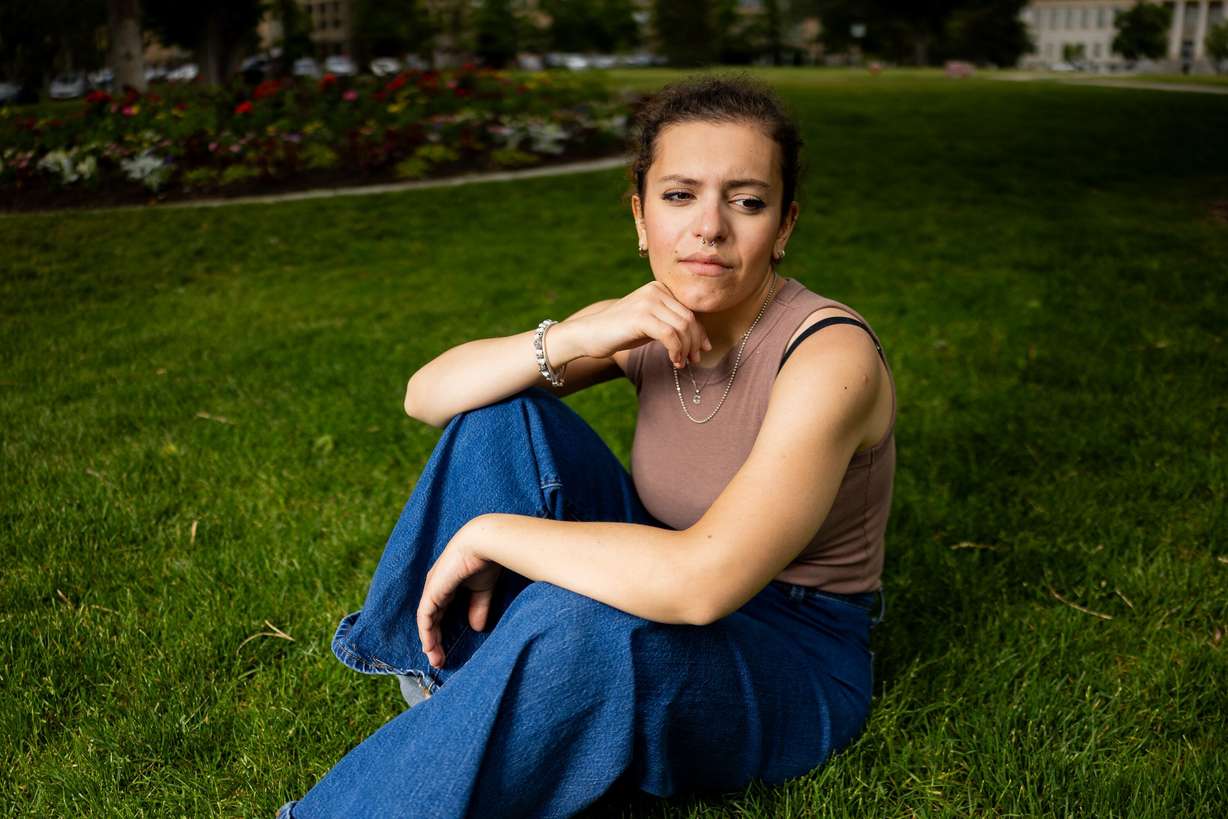
Giulia Tesoriere has run into scammers, not once, not twice, but three times as she's tried to navigate University of Utah housing.
Tesoriere moved to Salt Lake City a year ago and has used Facebook to buy and sell multiple contracts. As she's crossed paths with scammers, she's noticed a few consistent themes.
"I have to say, these scammers follow a very specific pattern. At first, everything seems completely legitimate. They say they're interested in the room and start asking questions, just like anyone else would," Tesoriere said.
After that, however, things tend to get suspicious.