'%3e%3cpath%20d='M34.1406%205.85938C30.3906%202.10547%2025.3047%200%2020%200C14.6953%200%209.60938%202.10547%205.85938%205.85938C2.10938%209.61328%200%2014.6953%200%2020C0%2025.3047%202.10547%2030.3906%205.85938%2034.1406C9.61328%2037.8906%2014.6953%2040%2020%2040C25.3047%2040%2030.3906%2037.8945%2034.1406%2034.1406C37.8906%2030.3906%2040%2025.3047%2040%2020C40%2014.6953%2037.8945%209.60938%2034.1406%205.85938ZM37.0117%2023.543H31.1602V13.5391H27.6328V19.9414C28.1211%2020.6914%2028.3711%2021.582%2028.3711%2022.5625V22.625C28.3711%2023.668%2028.1172%2024.6055%2027.6328%2025.4297V26.6094H36.082C33.4883%2032.9375%2027.2891%2037.3789%2020.0039%2037.3789C10.3711%2037.3789%202.62109%2029.6289%202.62109%2020C2.62109%2010.3711%2010.3711%202.62109%2020%202.62109C29.6289%202.62109%2037.3789%2010.3711%2037.3789%2020C37.3789%2021.1484%2037.2617%2022.2656%2037.0508%2023.3477C37.0391%2023.4141%2037.0234%2023.4766%2037.0117%2023.543Z'%20fill='white'/%3e%3cpath%20d='M22.3086%2018.5352C20.4336%2018.125%2019.9531%2017.8398%2019.9766%2017.1836V17.1406C19.9766%2016.6992%2020.3477%2016.2148%2021.4023%2016.2148C22.582%2016.2148%2023.8867%2016.6797%2025.0781%2017.4766L26.8516%2015.0195C25.4453%2013.8906%2023.707%2013.3398%2021.5547%2013.3398C18.5195%2013.3398%2016.4375%2015%2016.4063%2017.4766V17.5352C16.3633%2020.2617%2018.5859%2020.9805%2021.293%2021.6016C23.0391%2021.9766%2023.5703%2022.3164%2023.5703%2022.9609L23.5469%2022.9766C23.5469%2023.3906%2023.2578%2023.7031%2022.7852%2023.8359C22.5742%2023.9062%2022.1289%2023.9727%2021.5156%2023.9727C20.7617%2023.9727%2019.7539%2023.8633%2018.6328%2023.4844C18.0898%2023.2891%2017.4727%2023.0039%2016.8047%2022.6133L20.1406%2026.625C20.2813%2026.6602%2021.0977%2026.8516%2021.7734%2026.8516C25.0039%2026.8516%2027.0859%2025.2461%2027.1094%2022.6328V22.5703C27.1602%2020.1133%2025.2148%2019.1719%2022.3086%2018.5352Z'%20fill='white'/%3e%3cpath%20d='M5.24219%2013.5664V26.6133H8.75391V23.7578L10.2969%2021.9531L14.2031%2026.6133H18.3867L12.3555%2019.5195L17.4023%2013.5664H13.4531L8.75391%2019.0586V13.5664H5.24219Z'%20fill='white'/%3e%3c/g%3e%3cdefs%3e%3cclipPath%20id='clip0_97_2430'%3e%3crect%20width='40'%20height='40'%20fill='white'/%3e%3c/clipPath%3e%3c/defs%3e%3c/svg%3e)


- WalletHub's survey reveals 83% of respondents find education costs overwhelming.
- Nearly 60% cite education expenses as their biggest financial hurdle currently.
- Utah leads in financial literacy education, requiring personal finance courses for graduation.
SOUTH JORDAN — Utter these three words and stop summer-loving Utah kids in their flip-flop-wearing tracks: Back. To. School.
Perhaps a few parents also shuddered a bit.
For many Utah families, "back to school" means back to organizing carpools and after-school schedules and back for another school year of homework and extracurricular activities.
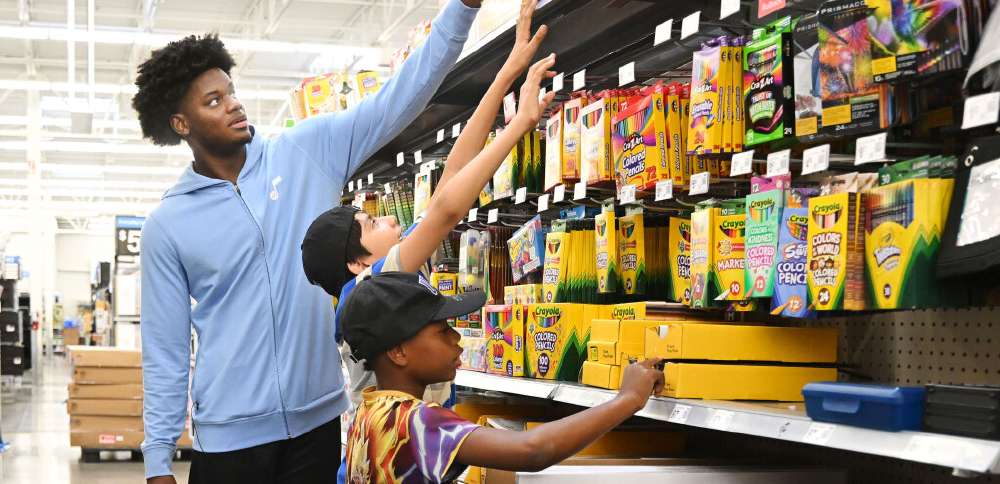
And then there's the annual back-to-school shopping to load up on class supplies and maybe a few new pairs of sneakers.
So what's weighing heavy on the minds and wallets of families as they prepare for the fast-approaching opening school bell of a new school year?
The personal finance platform WalletHub released Tuesday the results of its national "Back-to-School" shopping survey — measuring responses ranging from how parents are feeling about artificial intelligence to rising education costs and online shopping for school supplies.
"Parents already have a lot on their plates thanks to inflation and high debt levels, and they're fed up with schools adding to their burden," said WalletHub editor John Kiernan in an email. "Most parents think schools ask them to buy too much during back-to-school season."
Survey: Education costs = 'biggest' financial obstacle

In an online national survey of approximately 160 respondents reflecting U.S. demographics, WalletHub collected responses about a variety of financial and AI-related issues.
When asked if the cost of education is "out of control," 83% of respondents answered "yes."
And almost 60% said that the cost of education is "the biggest thing holding them back financially right now."
Meanwhile, just over 40% said they plan to spend about the same amount for back-to-school shopping this year as they did in 2025. But almost the same number of respondents are planning to spend more.
Twenty percent will be spending less.
Education and education spending remain a divisive subject in Utah and across the country. But an overwhelming majority of the back-to-school respondents believe schools have a duty to teach students the ins and outs of dollars and cents.
Ninety-five percent believe financial literacy should be part of a student's core curriculum right alongside English, history, science and math.
Utahns can be assured their K-12 students are graduating, on average, with a higher understanding of how money works than their counterparts across the country.
A WalletHub survey from earlier this year awarded Utah with the top U.S. ranking in high school budgeting education.
Every Utah high school student, regardless of their academic or career interests, is required to take a personal finance course if they want to graduate. And they are also given a standardized personal finance test.
"These course requirements have helped Utah get the highest possible high school financial literacy grade from the American Public Education Foundation, and the state is projected to maintain this rank through at least 2028," the survey noted.
The goal of Utah's mandatory general financial literacy course, according to the Utah Board of Education, "is to help students to become financially responsible and conscientious members of society as they contribute to their own financial well-being.
"Students should feel empowered to achieve financial success."
Ambivalence about AI — and online back-to-school shopping
While Americans continue to debate the value of education, particularly in post-secondary areas such as colleges and universities, most survey respondents are willing to go in the red when it comes to schooling.
When asked, "Is your child's education worth going into debt?" almost three-quarters — 72% — answered affirmatively.
Another survey question asked if all school districts should get the same amount of funding per student. Seventy-eight percent answered "yes."
In Utah, every K-12 student is allotted at least the annual Weighted Pupil Unit established each year by the state Legislature, although some schools might receive additional dollars if they serve special needs students.
Federal dollars are also allocated in different amounts to Utah schools based largely on community economic needs.
The WalletHub survey figures are closer to even when respondents were asked questions about back-to-school spending issues.
For example, 56% answered affirmatively that schools are asking parents to buy too much during the back-to-school season. Forty-four percent are fine with current school-mandated purchasing costs.
And while online shopping is increasingly prevalent across the U.S., 56% of survey respondents said they find the best back-to-school shopping deals locally, rather than online.
And finally, a majority of respondents are not bullish about AI in the classroom. When asked if AI is making school a "better or worse" investment, 59% answered, "Worse."

Most recent Features stories
Related topics
 Jason Swensen