'%3e%3cpath%20d='M34.1406%205.85938C30.3906%202.10547%2025.3047%200%2020%200C14.6953%200%209.60938%202.10547%205.85938%205.85938C2.10938%209.61328%200%2014.6953%200%2020C0%2025.3047%202.10547%2030.3906%205.85938%2034.1406C9.61328%2037.8906%2014.6953%2040%2020%2040C25.3047%2040%2030.3906%2037.8945%2034.1406%2034.1406C37.8906%2030.3906%2040%2025.3047%2040%2020C40%2014.6953%2037.8945%209.60938%2034.1406%205.85938ZM37.0117%2023.543H31.1602V13.5391H27.6328V19.9414C28.1211%2020.6914%2028.3711%2021.582%2028.3711%2022.5625V22.625C28.3711%2023.668%2028.1172%2024.6055%2027.6328%2025.4297V26.6094H36.082C33.4883%2032.9375%2027.2891%2037.3789%2020.0039%2037.3789C10.3711%2037.3789%202.62109%2029.6289%202.62109%2020C2.62109%2010.3711%2010.3711%202.62109%2020%202.62109C29.6289%202.62109%2037.3789%2010.3711%2037.3789%2020C37.3789%2021.1484%2037.2617%2022.2656%2037.0508%2023.3477C37.0391%2023.4141%2037.0234%2023.4766%2037.0117%2023.543Z'%20fill='white'/%3e%3cpath%20d='M22.3086%2018.5352C20.4336%2018.125%2019.9531%2017.8398%2019.9766%2017.1836V17.1406C19.9766%2016.6992%2020.3477%2016.2148%2021.4023%2016.2148C22.582%2016.2148%2023.8867%2016.6797%2025.0781%2017.4766L26.8516%2015.0195C25.4453%2013.8906%2023.707%2013.3398%2021.5547%2013.3398C18.5195%2013.3398%2016.4375%2015%2016.4063%2017.4766V17.5352C16.3633%2020.2617%2018.5859%2020.9805%2021.293%2021.6016C23.0391%2021.9766%2023.5703%2022.3164%2023.5703%2022.9609L23.5469%2022.9766C23.5469%2023.3906%2023.2578%2023.7031%2022.7852%2023.8359C22.5742%2023.9062%2022.1289%2023.9727%2021.5156%2023.9727C20.7617%2023.9727%2019.7539%2023.8633%2018.6328%2023.4844C18.0898%2023.2891%2017.4727%2023.0039%2016.8047%2022.6133L20.1406%2026.625C20.2813%2026.6602%2021.0977%2026.8516%2021.7734%2026.8516C25.0039%2026.8516%2027.0859%2025.2461%2027.1094%2022.6328V22.5703C27.1602%2020.1133%2025.2148%2019.1719%2022.3086%2018.5352Z'%20fill='white'/%3e%3cpath%20d='M5.24219%2013.5664V26.6133H8.75391V23.7578L10.2969%2021.9531L14.2031%2026.6133H18.3867L12.3555%2019.5195L17.4023%2013.5664H13.4531L8.75391%2019.0586V13.5664H5.24219Z'%20fill='white'/%3e%3c/g%3e%3cdefs%3e%3cclipPath%20id='clip0_97_2430'%3e%3crect%20width='40'%20height='40'%20fill='white'/%3e%3c/clipPath%3e%3c/defs%3e%3c/svg%3e)


- Utah residents may see more bats in July and August as pups learn to fly.
- DWR advises against removing bat colonies from homes during June to August to protect pups.
- Bats can carry rabies; homeowners should use precautions if bats enter living spaces.
AMERICAN FORK — Bats don't wait for Halloween to come out. In fact, Utahns might see more of the nocturnal creatures in July and August because the baby bats, or pups, are learning to fly and leaving their roosts for the first time.
Utah is home to 18 confirmed bat species, but there could be more, according to the state Division of Wildlife Resources, which wants people to know what to do if they encounter them.
"Bats are the only mammals capable of true flight," said Kimberly Hersey, DWR's mammal conservation coordinator. "They are found throughout the state and can be abundant wherever they can find food, shelter and water."
The life of a bat
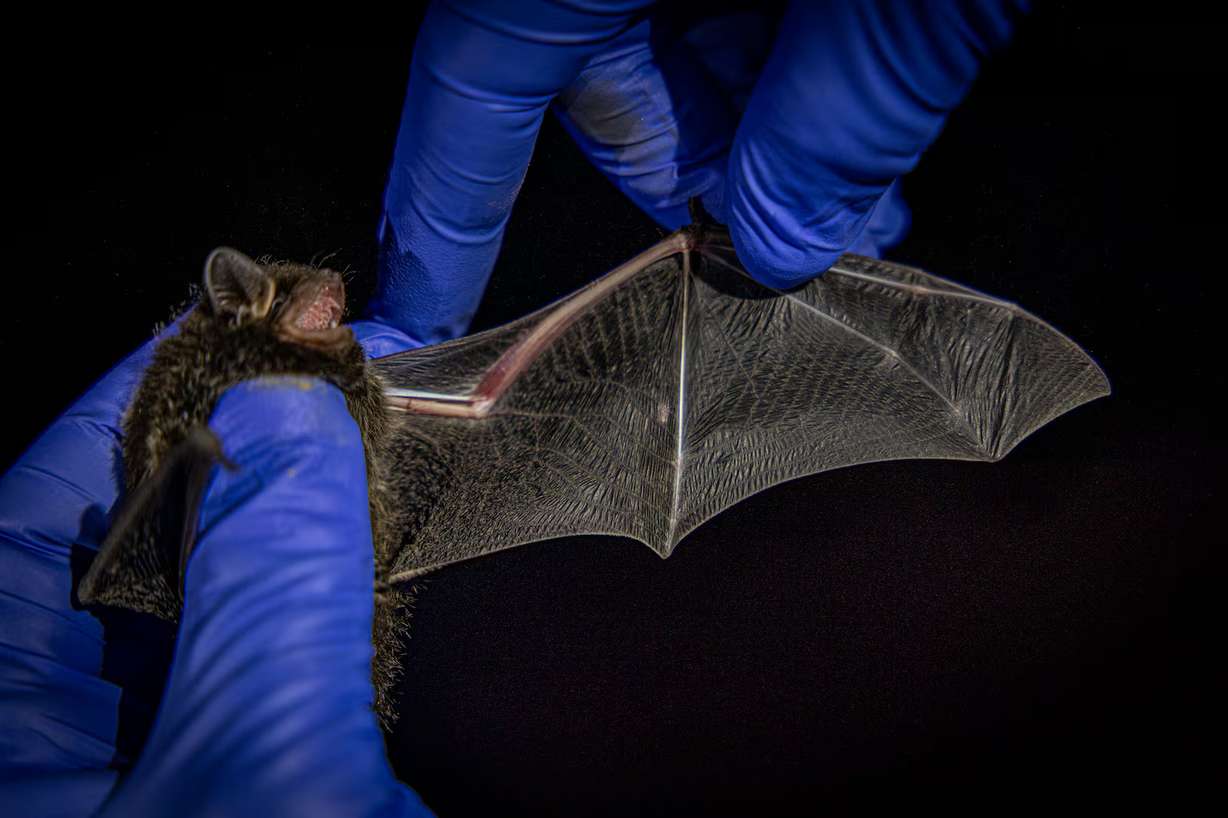
Bats in Utah feed almost exclusively on insects. They rely on standing water for both drinking and as a food source. Female bats have increased water needs when they are producing milk for their young. When insects aren't available during the winter months, many bats either migrate or hibernate, though some species do a combination of both and others stay active year-round.
"Sometimes, bats hibernate in caves and mines, and recent research in the western states has shown that many bat species also hibernate in the crevices of cliffs," Hersey said. "Bats in Utah do not usually hibernate in large groups like they do in many eastern U.S. states — they typically hibernate either in small groups or by themselves."
Five Utah bat species migrate each year, according to Hersey. They fly south from late August through October and then return in April and May.
"Encounters with bats seem to spike in September as the migratory species, especially the Mexican free-tailed bat, move around Utah," she said.
DWR suggests a few simple things homeowners can do to prevent conflicts during the times of year when bats are most active.
What to do if bats roost in your attic
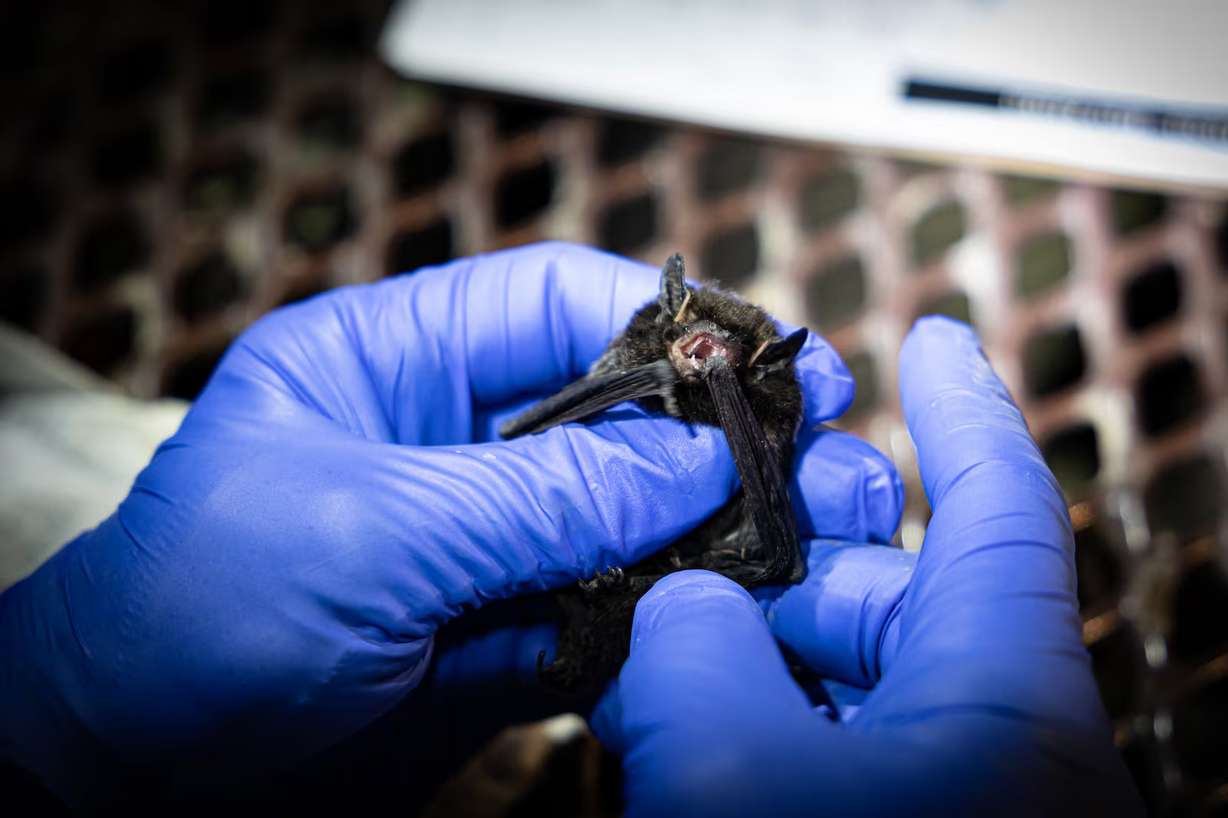
Groups of bats in homes are often maternity colonies of females and their babies. They typically come out of hibernation and move into a structure to give birth, usually in May or June. After they have babies, they become more active to support their location, and that's when people start to notice bats. The young are also learning to fly.
Hersey said from June to August is the hardest time of the year for dealing with bat nuisance issues. Because the young can't fly and are reliant on their mother's milk, preventing mothers from returning to their roosting spots will kill the babies.
Bats are a protected wildlife species, making it illegal to kill them.
"Poorly timed removals can also lead to bats inside attics suddenly finding their way inside someone's home because the mothers are trying to reach their young," Hersey said.
Unless there is a human health and safety issue where bats are coming into close contact with people, the DWR does not permit bat colonies to be removed at this time of year. But it does allow people to take actions to prevent bats from getting into living areas of the house.
"Although it may be inconvenient, you should wait until the young can fly, and then you can safely, humanely and permanently address the issue and prevent them from roosting on your property in the future," Hersey said.
What to do if you find bats in your house
Bats can carry rabies, a deadly virus that can be transmitted to people, so they shouldn't be handled with bare hands, according to the DWR. If you find a bat inside the living area, open a door or window, turn off the inside lights and turn on a porch light. Leave the room and allow the bat to leave on its own.
If the bat does not make its way outside on its own, you can carefully remove it with precautions:
- Wear heavy leather gloves, place a small box or can over the bat.
- To create a lid, slide a piece of cardboard between the can and the surface where the bat was located, enclosing the bat inside the container.
- Take the bat outside and release it on a tree or other high object.
Bats will also occasionally use porches or overhangs as a night roost, where they can rest, digest their food and excrete waste between meals. If they're regularly using a porch, try hanging streamers, balloons or other objects (like old CDs) that will move with a breeze to discourage bats from staying in the area.
How to prevent bats from roosting in the attic
- Cool your attic with fans to make it uncomfortable for bats to take up residence.
- Inspect the outside of the building for openings and gaps in siding, chimneys and roof lines.
- Seal cracks and holes with caulking, hardware cloth, foam rubber, foam sealant, tar paper and chimney caps. Do not do this, however, when bats have pups from May through August. Fall is the best time to seal those openings, especially when bats are vacating their roosts.
- After August, when the young can fly, you can also place bird netting over an exterior opening. Staple it down at the top and the sides, leaving the base open. Bats will be able to drop down the netting to leave, but cannot reenter the roost. Leave the netting in place for four to five days or until all the bats have left, and then seal the holes.
For more tips and safety information regarding bats, visit the Wild Aware Utah website.