- Primary Children's Hospital celebrated a record year of 39 liver or heart transplants in 2025, ranking them in the top 10 in the nation.
- Parents of two infants who received transplants expressed gratitude for their donors at a media event on Monday.
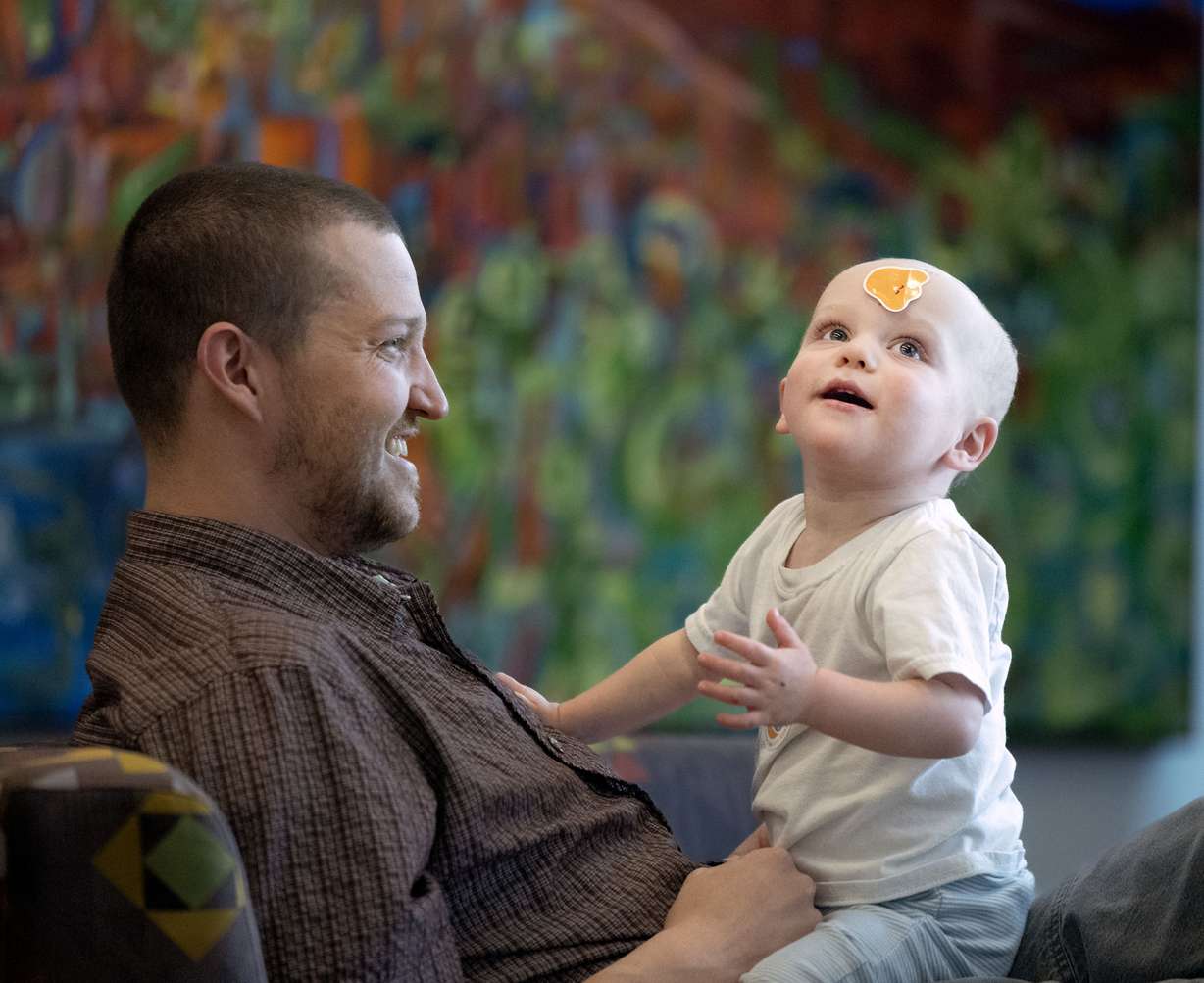
SALT LAKE CITY — Alonzo Whitney was born with half a heart, and his parents knew that would be the case, but they quickly learned he needed more than the surgery they were expecting.
At just 5 days old, he had surgery to set up a ventricular assist device, or artificial heart, while he waited for a transplant.
Sara Whitney said she got a call much earlier than expected that a heart was available for her then 6-week-old boy.
"A lot of miracles lined up to keep this boy alive, and since then, he's been doing amazing," she said at a press conference Monday at Primary Children's Hospital.
Whitney asked her now 1-year-old son — who she said has been learning his body parts — to show everyone where his heart is. The family has been in contact with the donor's family.
"It was just a very special boy and family, that they were willing to donate the heart," she said.
There are over 2,000 children waiting for an organ transplant in the United States, and Primary Children's Hospital wants to help more of them. Jean Botha, a surgeon and medical director of the organ transplant program at Primary Children's Hospital, said Monday's event marks a record year for transplants. He said more children have been able to receive transplants while maintaining good results.
'Extraordinary generosity'
The transplantation of 39 livers or hearts in one year reflects how the medical team lives up to the hospital's mission of "putting the child first and always," Botha said.
"These successes motivate us … motivate these teams to play an even bigger role in changing the landscape of pediatric transplantation across not only this region but this country," he said.
In 2025, the hospital ranked third in the country for heart transplants and sixth for liver transplants.
He thanked organ donors, both living donors and families of deceased donors. Botha said living donations have "barely increased" in the United States over the last 15 years, but that trajectory is changing at Primary Children's Hospital.
Sharon Chen, a pediatric cardiologist, said Primary Children's Hospital has performed 270 heart transplants since 1991, and the outcomes are "excellent."
"This milestone didn't happen because of chance; it happened because of our team," Chen said about reaching 18 heart transplants last year.
She said those 18 transplants represent 18 families who chose to "give the gift of life."
"At the heart of every transplant is a gift. Every transplant begins with a moment of extraordinary generosity. None of what we do here is not is possible without organ donation," she said.
Although they are reaching more children with transplants, Chen said the volume of children waiting for a transplant is also growing. Chen said over 80% of the kids waiting for a transplant wait in the hospital, either because they are too sick to leave or because they are using an artificial heart. She said while waiting, they celebrate birthdays and learn to crawl, walk, or run.
"It is a time filled with a lot of uncertainty, a lot of fear, but also joy and hope," she said.
A selfless aunt
Jadree Farmer's 10-month-old daughter Ellie was 3 months old when her pediatrician ordered tests after noticing that Ellie looked yellow during a routine appointment. The Provo mom took her infant to the emergency room in Salt Lake City immediately after hearing her bilirubin levels were well over what they should be. After a long night of lab work, she said they returned home with few answers.
Ellie underwent surgery in August 2025, which they hoped would heal her, but a few months later, her parents were told a liver transplant was her only option, Farmer said. On Nov. 17, she was listed on the registry, but was told to expect a very long wait. Ellie had already spent 34 days in the hospital.
Farmer said her sister ended up being "the perfect match."
A December donation for her then-7-month-old girl was "the best Christmas present and the best New Year's present we ever could have asked for — all because someone was selfless, because we have the best aunt in the world," she said.
Now, Ellie is "thriving and living her best life," her mother said a few months after the surgery.
"These kinds of miracles are not random, they're not luck, they're not out of the blue, but they come because of incredible care providers who we just love and adore, and they come because people are selfless in giving their organs for others," Farmer said.
'It's about being willing'
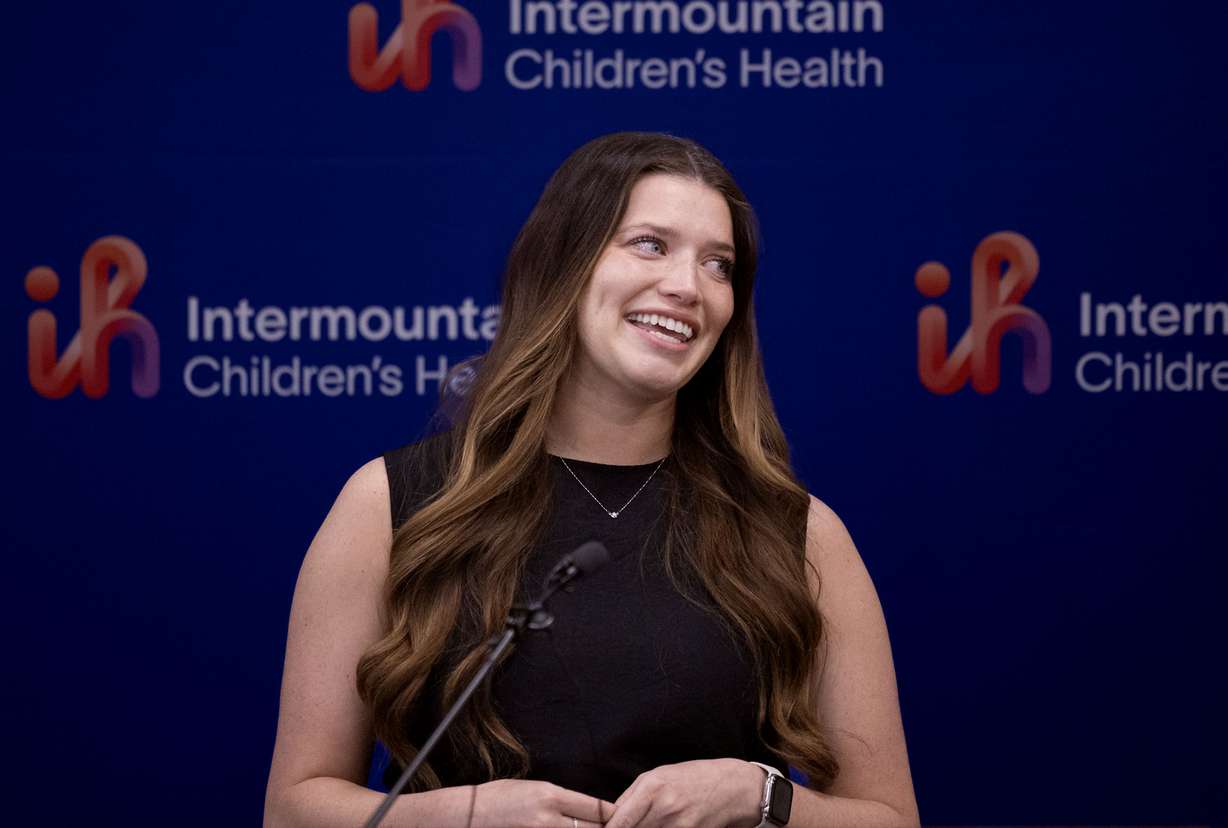
Madeline Baggett works with the transplant program at Primary Children's Hospital, but she is also a living liver donor. Baggett said that if more people understood the organ donation process, they would be more willing to volunteer.
She said she sees the team fight for every patient, including children who don't have time to spare. She said she realized she could do something.
"Donors aren't superheroes. We're just regular people who have the right information, the right support, and the right moment of courage. If my story does anything, I hope it helps people see that donation isn't about being fearless, it's about being willing. ... Sometimes that willingness can change someone's entire life," she said.
She said her mom needed a bone marrow transplant when she was in high school and she was not old enough to be a donor at the time. But she said she has felt the fear, hope and gratitude from being the family of a donor recipient.
"That feeling of wanting to help but not being able to stayed with me," she said.
When the day came for her surgery, she felt excited, not nervous, and supported by everyone around her. She said learning the recipient was doing well made it all worth it.
"I can honestly say that donating my liver was one of the greatest experiences of my life. I wouldn't trade it for the world, and I would do it again in a heartbeat if I could," she said.
Zach Kastenberg, a pediatric liver surgeon at University of Utah Health, said the increase in transplants last year represents hope for families and children.
He said since Primary Children's began offering liver transplants in 1996, fewer than 20% of the donors have been living donors. In 2025, 47% were living donors and many did not know the child in need.
"This reflects not only innovation in our field, but also the strength of our program, which is quite unique in terms of the pace and the volume of living donation that we offer. Families come to us during some of the most difficult periods of their lives, and it is our responsibility and our privilege to care for these folks using technologies at the cutting edge," he said.
Kastenberg said Primary Children's geographic reach has expanded to include five states, and it is "increasingly pushing that limit."