Estimated read time: 6-7 minutes
- AI-powered license plate readers aid Utah law enforcement but raise privacy concerns.
- Provo City Council addressed these concerns, highlighting safeguards and data control measures.
- Critics fear mass surveillance, urging public awareness of data use and privacy rights.
SALT LAKE CITY — Across Utah, AI‑powered license plate readers are becoming a key tool for law enforcement. They help catch dangerous suspects but also raise privacy concerns.
It's a controversial topic that's been thrust back into the spotlight in Utah, after police used the technology to capture two homicide suspects.
In just the last few weeks, local law enforcement used the license plate recognition system to track a man accused of killing three women in Wayne County. Police found him in Colorado.
The other, a suspect wanted in connection to a murder in Las Vegas, was found in Roy. License plate recognition cameras snap images of passing cars and upload plate numbers and vehicle details into a searchable database.
Companies provide all kinds of information about users that we may not realize.
Public concern over privacy
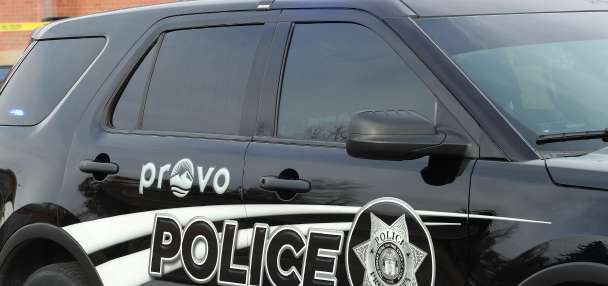
The Provo City Council recently held a meeting to address growing public concerns about the technology.
"Provo's participation in the Flock Safety network contributes to what effectively constitutes a national mass surveillance network of every citizen who drives on major roads, including those of us who are not suspected of any crime," a resident said in the meeting.
During that meeting, Flock Safety spokesperson Lily Ho outlined several safeguards designed to protect how the data is stored and used.
"You guys, as customers, are in full control of what you do with the data, how long you keep it, (and) who you share it with. Your data will automatically delete, depending on what your retention period is," Ho said. "We are not in the business of selling or sharing your data to anybody else. You are in full control."
Agencies say these cameras help solve cases and avoid broad stops, but residents want tighter limits and proof of restraint.
Law enforcement uses AI technology to track and find potential criminals
Investigators argue AI can narrow a suspect vehicle even when a plate is missing, reducing broad, intrusive stops and focusing on a smaller set of likely matches.
Capt. Brian Taylor with the Provo Police Department says the technology can also help identify descriptions of cars, which has led to accurate suspect locations.
"The AI search feature that literally touches on the vehicle fingerprint lets us do more than merely look for license plates," Taylor said.
But critics worry that expanding camera networks could morph into mass surveillance or retain too much information.
AI researcher Kenneth Marino, assistant professor in the Kahlert School of Computing at the University of Utah, looks into what these cameras are capable of, the benefits and limitations, along with ethical considerations of AI.
"These are computer vision systems that take a video feed or a still image, and in this case, will recognize the license plate," Marino said. "This is called optical character recognition, and it's extremely accurate. So with these cameras, you can extremely accurately know exactly which license plates are identified by which cameras."
He says that the cameras are capable of even more than that.
"With an image, it's very easy to identify individual people from their faces, possibly even cars, if your car is very unique," Marino said. "This information, if not properly protected, could potentially be used for all kinds of tracking of individual people."
Marino mentioned mass surveillance concerns and the technology's technical limitations.
"I think this is a place where people really should speak up and try to understand the technology better and what it's capable of," he said. "If protections aren't put in place, and people don't understand how it's being used, that isn't a dystopian or unrealistic concern."
In response to public concern, Provo police officials point to a public transparency portal and internal audits tied to case numbers and reasons for every search.
"It talks about the number of vehicles, the license plates that are read inside of the city. It shows the number of searches that Provo police officers are making in the database," Provo Police Capt. Robert Patrick said.
These are motion‑triggered photos, not continuous video, Patrick said. Images are encrypted and uploaded with time, date and location metadata for the limited retention window.
"When somebody drives by a camera, the camera will take a photograph, or two or three, and then that metadata is attached to the camera," Patrick said. "That is then encrypted and sent to our cloud storage, where it is searchable for the next 30 days."
He said that there are multiple audits for every search that the police officers in the department have done. Departments said they use short retention windows and multi‑factor authentication, with automatic deletion after the set period to prevent long‑term stockpiling of movement data.
"They have to have a reason. There is an internal audit and a monthly audit," Patrick said. "On Day 31, that first day's worth of data is then expunged and is no longer accessible to anyone, ever."
When agencies opt in, a national lookup can reveal if a target plate was seen in another jurisdiction still tied to a case number and subject to local audits. "We can access the (license plate reader) cameras through the entire country," Patrick said. "Anyone else that participates in the national database can also search our data. They have to have a reason for the search that is auditable by our police department."
Information may not be private anymore
Cities and developers can use your phone technology to see what businesses (you go to), they can tell your age, your income, your education, what you read and even how many cars you have.
"I think people don't realize how much of your information you are giving to private companies. I would ask the viewers at home, how many apps on your phone right now have permission to look at your location data, and who are they allowed to share it with," Marino said.
He said that some uses of this data may be mild. Companies might be using it to give users targeted ads and not necessarily infringing on users' rights.
"This technology, this data, could also be sold to third parties that you aren't expecting. It can be subpoenaed or given to government agencies or the federal government without your knowledge," Marino said. "I think there are a lot of issues with private companies and data that people should be aware of."
Marino said these issues and concerns need to be brought up publicly so individual users can understand their rights.
"I think this is an area where this is about fundamental values, about privacy, about controlling your own data and controlling your life, how much the government gets to know about you," Marino said. "Every citizen should have their voices heard, and this is really a question for democracy."