Estimated read time: 4-5 minutes
- Utah native Mickey Ibarra edited a book highlighting 25 Latino leaders' success stories.
- "Latino Leaders Speak: Personal Stories of Struggle and Triumph, Volume II" aims to inspire and counter negative stereotypes about Latinos.
- The book features actor Edward James Olmos and Xavier Becerra, former secretary of Health and Human Services, among others.
SALT LAKE CITY — As the national debate about illegal immigration threatens to cast a shadow over the Latino community, Mickey Ibarra is pushing back.
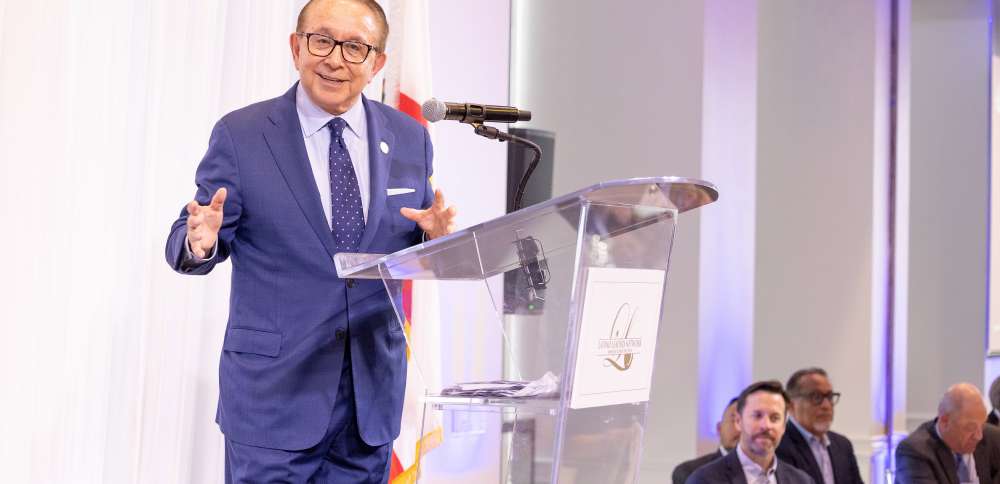
"Our stories must be told, and now more than ever they must be heard," he said. "We believe that it's our stories that contain the truth about the Latino community, and it's so important for us to change the negative narrative that is too often still being heard about our community, and the best way to push back on that narrative is to tell the truth."
To that end, the Utah native and Latino advocate edited a new book that tells the stories of a cross-section of 25 Latino leaders from across the United States, outlining the struggles they faced and overcame along the path to success.
"Latino Leaders Speak: Personal Stories of Struggle and Triumph, Volume II" is meant to inspire the Latino community, he said, and serve as a counterpoint to the negative portrayals he feels Latinos face, particularly in connection with the national debate about illegal immigration.
Volume I in the series, which came out in 2017, featured the stories of 33 Latino leaders, and the second installment, published late last month by Arte Público Press, is a continuation. The stories come from talks the varied leaders have given at events hosted by the Latino Leaders Network, led by Ibarra and meant to promote and build up the Latino community.
Featured in the new volume are political leaders, educators, representatives from the arts and sports and more, including Xavier Becerra, former secretary of the Department of Health and Human Services, former NFL standout Tom Flores and actor Edward James Olmos.
"What we're really trying to do with the book and the stories that we share is to change the narrative, to challenge that negative narrative that's coming from the White House and too many other places," Ibarra said.
Ibarra, now based in Washington, D.C., lived in foster care in Utah for many years growing up and, as an adult, served President Bill Clinton as a member of his senior staff, among other things.
He singled out "the ugliness, the meanness, the coarseness of the description of the immigrant community" in President Donald Trump's address to the nation on Dec. 17. Trump's critical comments were directed at immigrants who entered the country during President Joe Biden's tenure, some of them illegally. But Ibarra noted that most Latinos in the United States have been in the country "for many, many, many years."
Beyond that, he emphasized what he believes to be the overlooked success stories of Latinos.
"The community has heroes, we have role models and we certainly have outstanding leaders," he said. "Those stories have to be told, and now more than ever, they must be heard."
Read more:

Voces de Utah
Looking for more news from Utah's Latino community? Visit our Voces de Utah section for more stories, events and features.The book can serve high school students, he said, and he's hoping to develop an educational curriculum around it, as occurred with 14 of the 33 stories in the first volume. "Our audience is really a broad audience of schools, of libraries, students, the public," he said.
Ibarra, who has his own story of overcoming tough circumstances, is among those featured in the new book.
"How in the world can a little half-Mexican kid from Salt Lake City, Utah, end up assistant to the president of the United States? It's obstacles overcome," he said. His brother, David Ibarra, has made his own impact as a Salt Lake City-area businessman.
Miguel Cardona, who served as U.S. secretary of Education under Biden, is featured in the book.
"The president had faith in me because of who I am, not in spite of it," he says in the new volume. "Being Latino, a Spanish-speaker and a first-generation college student weren't deficits I overcame — these were assets, superpowers that gave me a unique perspective."
Adela de la Torre, president of San Diego State University and also in the book, describes her ascent in academia.
"I became a department chair. I became the head of a research center. I became a specialist assistant to the dean. I became a vice chancellor, and then I became a president," she says in the book.

Most recent Voces de Utah stories
Related topics
 Tim Vandenack