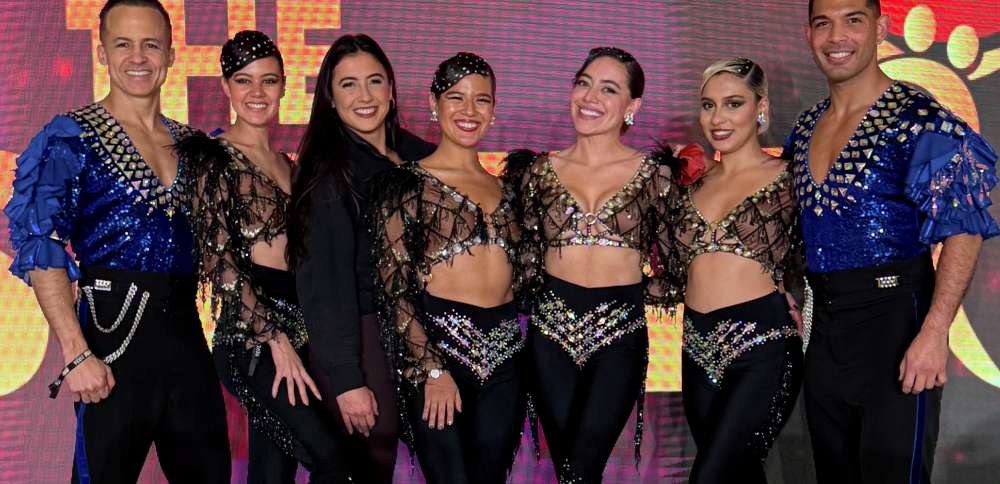
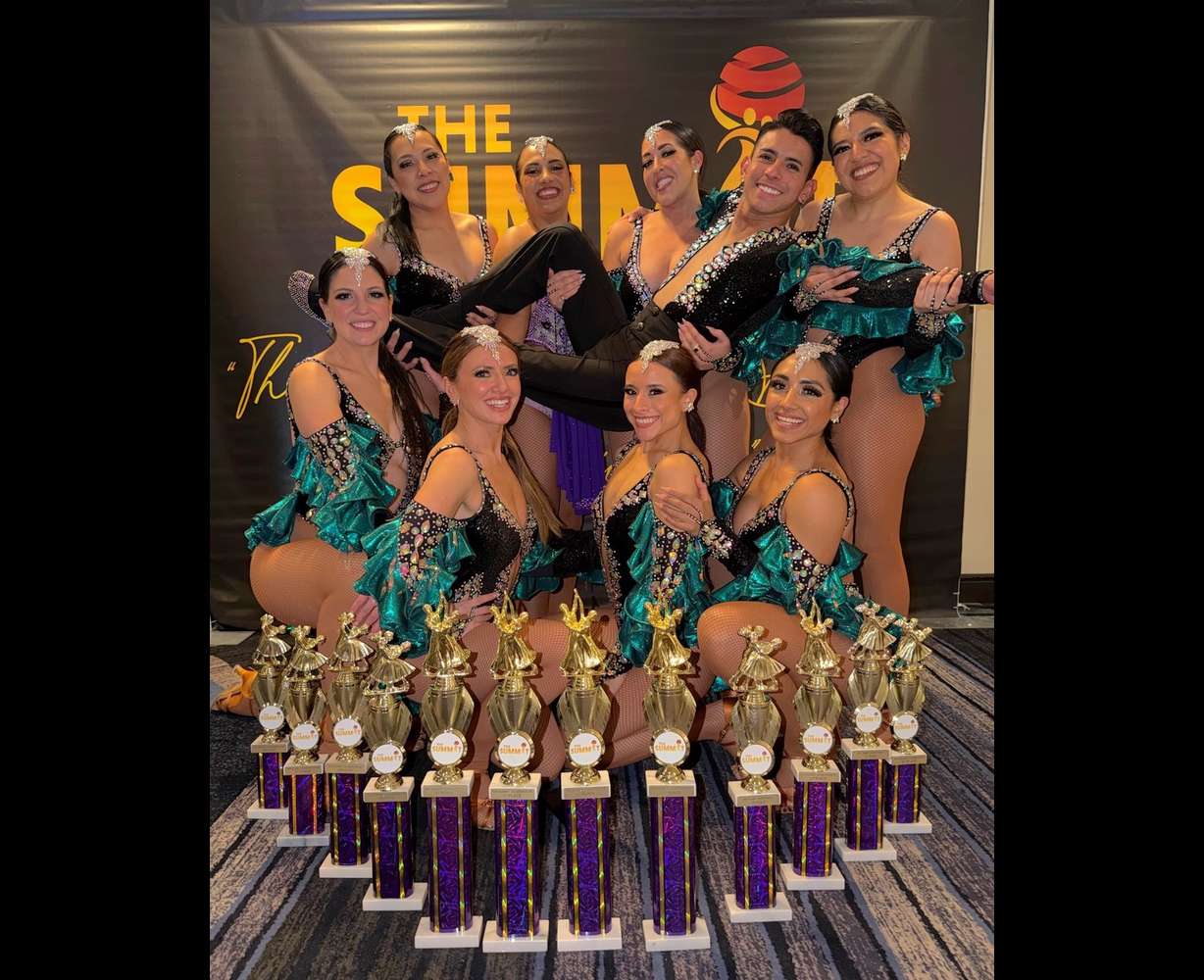
- Utah salsa dancers brought home numerous trophies from the recent Summit Championship in New Jersey.
- The Latin Dance Utah and Miel Latina teams won in four categories between them and took second or third place in several others.
- Salsa culture may be stronger in places like New York and California, but dancers from Utah are holding their own.
SALT LAKE CITY — Camila Johnson, who is originally from Colombia but now living in Utah, says salsa dancing and salsa music are in her blood.
"My country breathes salsa. It's everything. I grew up with salsa. My parents raised me with salsa every day," she said. "For me, it's the music of my culture. For most of the people from Latin America, it's about the same."
She's maintained her salsa roots as the operator of the Latin Dance Utah Academy in Sandy, where she teaches salsa and other dance styles. She and other aficionados in the state, though, are taking their passion to a new level — participating in salsa competitions around the country and increasingly bringing home trophies to show for it.
Latin culture is growing in Utah, said David Princess, who coaches another salsa dance team, Miel Latina, and more and more people in the non-Hispanic white community are also drawn to it, bolstering interest in salsa dancing. "There are people that just go dance for fun, then there are the people that like to perform and the people that like to see performances and also the people that like to compete," said Princess, originally from Costa Rica.
Dancers from Latin Dance Utah and Miel Latina competed late last month in East Rutherford, New Jersey, at the Summit Championship, a major salsa competition, faring well and underscoring the growth of salsa culture in Utah. Latin Dance Utah dancers garnered two first-place, two second-place and three third-place finishes. Miel Latina dancers had two first-place, three second-place and two third-place finishes.
Indeed, the salsa culture within the United States may be stronger in places like New York and California, Princess said, but dancers from Utah are holding their own.
"Right now, we're training as hard as these other states. Even if this community is small, we're really trying to grow," he said. "I think we're doing good, good work, and we're going to keep doing it."
Salsa music and dance are rooted in the Caribbean islands of Cuba and Puerto Rico, according to Salsa Vida, an online compendium of the salsa world. But it's very popular throughout Latin America and, increasingly, the United States and the rest of the globe. The music has a quick, lively beat, heavy on percussion, and the dancing is equally energetic.
"I love the energy of salsa," said Erika Keele, a dancer for Miel Latina. "It's really fast-paced and has an energy that's infectious. It's so fun to dance as a group because you feel each other, and you synchronize. The energy's unmatched."
Keele's background is in ballroom dancing, but she expanded her repertoire to bachata and salsa, recently joining Miel Latina, which will be holding auditions for more dancers later this month. Some of the other Miel Latina dancers have Latino roots in such places as Peru and Mexico, she said, but others are like her, with more far-flung ties to contemporary or jazz dancing or ballet.
Likewise, Johnson said her team comprises a mix of Latinos and others who have day jobs and dance as a hobby. What unites them as salsa competitors is a love of dance and, as competitions typically don't provide winners with a big financial windfall, a drive to get better. Practice hours can be long and intense.
Dancing "is a big passion for us," Johnson said. "They're not just dancing to dance but to get results. They make more of an effort; they work harder."
Beyond that, Johnson sees involvement in salsa, whether through her dance school or the dance team, as a way of creating a community and sharing her culture and love of dance with the broader public. "A lot of the people on the team did not grow up with (salsa), but the fact that we get to share it with them and make them feel what we feel when we listen to salsa, it's amazing," she said.
Read more:

Voces de Utah
Looking for more news from Utah's Latino community? Visit our Voces de Utah section for more stories, events and features.Going forward, both teams plan to take part in more competitions. Keele said other dancers and teams around Utah compete as well, and she hopes to see everyone thrive. Johnson dreams of taking salsa dancing to another level in Utah.
"Right now I'd say we're at a very good competitive level compared to other states that have been competing longer," she said. "Imagine what we could do in the next two, three years if we continue this way."

Related stories
Most recent Entertainment stories
Related topics
 Tim Vandenack