'%3e%3cpath%20d='M34.1406%205.85938C30.3906%202.10547%2025.3047%200%2020%200C14.6953%200%209.60938%202.10547%205.85938%205.85938C2.10938%209.61328%200%2014.6953%200%2020C0%2025.3047%202.10547%2030.3906%205.85938%2034.1406C9.61328%2037.8906%2014.6953%2040%2020%2040C25.3047%2040%2030.3906%2037.8945%2034.1406%2034.1406C37.8906%2030.3906%2040%2025.3047%2040%2020C40%2014.6953%2037.8945%209.60938%2034.1406%205.85938ZM37.0117%2023.543H31.1602V13.5391H27.6328V19.9414C28.1211%2020.6914%2028.3711%2021.582%2028.3711%2022.5625V22.625C28.3711%2023.668%2028.1172%2024.6055%2027.6328%2025.4297V26.6094H36.082C33.4883%2032.9375%2027.2891%2037.3789%2020.0039%2037.3789C10.3711%2037.3789%202.62109%2029.6289%202.62109%2020C2.62109%2010.3711%2010.3711%202.62109%2020%202.62109C29.6289%202.62109%2037.3789%2010.3711%2037.3789%2020C37.3789%2021.1484%2037.2617%2022.2656%2037.0508%2023.3477C37.0391%2023.4141%2037.0234%2023.4766%2037.0117%2023.543Z'%20fill='white'/%3e%3cpath%20d='M22.3086%2018.5352C20.4336%2018.125%2019.9531%2017.8398%2019.9766%2017.1836V17.1406C19.9766%2016.6992%2020.3477%2016.2148%2021.4023%2016.2148C22.582%2016.2148%2023.8867%2016.6797%2025.0781%2017.4766L26.8516%2015.0195C25.4453%2013.8906%2023.707%2013.3398%2021.5547%2013.3398C18.5195%2013.3398%2016.4375%2015%2016.4063%2017.4766V17.5352C16.3633%2020.2617%2018.5859%2020.9805%2021.293%2021.6016C23.0391%2021.9766%2023.5703%2022.3164%2023.5703%2022.9609L23.5469%2022.9766C23.5469%2023.3906%2023.2578%2023.7031%2022.7852%2023.8359C22.5742%2023.9062%2022.1289%2023.9727%2021.5156%2023.9727C20.7617%2023.9727%2019.7539%2023.8633%2018.6328%2023.4844C18.0898%2023.2891%2017.4727%2023.0039%2016.8047%2022.6133L20.1406%2026.625C20.2813%2026.6602%2021.0977%2026.8516%2021.7734%2026.8516C25.0039%2026.8516%2027.0859%2025.2461%2027.1094%2022.6328V22.5703C27.1602%2020.1133%2025.2148%2019.1719%2022.3086%2018.5352Z'%20fill='white'/%3e%3cpath%20d='M5.24219%2013.5664V26.6133H8.75391V23.7578L10.2969%2021.9531L14.2031%2026.6133H18.3867L12.3555%2019.5195L17.4023%2013.5664H13.4531L8.75391%2019.0586V13.5664H5.24219Z'%20fill='white'/%3e%3c/g%3e%3cdefs%3e%3cclipPath%20id='clip0_97_2430'%3e%3crect%20width='40'%20height='40'%20fill='white'/%3e%3c/clipPath%3e%3c/defs%3e%3c/svg%3e)


- The Church of Jesus Christ of Latter-day Saints filed a lawsuit against John Dehlin.
- The lawsuit alleges Dehlin's podcast uses logos similar to church trademarks.
- Dehlin denies infringement claims; the church seeks to prevent brand confusion.
SALT LAKE CITY — A trademark dispute is headed to the courts after The Church of Jesus Christ of Latter-day Saints and podcaster John Dehlin failed to reach a solution after five months of negotiations.
The church and its intellectual property entity, Intellectual Reserve Inc., filed a trademark and copyright complaint in federal court on Friday that names Dehlin and his Open Stories Foundation.
The lawsuit claims Dehlin willfully and knowingly created confusion by using logos and marks similar to the church's and by using copyrighted church photographs.
Dehlin is the founder and host of the podcast "Mormon Stories." He was excommunicated from the church in 2015.
The trademark issue is not related to the podcast's viewpoint, the church stated in a post on Friday on its official website.
"This case concerns branding choices that incorporate church-protected names and design elements in ways that may lead people to believe the podcast is produced by or affiliated with the church when it is not," the church post stated.
Dehlin told the Deseret News that he and the Open Stories Foundation don't believe there is any trademark infringement.
"We disagree with their allegations of confusion," Dehlin stated in an email response to questions.
The church's belief that ongoing confusion exists led the manager of its Intellectual Property Office to send Dehlin a letter in November outlining the church's concerns.
"The church has an obligation to protect its trademarks as unique identifiers to prevent confusion about what is and isn't official church content," the manager wrote, according to an exhibit included with the lawsuit.
The church manager stated that the request was related solely to Dehlin's use of the church's intellectual property or design elements that created confusion.
"The church respects your right to free speech and has no desire to censor your podcast, website or social media accounts in any way," the manager wrote. "Our request is that you update elements of your branding to ensure viewers can distinguish your content from church content."
The church stated in its Friday post that it is not attempting to silence a critic.
"People are free to express support for or criticism of the church and its teachings," the church stated. "This case does not concern the content of the podcast. It concerns preventing confusion about source and affiliation."
The church's goal was to resolve the issues privately and amicably, according to the Friday post.
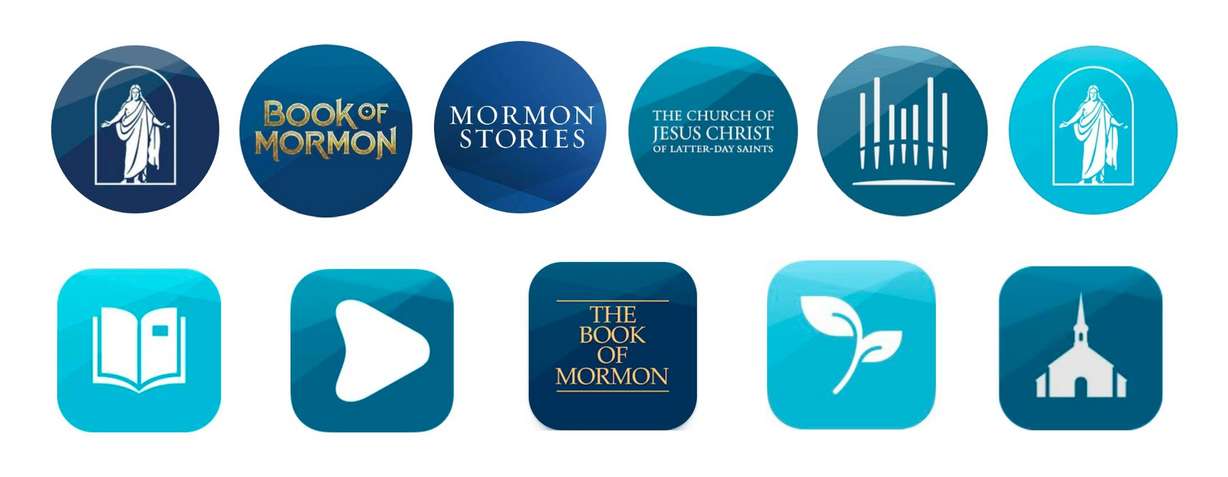
In December 2022, Mormon Stories changed the color of its logo to blue. Combined with the church's light-rays design marks, the logo created confusion by imitating the church's design elements, according to the lawsuit.
The lawsuit also included a number of comments made on Mormon Stories Facebook and YouTube pages by people who said the podcast's designs and approach made it difficult to initially determine whether it was affiliated with the church.
"I've been watching the videos to do with Teal by this channel but I don't understand," one commenter stated. "Is this channel run by Mormons? Or ex-Mormons? Or people who are Mormons but against radical Mormons? Or they don't like Mormons? I don't mean to sound rude if it does, I just don't understand."
Dehlin told the Deseret News that Mormon Stories made changes after receiving the intellectual property manager's letter in November, changing the color of its logo to orange and altering its style. Mormon Stories also added what Dehlin said was the church's preferred disclaimer language to the podcast description on each of its platforms.
The two sides attempted mediation, which began in February. That process ended in March. Dehlin agreed to some changes but refused to make others, according to the lawsuit.
"The church's demands were just too unreasonable and we walked away," he said in a statement then.
The ongoing dispute appears to turn on the use of the term "Mormon" and on elevating the use of disclaimers, such as using a brief verbal disclaimer at the beginning of podcast episodes stating that it is not affiliated with or endorsed by The Church of Jesus Christ of Latter-day Saints.
"This is a common and straightforward way to help audiences understand the source of content," the church stated. "That step was not adopted. As a result, the likelihood of confusion remains, and the church moved forward to protect its trademarks."
Dehlin disagreed.
"The church wanted us to make the disclaimer more prominent, so it was essentially the primary thing anyone sees in our branding, which we believe is unreasonable," he said. "We don't want our primary message to be about what we are not."
In 2018, church leaders asked people to discontinue using the term "Mormon" when referring to the church or its members and use the full name of the church or the terms "Church of Jesus Christ" or "Latter-day Saints."
Dehlin has stated previously that he didn't think the church had a legitimate claim to the term "Mormon." He and others who want to use the term for their businesses claim the church "abandoned" it.
According to the lawsuit, the term Mormon has been strongly associated with the church since its founding in 1830 because of the name of the Book of Mormon, which the church considers a sacred companion text of scripture to the Bible.
The church has continued to protect trademarks with the word "Mormon" and to emphasize the Book of Mormon, which is described on the homepage of its official website.
"Where does the name come from?" the description states. "Hundreds of years ago, an ancient prophet named Mormon compiled a record of his people."
The church also actively continues to use design elements it contends Mormon Stories has imitated to confuse the public.
The church stated that when talks with Dehlin failed to reach a resolution, it determined it had to file the complaint "to protect its intellectual property."
The lawsuit, filed in the U.S. District Court of Utah, alleges that Dehlin and "Mormon Stories" have used the term "Mormon" and a blue logo with fonts and design elements like light rays to imitate church logos and sow confusion.
The church maintains trademarks and copyrights using the word "Mormon" "so people can clearly identify what is and is not official church communication," the church said in its statement. "Names, logos, and visual design elements help people know when content represents the church."
The church changed the Mormon Tabernacle Choir to the Tabernacle Choir at Temple Square while maintaining the trademark for the term "Mormon Tabernacle Choir" to protect the choir's past intellectual property.
Late church President Russell M. Nelson, who announced the re-emphasis of the church's full name to emphasize the name of Christ, said the church would protect the term "Mormon."
"We have to be careful to protect the name 'Mormon,'" he said. "The media will think that we are tossing it out. We aren't. We just want to be accurate. Mormon was a man. He was a prophet. He was a writer, a record keeper. We honor him and treasure the book that bears his name. We're talking about the name of the church."
While "Mormonism" is an inaccurate term, according to the church's official style guide, the church states that "'Mormon' is correctly used in proper names such as the Book of Mormon or when used as an adjective in such historical expressions as 'Mormon Trail.'"
In Friday's lawsuit, the church listed a number of what it called "Mormon marks" that it maintains. It also included exhibits that show the marks are officially registered with and recognized by the U.S. Patent and Trademark Office:
- Mormon.
- Book of Mormon.
- Book of Mormon Stories.
- Mormon Messages.
- Mormon Channel.
- Mormon Tabernacle Choir.
- Book of Mormon Videos.
- Mormon Battalion.
- Mormon Handicraft.
The church regularly moves to enforce its trademarks. Most matters are resolved privately and amicably, the church's post stated.
Other times, the church pursues legal remedies. For example, it filed opposition with the U.S. Patent and Trademark Office when Heather Gay of the TV show "The Real Housewives of Salt Lake City" applied for an official trademark for the term "Bad Mormon" in 2023. Gay withdrew her application in 2024 and the office entered a judgment against her.
Open Stories has used logos with design elements similar to the church's since at least 2016, according to the lawsuit. It also alleges that Open Stories used parts of the church's Christus symbol in its designs of YouTube images after President Nelson released the new symbol for the church with the statue as a centerpiece in 2020.
"This symbol will now be used as a visual identifier for official literature, news and events of the church," President Nelson said. "It will remind all that this is the Savior's church, and that all we do as members of his church centers on Jesus Christ and his gospel."
Mormon Stories also used a number of copyrighted church photographs without permission, according to the lawsuit.
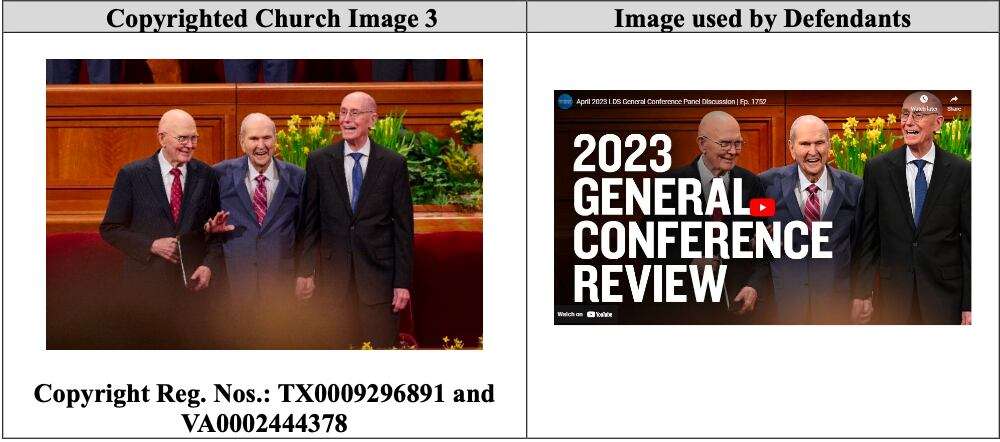
The lawsuit included a number of exhibits with numerous documents from the U.S. Patent and Trademark Office and the U.S. Copyright Office granting the church trademarks for the Book of Mormon and copyrights for official photographs of church leaders, such as President Nelson and his successor, President Dallin H. Oaks, that have been reused by Mormon Stories without permission.
Dehlin told the Deseret News that Mormon Stories removed the images that concerned the church from its website and channel pages.
"We believe our use qualifies as fair use," he wrote. "Despite that, in response to their recent requests, we agreed to remove the images they identified from our website and podcast thumbnails."
Trademark Reg. No. 6,901,693 is granted to the church through Intellectual Reserve for the Christus symbol. The official document states, "The mark consists of an image of Christ with outstretched arms standing under an arch and the stylized wording "THE CHURCH OF JESUS CHRIST OF LATTER-DAY SAINTS" within a rectangular box below the arch.
In the lawsuit, the church asks the court to permanently enjoin and restrain Mormon Stories from:
- Using marks, names or designs that are "confusingly similar" to the church's.
- Reproducing, distributing or publicly displaying church-copyrighted works or derivatives of them when advertising or promoting their business or content.