- The Church of Jesus Christ's new Humanitarian Center in Salt Lake City aids local immigrants refugees by providing a temporary job and English education.
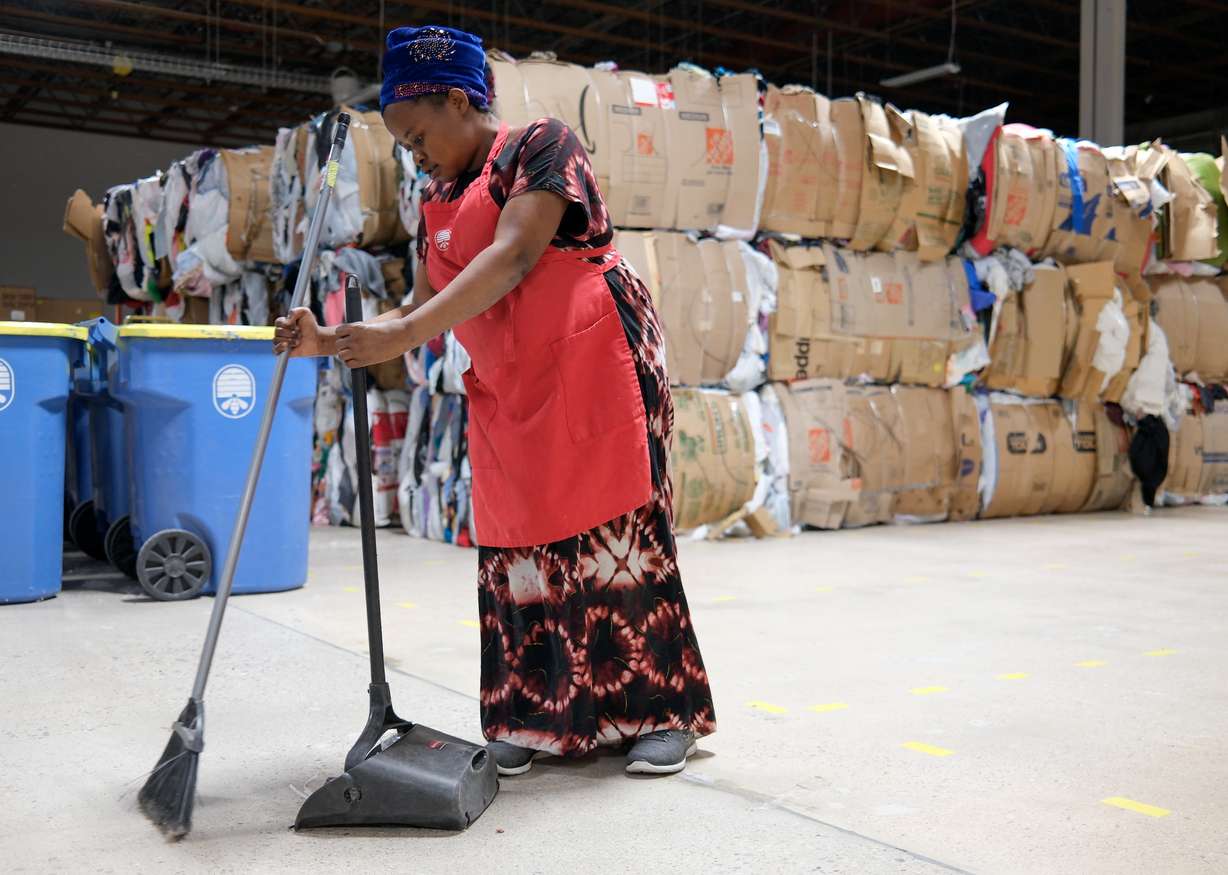
- Employees help sort extra donations to Deseret Industries to prepare them for being sent around the world to those in need.
- The new facility is open for tours, and volunteers can help with quilting and building kits.
SALT LAKE CITY — When people think about the humanitarian services provided by The Church of Jesus Christ of Latter-day Saints, they often consider aid in other countries or in response to natural disasters. But the church's new Humanitarian Center is also life-changing for those who work there.
Blaine Maxfield, managing director of welfare and self-reliance services for the church, said the facility is much more than a place to distribute humanitarian goods — it's focused on helping individuals. During a media tour Wednesday, he pointed out art and quotes around the facility focusing on Jesus Christ and his direction to love your neighbor.
"This is more than just a place that we're distributing goods; we're building individuals here as well. We're doing what we think the Savior would do as we look outside ourselves and care for the one, and so it's just a beautiful place to be," he said.
People have already begun working in the new Humanitarian Center location, 1999 W. 1700 South in Salt Lake City, across the street from where it previously was, before its dedication on Wednesday evening. The new facility has an ongoing exhibit where people can learn about the church's humanitarian efforts, in the center and outside of it.
The church's First Presidency toured the facility on Friday. In a social media post about the experience, President Dallin H. Oaks said: "The Savior has commanded each of us to love God and to love our neighbor. ... This facility will serve an important role in preparing and distributing emergency supplies to meet global needs."
Building individuals
Troy Casper, manager of the Humanitarian Center, said they find employees, whom they refer to as associates, through partnerships with three resettlement agencies and through referrals from local bishops.
When they arrive, the associates are shown pictures for the various positions they have — sorting, cooking or working machinery — and they choose what they want to do. Within just a few months, he is surprised by how well they are now able to communicate with him.
"It's unreal how quick they learn and grow … and they're very grateful. They express their gratitude all the time," Casper said.
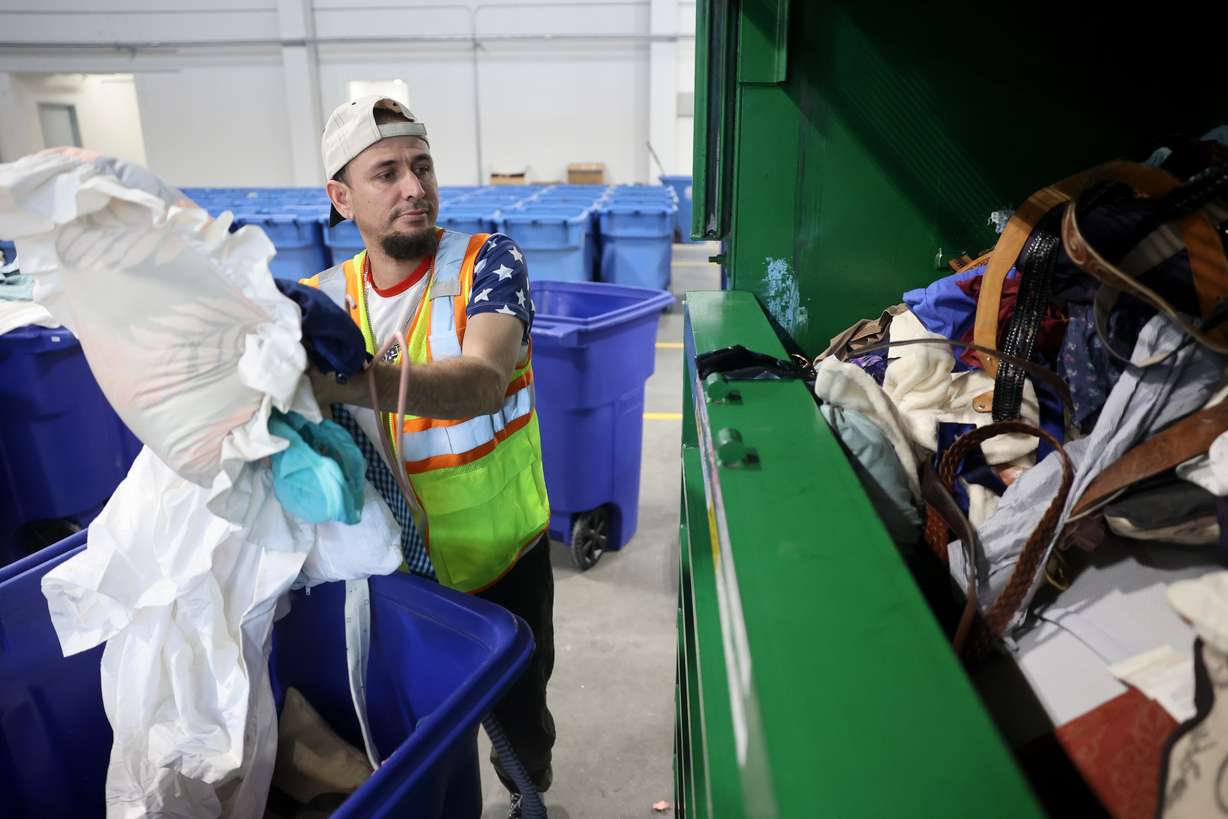
Although the work is similar to what is done at Deseret Industries locations, it is unique because the employees spend half of their work day in English training through a partnership with the nonprofit English Skills Learning Center. Associates are paid for the time they are learning as well.
Casper said they have English classes that focus on different skills like citizenship, digital literacy and driving. On average, people spend 10 months working as an associate at the Humanitarian Center before moving on to other careers — some even starting their own restaurants.
According to Casper, many of the current associates are Muslim, and the church does not proselyte through the Humanitarian Center. Instead, the new facility has a devotional room designed for those who are Muslim to do their daily prayers. He said they were "touched" and "grateful" when seeing the new space.
"They couldn't believe that was built for them. … They immediately saw it as a holy place," he said.
Across the street, they were limited to teaching 150 people English, but the new facility will allow them to teach up to 250 people. Casper said they expect to gradually increase to that number.
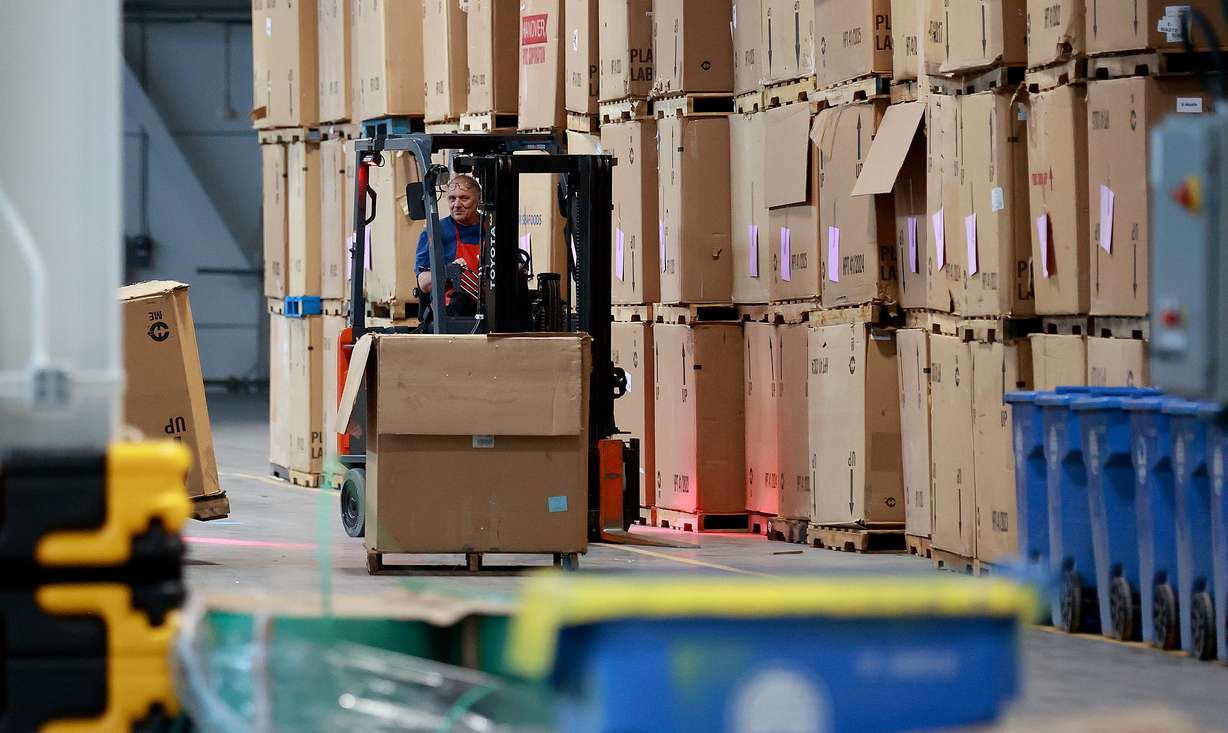
Maxfield explained the building at 250,000 square-feet is actually a little bit smaller than the previous building, but it is organized specifically for what they are doing. He said the new location will also facilitate teamwork and collaboration, helping prepare associates for their futures even better. Many leave with a food handler's permit or a certification for using the forklift.
"As meaningful as this opportunity is to share goods all over the world, it's equally as important that we care for those that work here. ... We learn from them and they learn from us," Maxfield said.
Debbie Worthen, KSLGrowth of Deseret Industries
One of the main purposes of the new facility is to take 1,000-pound bales of clothing from donations to the church's 46 Deseret Industries stores, sort them and then bundle them into 100-pound bales that can be distributed around the world. The smaller bales can be moved without a forklift wherever they are delivered.
Categorized bundles — men, women, youth or coats — are ready to send out when the facility receives requests from local church leaders or partner humanitarian organizations.
Associates also help disassemble donated electronic equipment and sort it for recycling as part of sustainability initiatives.
The Humanitarian Center began in 1991 as a way to take excess donations and share them further as part of the humanitarian effort, and it has continued growing since then.
"We're grateful for everybody that donates, and everything matters," Maxfield said.
Humanitarian Center and beyond
Right now, there are associates from 20 different countries, but flags on the walls show many more countries that have been represented. During the tour, visitors have a chance to see lockers which, when opened, showcase stories of associates and their cultures. During the tour, visitors will also be able to help a little bit with sorting clothing items and preparing kits.
Maxfield talked about many other projects highlighted through the center's exhibit that are outside of the new facility: health screenings, job training, food and wheelchair donations, access to water, emergency response teams and education.
The Humanitarian Center also provides opportunities for volunteers to come and create quilts. People can call the center to learn when those opportunities happen. About 5,000 quilts each year are created there from donated fabrics, which are mostly distributed locally. Maxfield said the church will purchase quilts locally when they are needed around the world.
Volunteers can also help pull together hygiene kits, which accompany emergency supplies, rakes, chainsaws and wheelbarrows to areas following a natural disaster.
"When disasters happen, the individuals know that Latter-day Saints will come and that we'll stay. And we feel that in a world that's becoming more divisive, one of the great ways to really help bring communities together is to look outside of yourself and serve," Maxfield said.
While traveling to see how aid is delivered, he said it is amazing how people want to care for others, especially in times of disaster, despite their own personal loss.
"It's always such a beautiful thing for me to see, and a motivating factor for myself to see people as divine," Maxfield said.
How can you help?
According to Maxfield, the biggest question they get from people during tours is where they can help, and he encourages people to find a project that speaks to them and fits their needs.
"Everybody can serve, and every project matters," he said.
Near the end of the tour, a big wall with a QR code directs visitors to give back through projects listed on JustServe.
"So many times … we assume that we need to travel to some distant location to really be helpful, but in almost every case, the greatest help that you can provide happens right in your own home, right on your own street, or right in your own community — because there's need everywhere that you turn," Maxfield said.
The Humanitarian Center's open house will run from June 1 to July 23 from 10 a.m. to 7 p.m. on weekdays. Following that period, there will still be walk-in tours available. Tours can be scheduled on the church's Temple Square app or by calling 801-240-5954.