- KSL's investigation reveals discrepancies in Utah school weapons incident reporting data.
- The State School Board reported 4,907 incidents, while districts reported 4,370 for the same period.
- Discrepancies arise from varied reporting systems and interpretations of weapon definitions.
COTTONWOOD HEIGHTS — When Amy was growing up in the 1980s and 90s, weapons in schools weren't remotely on her radar.
"When I was in school, I never thought about that even once," she said. "It was a very different time then."
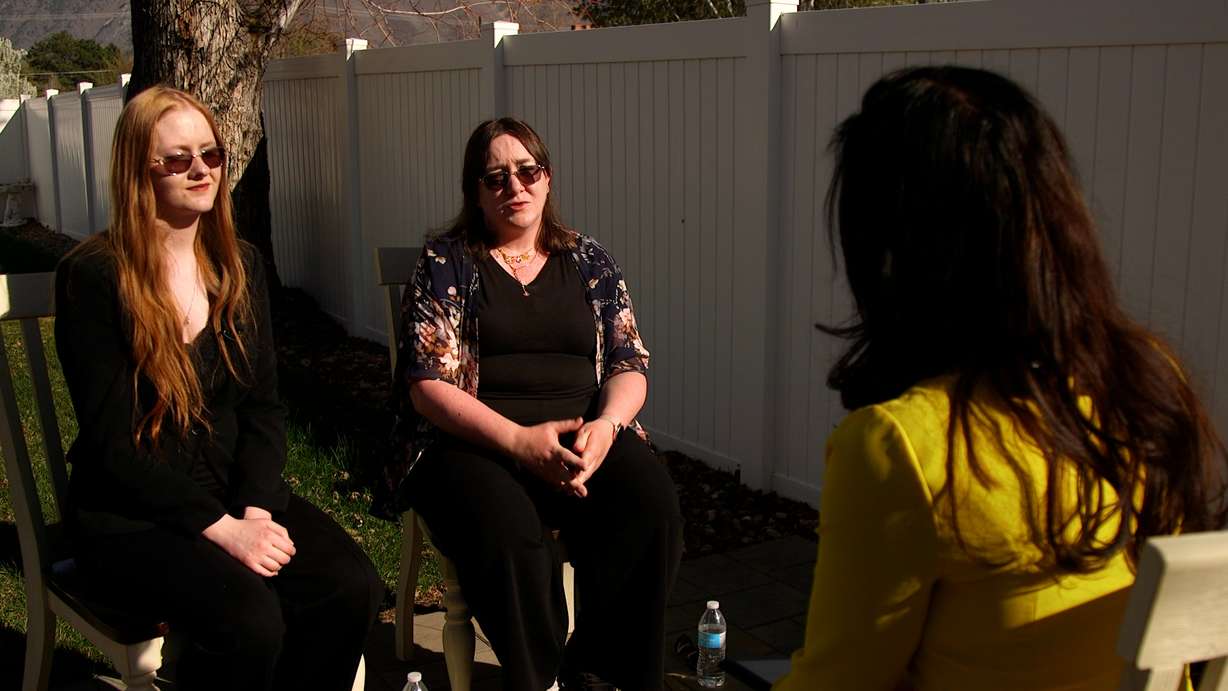
But when Amy pulled up to Brighton High School on March 6 to pick up her daughter and saw police vehicles and a large number of students and staff outside, she feared the worst.
"That there had been another school shooting," she said of her greatest fear in those first moments. "I think that's the immediate thing that goes through everyone's mind, you know, when you see that."
Amy, who asked us not to use her last name, said she was able to call her daughter, Crystal, and confirm that she was safe, though rattled. Crystal said she had been pushed by someone running through the school's halls.
"He shoved me to the side," she said. "I was taken aback. I was very confused. And then a few seconds later, I see our school officer. I see him chasing the kid, and I look over, and I see him tackle him to the ground and put him in cuffs."
Later, parents of students received an email that the incident involved a nonstudent who had a weapon. They were assured that there had been no immediate threat to students or staff. Everything had gone as well as it could have: the nonstudent was identified and detained. No one was injured.
"I think our school is actually very good at keeping things locked and safe and the fact that our security officer was on it like that … I'd say props to that officer," Crystal said. "Really, really amazing school officer."
"I'm feeling very grateful for him," her mother added.
Differences in data
Incidents like this one prompted KSL Investigates to look at what types of weapons are making their way into Utah's schools, and how often.
Over nearly six months, one thing is clear: student safety is a top priority for parents, local and state officials, and it's one reason why the state began collecting weapons-incident data.
KSL filed records requests with the State Board of Education and all of the state's 41 school districts, asking for weapons-incident data spanning five school years from 2019 through 2025.
In all but two instances, the numbers provided didn't match up.
Overall, while the State Board of Education reported 4,907 incidents statewide, the individual districts reported a combined total of 4,370 for the same time period.
The two districts that matched the school board's data — Rich and Tintic — reported zero incidents.
Others showed a wide range of disparities. Like Granite School District, which reported 69 weapons-related incidents to KSL for the time frame requested, but 369 incidents to the State School Board for the same period.
On the opposite end of the spectrum, Cache School District reported 22 incidents to the school board and 165 to KSL.
Luke Allen with Granite School District said the discrepancy was due to a misunderstanding of KSL's request that led to the omission of about 300 incidents. Cache School District left certain reporting fields blank, leaving more than 100 incidents out of the numbers reported to the state.
As KSL Investigates compared the different data sets, we found a variety of circumstances which may explain the discrepancies.
The data provided to KSL came in various formats, from spreadsheets to tables and written summaries. Some districts tracked whether law enforcement was involved and whether an arrest was made in relation to each incident. Others said they did not routinely track arrests in their schools, and that information would typically be maintained by law enforcement.
Despite KSL requesting incident-based reports, some districts sent student-based reports, which counted each individual student involved in an incident and inflated the numbers.
Districts across the state reported utilizing different tracking and reporting systems that sometimes varied both from other districts and, in some cases, internally for certain school years as some districts had changed programs over the years.
For some, pulling the data was straightforward. For others, it would require staff to review each individual incident — a process they said could take as many as 40 hours and require fees in the hundreds of dollars.
Shauntelle Cota, State Board of Education's director of school safety and student services, oversees the school safety center and its data collection team. She said that while certain data fields are required by federal law, state statutes and board rules, they leave a certain amount of the process surrounding the gathering and reporting of incidents up to the individual local education agencies.
Some weapons definitions, who tracks and files weapons incidents and whether to include additional fields and categories in their reporting are also left up to each district's discretion, as long as they align with statute and rule.
"(Local education agencies) are allowed to make any policies that they want that best fit the culture and needs of their particular students and staff," Cota said. "And so, we support any policies that they make that have gone through their own boards and have been voted into policy."
Those variances make it difficult to obtain data sets that cleanly match.
One district told KSL it originally had teachers filling out weapons incident reports for the use of finger guns. This prompted KSL to reach out to a sample of other districts with various scenarios, including finger guns aimed in a threatening way, and asked if it would qualify as a weapon. Some districts said that it would, some said it would not and others said it would depend on the student's age and context.
"There is a definition, but there is also interpretation of the definition," Cota said.
The challenge of flexibility
Joe Hayes, director of operations and district safety at Alpine School District, said this flexibility can be both a challenge and a benefit.
"I think it's tricky because it's not well defined or may not be specifically defined as to, 'Hey, these are weapons and these are not weapons,'" Hayes said. "So, whenever you have that space for some different types of conclusions or decision-making, you have an opportunity for different people to view it a different way."
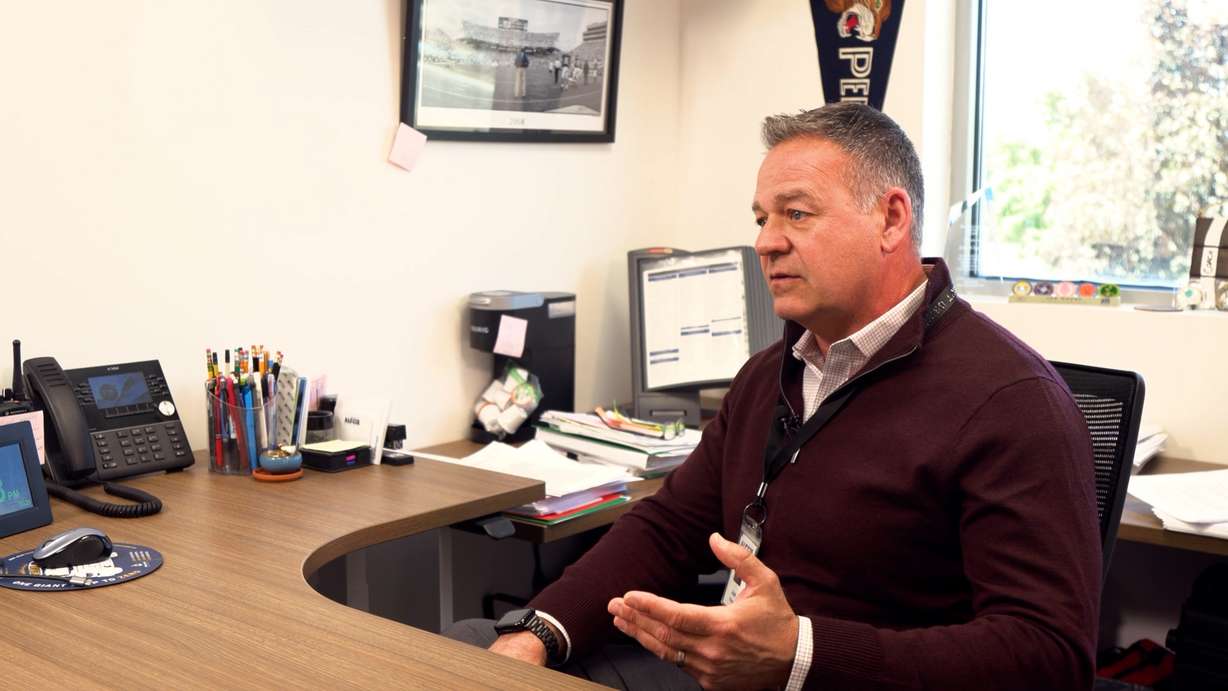
"Maybe that's not necessarily a bad thing because, you know, there are always those one-offs or things that we didn't anticipate or expect that we might want to have that room to kind of allow individuals to decide what constitutes a weapon or not a weapon," Hayes said.
He said administrator training and communication is critical in ensuring incidents are reported accurately, as is putting those incidents in context. Hayes said the "vast majority" of weapons incidents in his district involved weapons being brought to school by accident.
"An example might be a student (who) had a small pocketknife that they were using over the weekend for, you know, a camping trip or something like that and simply forgot to remove it from their backpack and it's discovered at school," he said. "In that context, the weapon shouldn't be at school, but the student brought it by mistake or by accident and never brought it to harm anyone or had any intent to intimidate or do anything like that."
In 2018, Sen. Todd Weiler, R-Woods Cross, voted in favor of SB198 which required the state to collect and report school-based disciplinary and law enforcement data. That reporting system now includes weapons-related incidents. Weiler said the thought at the time was that good data leads to good decisions.
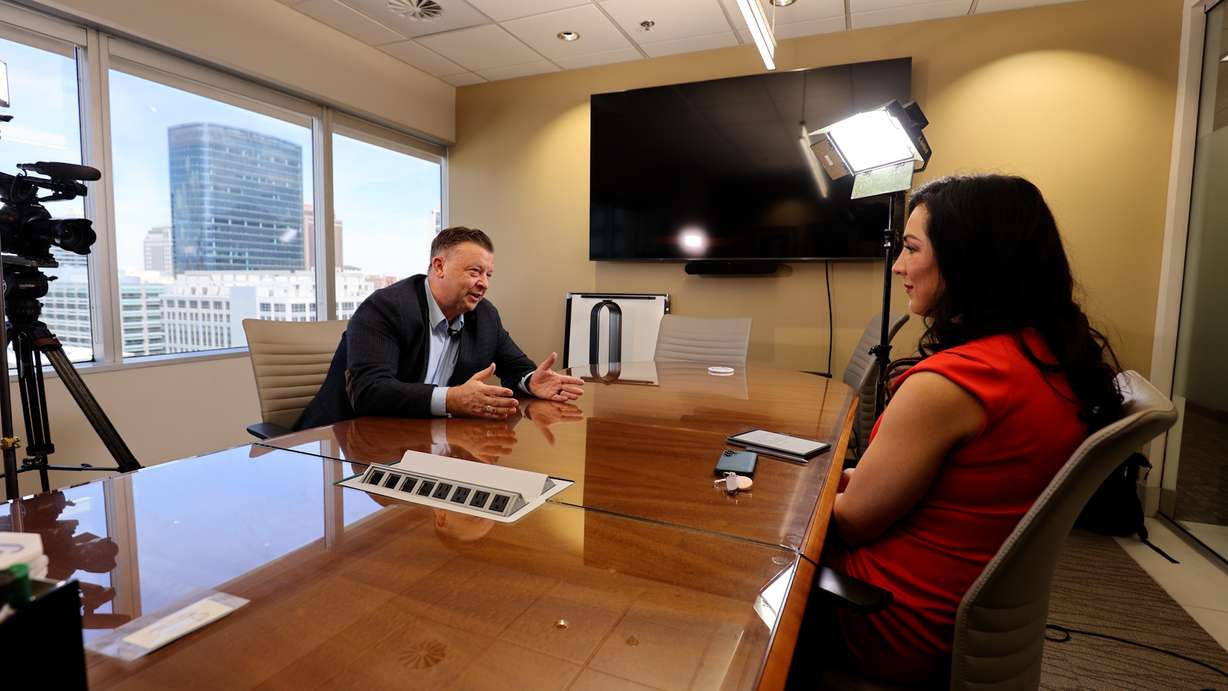
"We had just made some major overhauls to the criminal justice juvenile system the year before, and so it made sense to try to collect some data to see if the changes we had made were working," he said.
Weiler was surprised to learn of the discrepancies between the numbers districts provided to the State School Board and those provided to KSL and expressed concern about the issues presented by leaving interpretation of weapons definitions up to various districts.
"The problem with that is then we don't have any uniform system, so we can't really compare," he said. "Is it getting better? Is it getting worse?"
He said there may be a need to improve the definitions given to local education agencies, and he cited the finger guns example as one incident where he could easily see both sides. Depending on the scenario, some could see it as a threat while others could dismiss it as just a gesture, he said.
"Maybe as a state we need to do a better job explaining what data we want collected and what data we want counted," he said, noting the importance of solid data. "The more information I have, the better decisions I can make as a policy maker."
Why the discrepancies?
Cota said that the various systems used by the districts don't impact the data-gathering process on the state's end, because they are coded into a common format when they are received by the state.
"You can see that there are very specific ways that the data has to be entered and that the system has to be formatted or coded, if you will, to be able to speak that common data language," Cota said.
She said it's a system that's worked for them thus far.
"It comes in to my data team as raw data and then, again, they create the filters and create the reports that they need, and it's worked," she said. "We've done this for years. We've never had any of our local education agencies on one unified system."
Another explanation given for the discrepancies between numbers provided by the state versus the individual districts was the variety of filters that could have been applied to the data to fulfill the requests.
"The variations identified are a byproduct of the technical complexity involved in aggregating data from dozens of distinct local software systems into a single state repository," said Ryan Bartlett, director of strategic communications at the State Board of Education. "We are confident that if USBE staff had the capacity to manually cross-reference every individual record and align filtering methodologies with each local district, these data sets would show alignment. However, performing a reconciliation of this magnitude for a media inquiry would require a significant expenditure of time, technical expertise, and taxpayer-funded resources."
Bartlett said the school board's data reports are accurate under state and federal standards.
"We remain confident in the integrity of the data submitted by our LEAs," he said. "We are continually working to strengthen and improve our data reporting systems, and we remain fully committed to supporting safe, secure learning environments for every student, educator, and school community across Utah."
Ultimately, Cota said the best information will come from the local school systems.
"Be present in the school, be present with the teachers, talk to the teachers (and) talk to the superintendent," she said. "They know their schools, they know their people. We have amazing educators across the state. We have superintendents that care about kids, we have teachers that care about kids and we have a lot of great things going on."
Cota reiterated that while there isn't a standard state reporting system or program, the State School Board is always willing to provide any support needed, whether it be training or help with data. She is confident districts are doing their best.
"We can't be physically present at the schools, and so we trust that the schools are giving us the data that they have," she said.
Putting safety first
Hayes said while there have been serious events regarding weapons in schools in the news, it can lead to misconceptions that things are more dangerous than they are. He said Utah school officials are doing everything they can to make sure their schools are safe.
"Unfortunately, there are tragedies, and we do have events that have happened throughout our country where weapons have been brought into schools," he said. "In the state of Utah, you know, we are doing everything we can to make sure that they continue to be safe places for students."
But he said the thing that has likely protected students the most is their own willingness to report when they see or hear of any potential danger or threats.
"For me, the most important thing is that students feel comfortable enough, that they have a trusted adult in that building that they can go to and share something like that with," he said. "Our children, the students in our building, need to feel like 'I can go to anyone, any adult in that school and let them know what's going on.'"
Crystal and her mother had only positive things to say about their experience with Canyons School District and its approach to student safety. Crystal cited the quick actions of the school resource officer on the day of the incident. The mother praised safety protocols she has seen at schools throughout the district.
"I believe Canyons takes it very seriously," she said. "I believe that they have done a lot to try to provide security in our schools.
That said, she would rather that it wasn't something that her daughter, or anyone else, had to worry about.
"(I'm) thinking about how I wish our children didn't have to have those worries," Amy said, as she began to cry. "Sorry. I wish they wouldn't have to have those fears."
Have you experienced something you think just isn't right? The KSL Investigators want to help. Submit your tip at investigates@ksl.com or 385-707-6153 so we can get working for you.