Estimated read time: 4-5 minutes
- Aerial reseeding is underway on the Cottonwood Fire burn scar in Utah.
- Crews aim to stabilize slopes by spreading 600,000 pounds of seed over 56,000 acres.
- The project, involving multiple state agencies, seeks to prevent erosion and aid wildlife recovery.
JUNCTION, Piute County — The views from high above Utah's mountains can be breathtaking.
Snow-covered peaks, rugged terrain and herds of elk make for the kind of scenery that can fill a photo album quickly.
But for the airplane pilots flying over Beaver Mountain in Beaver County lately, the beautiful views aren't why they're there. They're hoping to make the mountain look even better.
"We've been working on this project for a couple of weeks. We're flying seed on the Cottonwood Fire," said Charlie Hammond with Hammond Helicopter, the company the state of Utah contracted with to do the work.
The Cottonwood Fire burned approximately 97,000 acres this past summer, leaving behind large areas of scorched vegetation and exposed soil.
Now, state agencies and aerial crews are working to help the mountain recover through a massive reseeding operation.
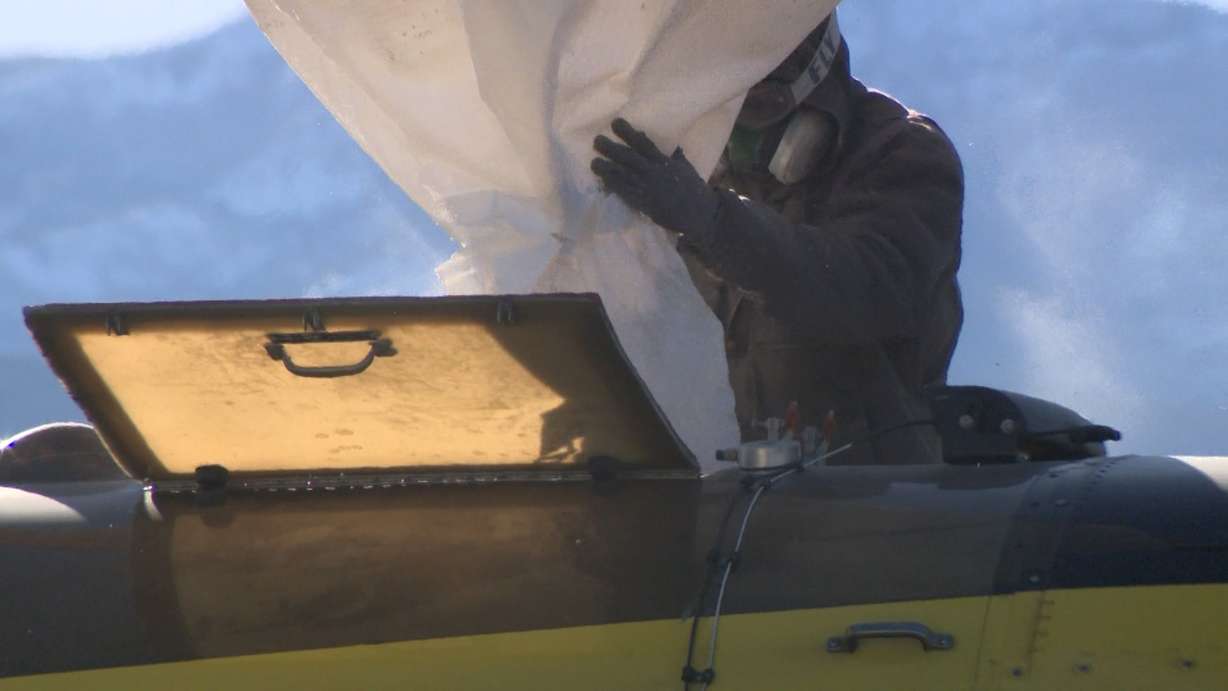
At the small airport in Junction, crews have been loading airplanes with large bags of seed before sending them into the sky to spread that seed across the burned landscape.
"There's close to 500 bags of seed," said Hammond. "That's basically 500 airplane loads worth of seed going up here."
The effort is part of a larger wildfire rehabilitation project involving the Utah Division of Wildlife Resources, the Utah Division of Forestry, Fire and State Lands and other government agencies.
Gary Bezzant, habitat program manager for the Division of Wildlife Resources, said crews are reseeding approximately 56,000 acres with roughly 600,000 pounds of seed.
"After a wildfire, we get together a team of people. We do an analysis and decide what needs to be done," said Bezzant. "We'll look at the severity of the burn, the slopes of the terrain, and then we also lay wildlife habitat over the top of that. When those three all come together at the same spot, we say, 'That's an area that needs treatment.'"
It's an enormous undertaking, but one state officials said is necessary after one of the largest wildfires in Utah history.
"When we have a high-intensity fire like this, there's really a lot of bare ground, which leads to a lot of issues," said Nicholas Dastrup, a forester program manager with the Utah Division of Forestry, Fire and State Lands.
Those issues have already been felt in communities below the mountain. Without vegetation and established root systems to help hold the soil in place, rainstorms have washed mud, sediment and debris down burned slopes.
The massive flooding has affected communities in Beaver and Piute counties, with runoff even washing across U.S. Highway 89 near Junction and on Interstate 15 in Beaver.
"The faster we can get roots in the soil to hold that soil up on the mountain, the better," said Bezzant.
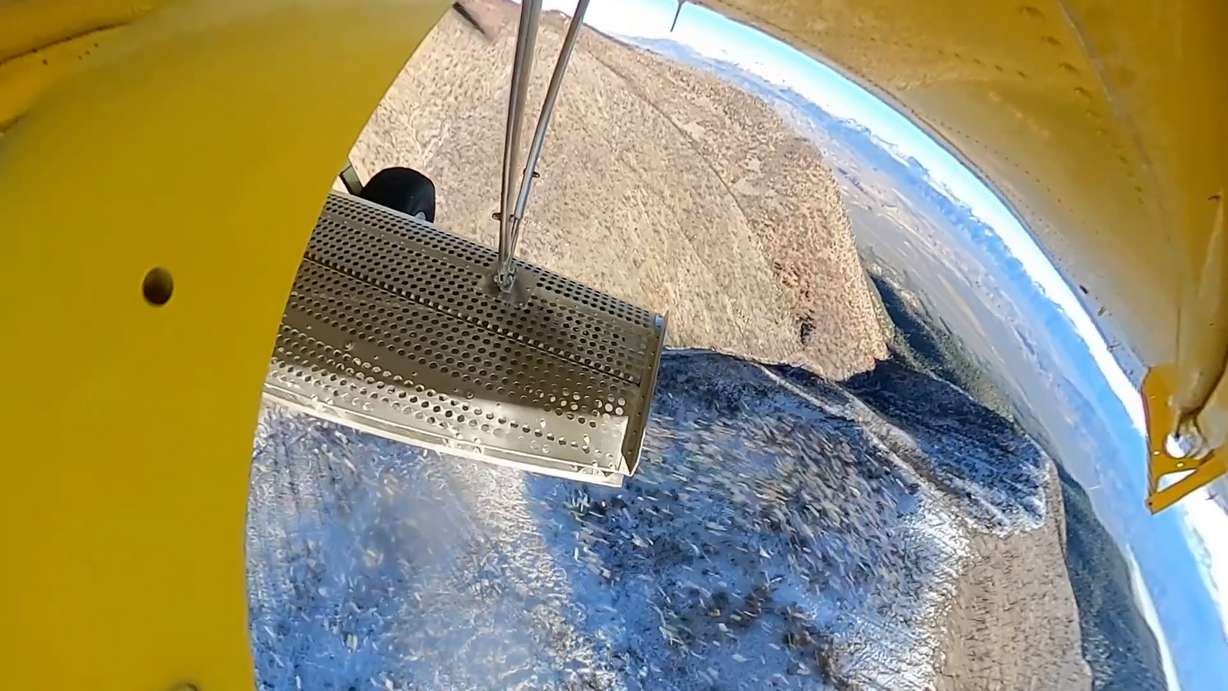
The seeds being dropped from airplanes are intended to help stabilize those slopes, reduce future erosion and restore vegetation lost in the fire.
They could also provide an important benefit for wildlife. Bezzant said the seed mixture includes grasses, forbs and shrubs that provide food and habitat for animals such as deer and elk.
The vegetation could also eventually provide forage for livestock that graze in the area.
"I think a lot about the deer and the elk," said Bezzant.
But getting the seeds onto the mountain is only the beginning. Crews are trying to complete the aerial seeding before winter conditions make flying more difficult. Hammond said pilots have already encountered snowstorms and strong winds while working near burned areas at elevations approaching 11,000 feet.
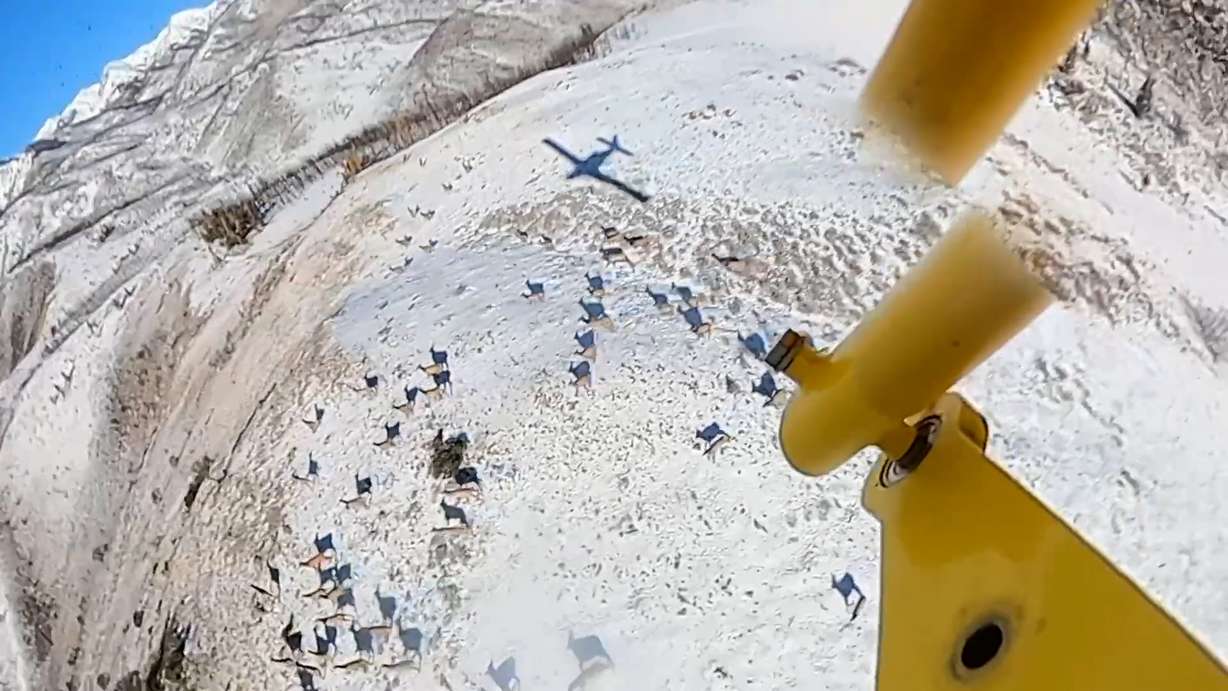
Once the seeds are on the ground, much of the work is left to Mother Nature.
About 600,000 pounds are designated for the Cottonwood Fire area alone.
"Basically, the seed will just sit in the snow, dormant, until the sun comes out and it'll melt the seed down into the soil," said Hammond.
That's when warmer temperatures will help the seeds settle into the soil and begin germinating in the spring. A lot of the success of the project also depends heavily on precipitation and moisture.
"Winters like we've had the last couple of years have been really hard. When we do these projects, we hope for good things, but without the precipitation, the seeds don't germinate and we don't get what we're looking for," said Bezzant. "So, we're hoping this El Niño stuff really is real and we're going to get what we want."
Dastrup said conditions have been encouraging so far, with good fall moisture providing reason for optimism.
"We've got great soil moisture right now, and so we've got really high hopes right now of having a really high success for the seeding," said Dastrup.
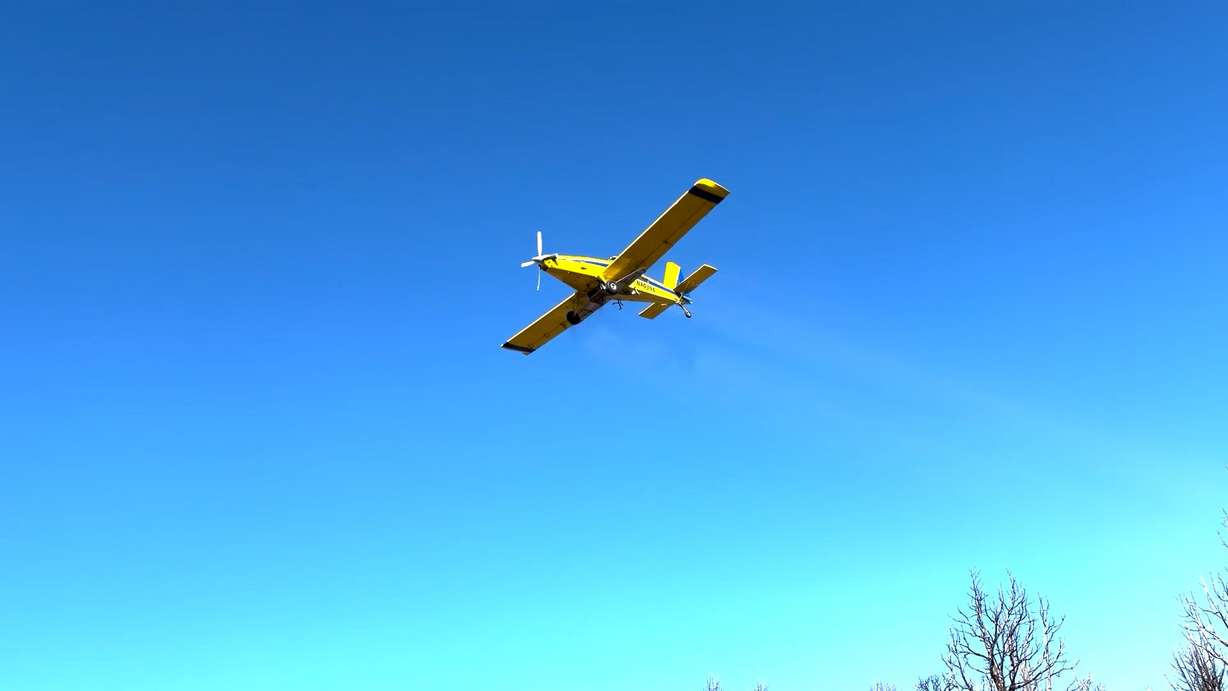
The aerial seeding is also just one part of the broader recovery effort. Other work includes removing some fire-damaged trees at higher elevations and rehabilitation projects along streams.
The hope is that the seeds being dropped now will begin establishing roots next spring, helping restore the landscape and protect communities below the mountain from future erosion and flooding.
"It's exciting. It's watching something reborn," said Dastrup. "What's more exciting is seeing the seed come up this next spring."
After a summer that took so much away, crews are hoping spring will give a little something back.