'%3e%3cpath%20d='M34.1406%205.85938C30.3906%202.10547%2025.3047%200%2020%200C14.6953%200%209.60938%202.10547%205.85938%205.85938C2.10938%209.61328%200%2014.6953%200%2020C0%2025.3047%202.10547%2030.3906%205.85938%2034.1406C9.61328%2037.8906%2014.6953%2040%2020%2040C25.3047%2040%2030.3906%2037.8945%2034.1406%2034.1406C37.8906%2030.3906%2040%2025.3047%2040%2020C40%2014.6953%2037.8945%209.60938%2034.1406%205.85938ZM37.0117%2023.543H31.1602V13.5391H27.6328V19.9414C28.1211%2020.6914%2028.3711%2021.582%2028.3711%2022.5625V22.625C28.3711%2023.668%2028.1172%2024.6055%2027.6328%2025.4297V26.6094H36.082C33.4883%2032.9375%2027.2891%2037.3789%2020.0039%2037.3789C10.3711%2037.3789%202.62109%2029.6289%202.62109%2020C2.62109%2010.3711%2010.3711%202.62109%2020%202.62109C29.6289%202.62109%2037.3789%2010.3711%2037.3789%2020C37.3789%2021.1484%2037.2617%2022.2656%2037.0508%2023.3477C37.0391%2023.4141%2037.0234%2023.4766%2037.0117%2023.543Z'%20fill='white'/%3e%3cpath%20d='M22.3086%2018.5352C20.4336%2018.125%2019.9531%2017.8398%2019.9766%2017.1836V17.1406C19.9766%2016.6992%2020.3477%2016.2148%2021.4023%2016.2148C22.582%2016.2148%2023.8867%2016.6797%2025.0781%2017.4766L26.8516%2015.0195C25.4453%2013.8906%2023.707%2013.3398%2021.5547%2013.3398C18.5195%2013.3398%2016.4375%2015%2016.4063%2017.4766V17.5352C16.3633%2020.2617%2018.5859%2020.9805%2021.293%2021.6016C23.0391%2021.9766%2023.5703%2022.3164%2023.5703%2022.9609L23.5469%2022.9766C23.5469%2023.3906%2023.2578%2023.7031%2022.7852%2023.8359C22.5742%2023.9062%2022.1289%2023.9727%2021.5156%2023.9727C20.7617%2023.9727%2019.7539%2023.8633%2018.6328%2023.4844C18.0898%2023.2891%2017.4727%2023.0039%2016.8047%2022.6133L20.1406%2026.625C20.2813%2026.6602%2021.0977%2026.8516%2021.7734%2026.8516C25.0039%2026.8516%2027.0859%2025.2461%2027.1094%2022.6328V22.5703C27.1602%2020.1133%2025.2148%2019.1719%2022.3086%2018.5352Z'%20fill='white'/%3e%3cpath%20d='M5.24219%2013.5664V26.6133H8.75391V23.7578L10.2969%2021.9531L14.2031%2026.6133H18.3867L12.3555%2019.5195L17.4023%2013.5664H13.4531L8.75391%2019.0586V13.5664H5.24219Z'%20fill='white'/%3e%3c/g%3e%3cdefs%3e%3cclipPath%20id='clip0_97_2430'%3e%3crect%20width='40'%20height='40'%20fill='white'/%3e%3c/clipPath%3e%3c/defs%3e%3c/svg%3e)


Estimated read time: 2-3 minutes
- Recent storms in Utah provided rain but haven't replenished reservoirs, experts say.
- Laura Haskell notes thirsty soils absorb rain before reaching reservoirs, limiting impact.
- Officials highlight low reservoir levels, urging reduced outdoor water use amid ongoing drought.
SALT LAKE CITY — Utah's recent storms are bringing much-needed rain to drought-stricken areas, but water experts say the precipitation is doing little to replenish the state's reservoirs.
While the rain has provided temporary relief and reduced the need for outdoor watering, much of the water is absorbed before it can reach streams and reservoirs, according to the Utah Division of Water Resources.
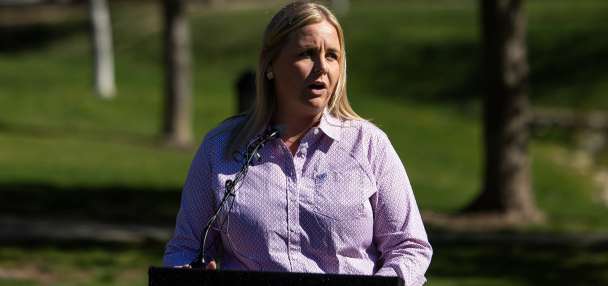
"It reduces demand, but it doesn't increase supply," said Laura Haskell, drought coordinator for the division.
After extended dry conditions, thirsty soils and vegetation soak up much of the rainfall before it can contribute to water storage.
"They have a lot of debris in them," Haskell said of recent rainstorms. "They get soaked up by the ground, by the vegetation and sort of disappear."
Some Utah reservoirs remain at critically low levels despite recent precipitation. Haskell pointed to Yuba Reservoir as being "almost bone dry," while water levels at Steinaker Reservoir have also dropped significantly.
Larger reservoirs have been better able to withstand dry conditions because they can store water from multiple wet years.
"Like Deer Creek, they may have gone down, but where they hold so many years of water, it's not as noticeable necessarily," Haskell said.
Still, officials warn that even large reservoirs can only rely on water saved during wet years for so long.
The impacts of declining water levels are already being felt across the state, particularly in rural and agricultural communities.
"A lot of agricultural producers are having to haul water to their animals, to their livestock that would normally be fed by wells and springs," Haskell said.
Haskell encourages Utahns to take advantage of the recent wet weather.
"It's very humid outside. Your landscaping doesn't need as much water," she said. "We use more than half of our water outside."
Looking ahead, state officials say Utah's water outlook will largely depend on what happens this winter. A strong mountain snowpack is critical for maintaining healthy reservoir levels and supporting water supplies across the state.