- The Utah Department of Public Safety is warning of a new scam involving fake court notices demanding payment for traffic violations via QR code.
- Authorities advise vigilance and reporting to police if money was sent to scammers.
TAYLORSVILLE – The Utah Department of Public Safety is warning about a new scam that hit the phones of Utahns on Thursday.
The message contained what purported to be a "final court-ordered mandatory collection notice" from the state of Utah, warning that the recipient's "traffic violation account" is delinquent and in default. A QR code at the bottom directs them to an "official secure portal" to make a payment.
But it's not legitimate. Neither is the "Department of Safety & Homeland Security" listed at the top of the notice. Such a department does not exist in Utah.
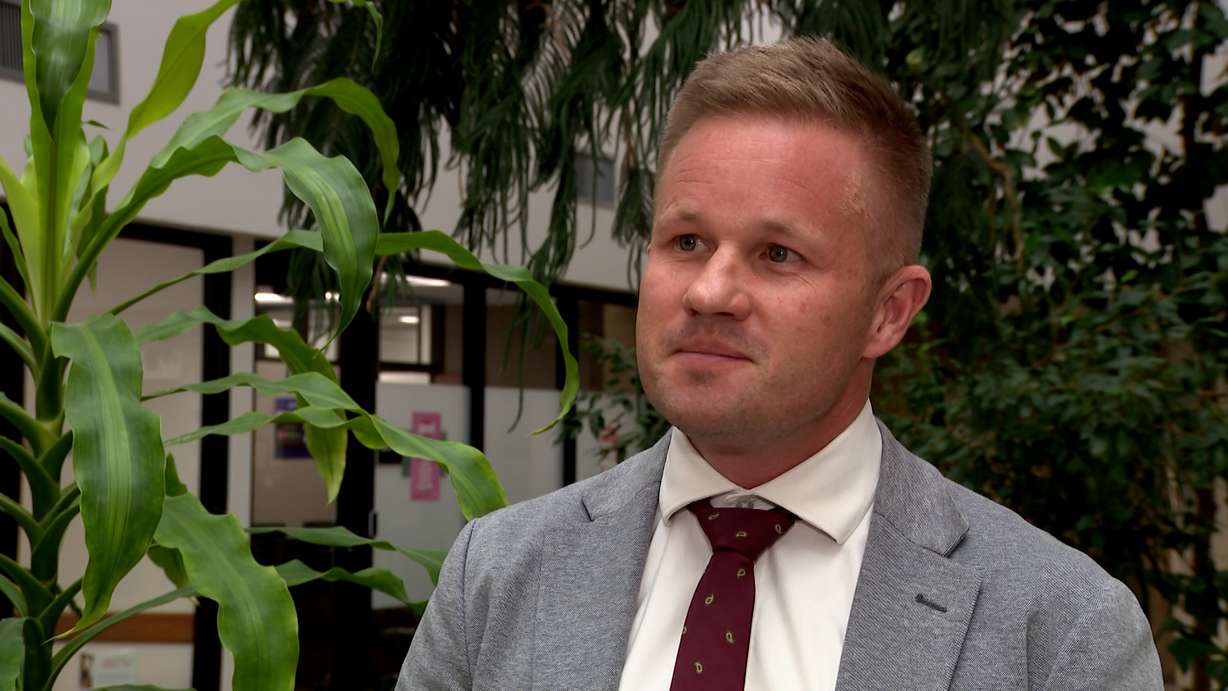
"We've received reports that this scam particularly has gone out far and wide," said Tanner Jensen, chief of investigations at the real Department of Public Safety.
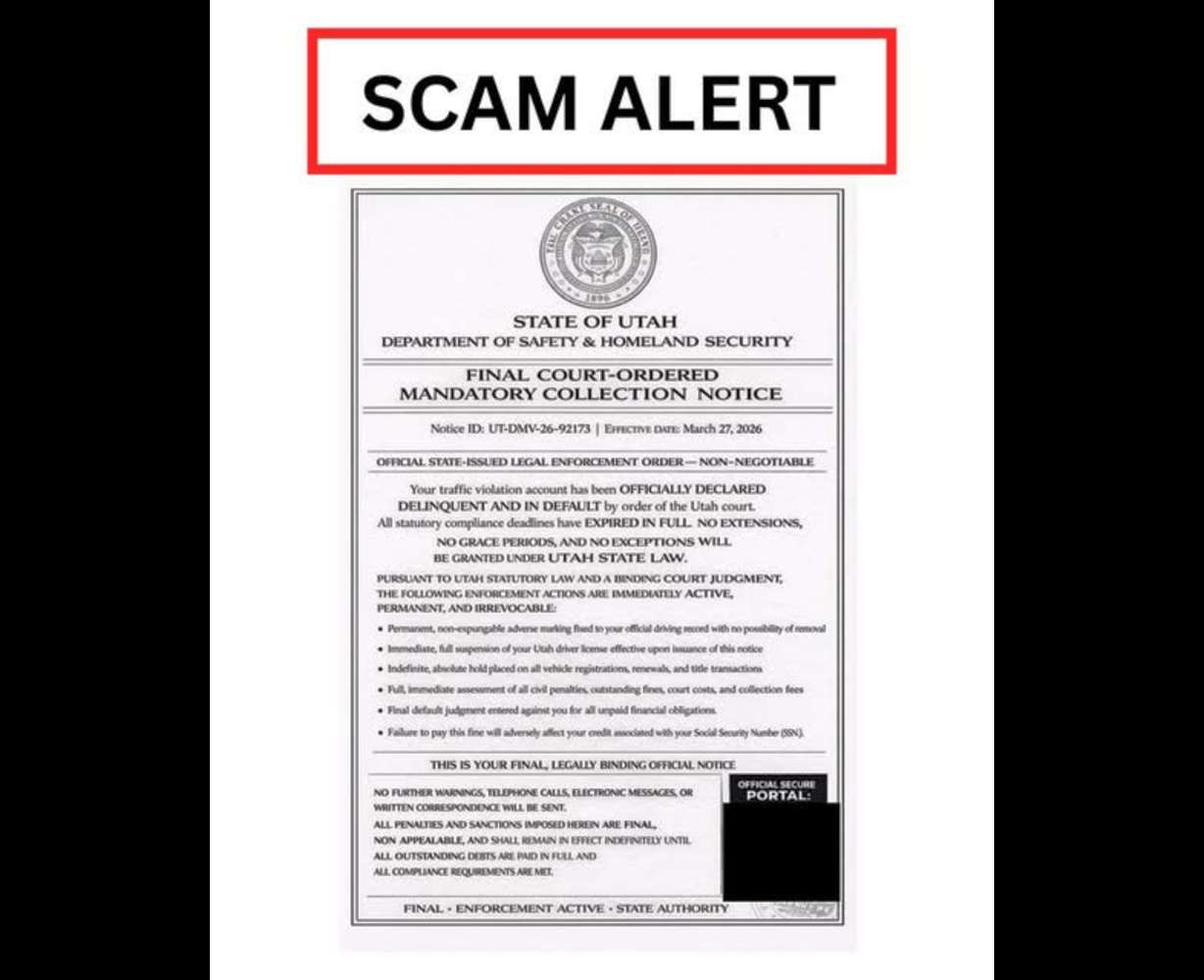
By mid-afternoon Thursday, DPS had received around 100 calls from people reporting the scam, some of whom had already tried sending money.
Scams like this are becoming much more sophisticated, Jensen said.
"There are several things about it that look official, and you can tell that they've probably used some type of artificial intelligence to make it look official," he said. "But still, the government would never send something alarming, threatening and require immediate action."
Jensen said the scammers are likely from overseas and use AI to clean up grammar mistakes that used to be a hallmark of such scam attempts.
He said people should be aware of that and other red flags — and never respond to a similar request for money. Jensen said anyone who has sent money should contact their local police department and file a report.
"If you see something that requires immediate action and threatens you, your first thing should be, 'Oh, this might be a scam, let me look deeper into this before responding,'" Jensen said.
Ultimately, Jensen said, scammers continue to send these messages because they're "somewhat successful" in getting money from people. He urged vigilance.
"Scams are not going away," he said.