- Utah requested $1 billion in federal aid to address Great Salt Lake issues.
- Gov. Spencer Cox is optimistic about bipartisan support following Trump's supportive remarks over the weekend.
- Utah's proposal may involve creative conservation solutions.
Editor's note: This article is published through the Great Salt Lake Collaborative, a solutions journalism initiative that partners news, education and media organizations to help inform people about the plight of the Great Salt Lake.
SALT LAKE CITY — President Donald Trump promised Utah leaders that he wants to work "closely together" on Great Salt Lake issues, before he posted on social media about the lake over the weekend, according to Gov. Spencer Cox.
Trump's remarks, first posted on Truth Social on Saturday and republished on the White House's X account on Monday, came after Utah leaders had spent the past few months asking the federal government for help as lake waters have receded. The governor requested funding to support efforts to get water to the lake, which could be in the range of $1 billion.
"I told him that it's going to take funding to help us save the Great Salt Lake. He didn't flinch at that at all. He said he could be supportive of helping us secure the funding that we need," Cox said on Monday. "We've been working on a plan for a long time, and I'm very excited about the future of the Great Salt Lake."
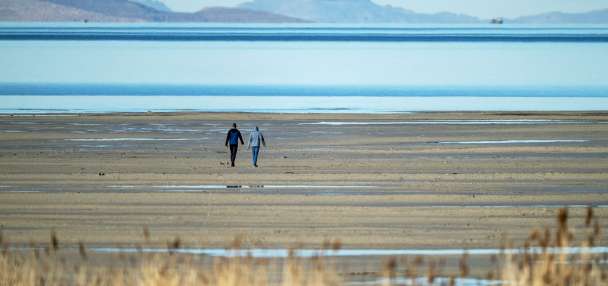
The Great Salt Lake's southern arm has risen in recent months, but it remains approximately 6 feet below its healthy minimum level. Snowpack levels within its basin remain below 65% of the median for late February, which is why experts don't believe it will make many gains this spring.
That could push levels close to their record low again by the end of the summer. Trump wrote that the lake's decline is "an environmental hazard that must be worked on, IMMEDIATELY."
"The people of Utah are spectacular, and they deserve to be helped. I am dealing with your very caring governor, Spencer Cox, and we are going to make it all happen," he added.
Generating bipartisan support?
Utah leaders are still crafting an official proposal for the federal government, which is expected to be presented in the coming months, Cox said. It's still unclear if Utah will receive $1 billion for Great Salt Lake efforts or any federal assistance at all, as such a request will likely require congressional support.
All of us, across the political spectrum, know how important this is. That gives me hope.
–Utah Gov. Spencer Cox
Still, state leaders remained giddy days after the president's post because they believe it carries weight in future funding discussions. It might also help close any political divides related to the lake's decline.
"This is a bipartisan effort. This is not just kind of the environmental left that's interested in saving the lake. It's the MAGA right as well," Cox said. "All of us, across the political spectrum, know how important this is. That gives me hope."
It could also help Utah when it comes to negotiating the Colorado River, said Utah House Speaker Mike Schultz, R-Hooper. It's important because any cuts to Utah's Colorado River allotment could impact water that flows into the Great Salt Lake via the Central Utah Water Conservancy District system, so the post may enhance efforts to retain existing rights or gain new ones, he points out.
An extra $1 billion, he said, could go toward many more conservation projects or water rights deals. It could also go toward massive projects, such as desalination or pipelines, that deliver more water to the Lower Basin states in exchange for Utah receiving a greater share of the Colorado River supply.
"These are all discussions that need to happen," he said, explaining that solutions will require creativity.
"If we think we're going to be able to save the Great Salt Lake without our federal partners, it's just not going to happen," he added. "We need to work together and collaborate because it's a regional issue (and) a worldwide issue."
State leaders spoke about Trump's post before and after unveiling a new partnership with the petroleum industry that the state says will increase fuel supply, potentially lowering gas prices and resolving a feud with Idaho. That agreement includes more collaboration with Idaho on Bear River issues, a key tributary for the Great Salt Lake.
Utah's northern neighbor tentatively agreed to increase the water supply on the Bear River system. The measure doesn't secure additional water rights, but it could help send more excess flows into the lake.