- A study outlines the potential costs for 12 solutions for Great Salt Lake dust mitigation.
- Water-based solutions offer ecological benefits but are costly; nonwater options are cheaper, but don't offer as many benefits.
- The Great Salt Lake's decline poses a threat to Utah's growth, officials say.
Editor's note: This article is published through the Great Salt Lake Collaborative, a solutions journalism initiative that partners news, education and media organizations to help inform people about the plight of the Great Salt Lake.
SALT LAKE CITY — While the Great Salt Lake's decline remains a key issue in the Salt Lake Valley, Tim Hawkes suspects it might not even crack the top 100 issues in other parts of the state.
However, as he spoke to some members of the Utah Legislature gathered at Capitol Hill on Tuesday, he warned them that it should be a higher priority. Its collapse would be an "existential threat" for the state, with costly and irreversible consequences.
"I think it's the single-biggest threat to Utah's long-term ability to grow and thrive," said Hawkes, a former state lawmaker who now chairs the Great Salt Lake Advisory Council and serves as interim executive director for Great Salt Lake Rising, a coalition of private individuals fundraising for the lake.
"There's nothing else out here as big and dire," he added. "You can mess up transportation and course correct, you can mess up education and course correct. This one you cannot screw up, and we've seen what that means."
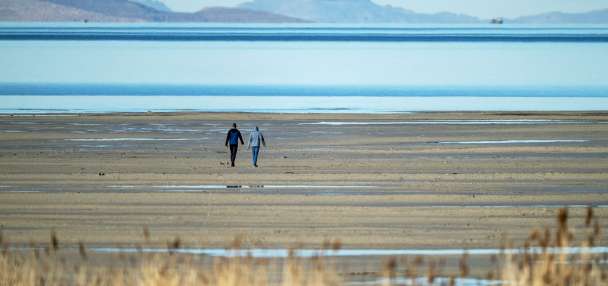
Most of that concern comes from what's known from other terminal saline, which have dried out and pushed dust into surrounding areas. It could create regulatory, economic and ecological damage if left untreated, according to the University of Utah.
But there are options to mitigate the problem with varying costs and successes, university researchers say. They unveiled those in a study released on Thursday, outlining the costs, longevity, ecological value and other elements of 12 potential solutions for lake dust.
Fixing the lake's dust concerns
Getting water to the lake would be the most effective solution in terms of dust mitigation, longevity and ecological benefits, but it would be expensive, the report finds. Three of the water-based options would require at least 2.3 to 3.15 acre-feet per acre, with potential lakewide capital costs of $12.6 billion to $31.2 billion over 50 years.
That doesn't include the costs of acquiring water, nor the basin-wide conservation effort it would take to get water to the lake.
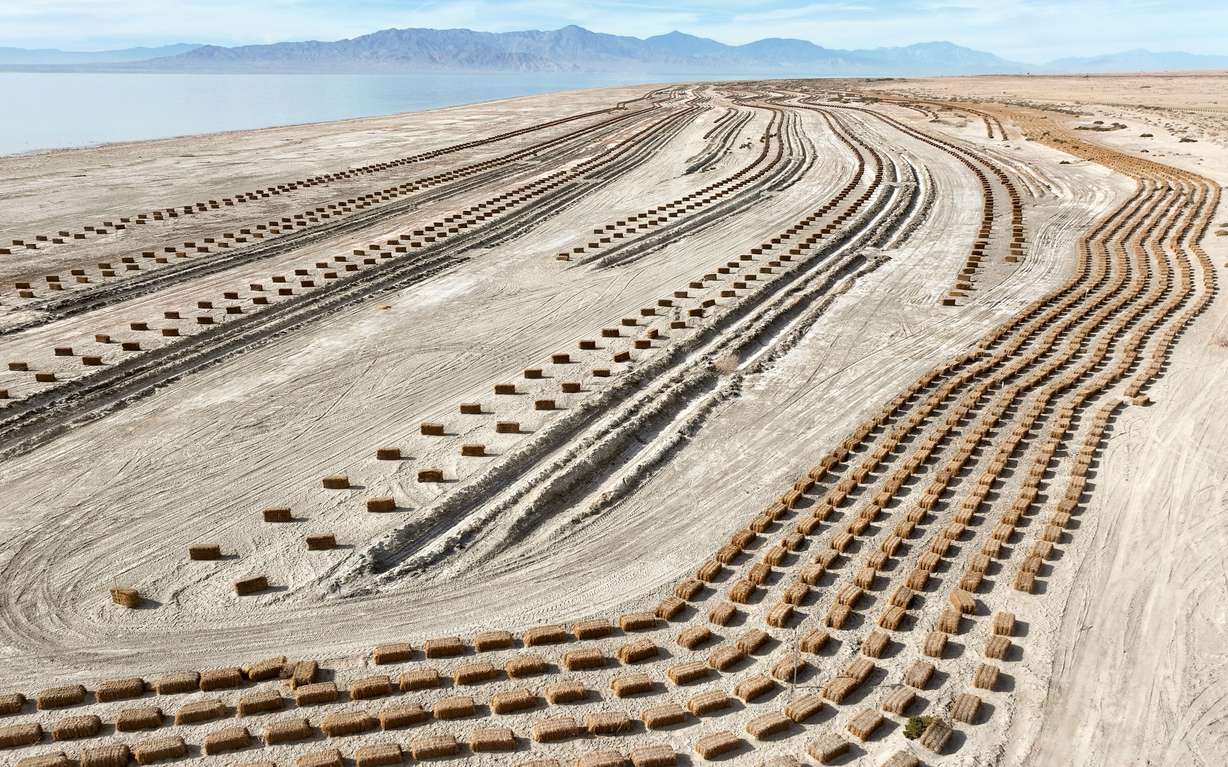
An option to place gravel over the lakebed is considered the top non-water option to mitigate dust, which would require no water. It would be cheaper — with an estimated lakewide capital cost of $10.1 billion over 50 years — but it would offer "very low" ecological benefits and poor aesthetics.
Mechanical tillage, or deep furrows in the soil, would be even cheaper, but likely less effective. It would also require more work while also providing little to no ecological benefits, the report added. The report doesn't offer a comparison to the potential costs from not having water, such as impacts to the brine shrimp industry or migratory bird populations.
The best option?
Researchers point out that no solution offers "both universal applicability and minimal long-term costs." They also outlined three "hypothetical scenarios," in which multiple water-based and nonwater solutions are used to maximize dust mitigation, cost, ecological needs and other elements. Many of these have cheaper long-term costs and various tradeoffs than picking a single solution.
(Every option) entails significant financial costs, ecological tradeoffs and uncertainties that must be carefully assessed prior to implementation.
–Kevin Perry, a professor of atmospheric sciences at the University of Utah
The findings are based on evaluating "a broad range of potential dust control options," said Kevin Perry, a professor of atmospheric sciences at the University of Utah, and the study's lead author. Most of the costs are based on what was used to mitigate dust at other saline lakes.
Various Utah agencies assisted in the research. It's meant to weigh the pros and cons of every potential option for policymakers to consider without endorsing a solution.
"The analysis confirms that multiple dust control options are technically feasible, but each entails significant financial costs, ecological tradeoffs and uncertainties that must be carefully assessed prior to implementation," he said in a statement.
The report was released as the lake again faces near-record-low levels. Its southern arm remains a little more than 6 feet below what's considered its minimum healthy level.
Those who manage the lake's situation say they're still committed to getting more water to the lake, but the report offers more options in the state's effort to avoid the worst-case scenario.
"We are continuously interested in opportunities to add more tools to our toolbox regarding Great Salt Lake," said Brian Steed, Utah's Great Salt Lake commissioner. "This dust study helps create a clearer picture of where dust events are occurring, what may be in the dust and what tools we can utilize to mitigate risks."