- Mike De Mie was charged $559 despite a free-phone offer from Verizon.
- Utah law requires companies to clearly define terms when advertising something as "free."
SARATOGA SPRINGS — Mike De Mie had been getting offers from Verizon, his cell phone company.
"Don't miss out, get an iPhone on us," he said of the free phone offer. They were offering two free phones and two additional lines, and it would only raise his bill by about $20 a month. So, De Mie said yes.
"After being told we were going to get two free phones, a month later, we got an invoice for $559," he said. De Mie says he called and spoke to an agent who agreed that they had messed up and would fix it. But what he got wasn't an adjustment.
"They turned our phones off," he said. "They wanted the money."
De Mie says he was strong-armed into paying to get his phones working again. When he protested this time, he was told that he was misinformed when he was told the phones were free.
"Where I come from, misinformation means a lie," he said. "Are you saying you lied to me?"
"Is that how you feel?" KSL's Matt Gephardt asked.
"Yeah, they did lie."
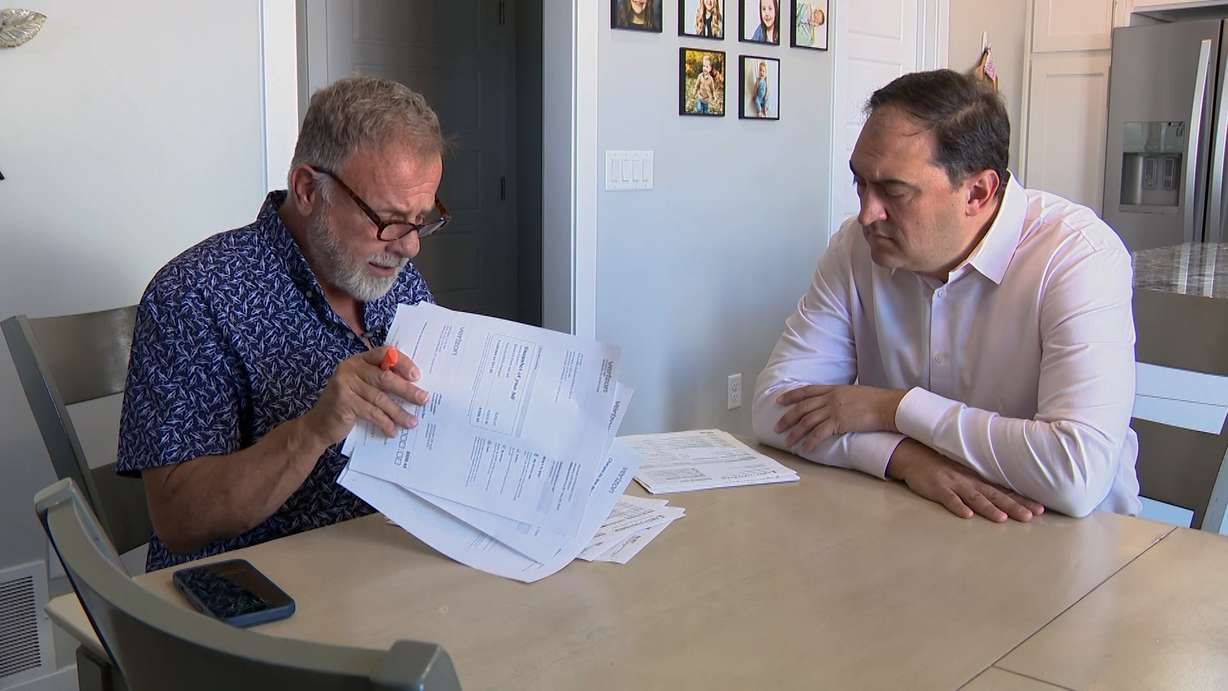
Gephardt reached out to Verizon on De Mie's behalf, not through customer service, but through the public relations department: How can they offer something for free and then demand hundreds of dollars?
Verizon said, for privacy reasons, they couldn't discuss it, but they did resolve De Mie's issue.
"I don't wanna pay the $559," he said. "That wasn't the agreement."
He says the day the KSL Investigators called Verizon, he heard from the company's executive office. In addition to getting those free phones, as advertised, the company also gave him a "courtesy credit of $100," as an apology for the hassle.
What is 'free?'
You should know that, legally, the word "free" is very specific. It means free. If a company offers something for "free," it must genuinely cost the consumer nothing with clear terms stated upfront. Otherwise, it's a violation under Utah Code.