Estimated read time: 3-4 minutes
- A court blocked President Donald Trump's executive order redirecting $4 billion in homelessness funding.
- Utah's central campus funding, a 2026 priority, faces uncertainty due to the ruling.
- Gov. Spencer Cox seeks $75 million for the campus, relying on diverse funding sources.
SALT LAKE CITY — President Donald Trump's overhaul of federal homeless services faced a setback on Friday that could jeopardize Utah Gov. Spencer Cox's top priority for 2026: funding Utah's massive central homelessness campus.
A federal judge temporarily blocked an executive order from July that redirected nearly $4 billion in grant money away from "housing first" programs and toward states like Utah with a focus on public safety and mandatory treatment.
Lawyers from 20 mostly Democratic-led states, local governments and nonprofit groups argued the changes risked undermining programs that provide housing for around 170,000 people, Reuters reported.
If the program went into effect, Utah could also lose programs that house up to 1,000 people, according to the National Alliance to End Homelessness. Around 37% of Utah's permanent housing beds are funded through the federal Continuum of Care program.
But the court ruling could jeopardize federal funding that Utah's governor has repeatedly said will be critical to powering the state's latest attempt to counter chronic homelessness in the state, which reached record levels in 2025.
Bill Tibbitts, the deputy executive director of Crossroads Urban Center, a local nonprofit that provides food and clothing to low-income families, said the ruling could force the state to switch gears on how it intends to fund homelessness services.
Related:
Is Miami the key to solving homelessness, criminal justice issues in Salt Lake County?
Salt Lake County explores adopting Miami-Dade County's model to address homelessness and criminal justice."Crossroads Urban Center urges our state leaders to recognize that extra federal funding may never be available for building the controversial campus and to pause any plans that were contingent on receipt of those funds," Tibbitts told the Deseret News in a statement.
Funding the central campus

From the beginning, Cox has framed Trump's policy shift as an opportunity. The past few years have seen Cox and his incoming homelessness adviser, state Rep. Tyler Clancy, R-Provo, distance the state from the housing-first approach it once exemplified.
Instead of pouring millions into long-term, low-barrier-to-entry housing, the Utah Legislature has followed Clancy's lead in cracking down on drug use in and around shelters, connecting first responders with mental health resources and expanding a statewide homelessness database.
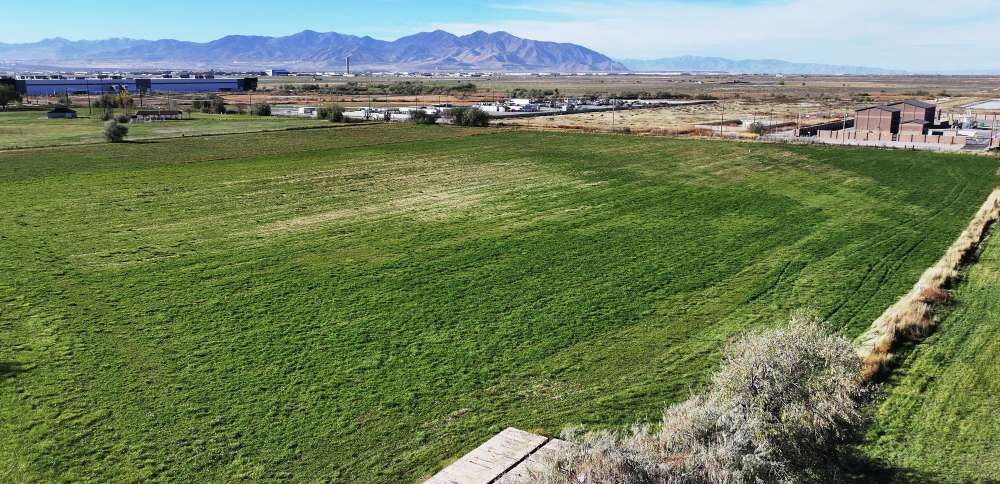
But the backbone of the state's reimagined strategy to homeless services has been a so-called "transformational" campus, which recently broke ground just north of the Salt Lake City International Airport.
The 16-acre, 1,300-bed facility, modeled after successful campuses in Reno, San Antonio and Miami, would seek to create a centralized, one-stop location for Utah's chronically homeless population to receive mental health treatment and addiction recovery help.
The program would prioritize "high utilizers," according to Cox's fiscal year 2027 budget recommendations. These are the repeat criminal offenders who may require involuntary commitment to become sober and progress toward self-reliance.
The central campus is intended to work in tandem with Salt Lake County's dispersed service-centers model that was established over the past half-decade, according to Clancy. It will also approximately double the amount the state spends annually on homeless services.
Legislators already appropriate roughly $20-30 million each year to support homeless shelters. In the upcoming legislative session, Cox will pressure lawmakers to set aside $25 million, on top of last year's $25 million, to complete construction of the campus.
The governor will also lobby for $20 million in ongoing funds to operate the campus. Cox's requests fall short of the total expected costs of the campus: $75 million to build, and at least $30 million annually to operate.
He told the Deseret News he is counting on municipalities, private donors and the federal government to pick up the rest of the tab and called the central campus the "perfect project" for Trump's revised federal grant process.
Cox met with Trump's housing secretary in Washington, D.C., on Dec. 10, just after the administration withdrew its newly revised grant program. The state's application for funding under the new rules had not progressed because of the November government shutdown, Cox said.
The Department of Housing and Urban Development said it remains "committed to program reforms," The New York Times reported. But it is unclear whether the administration will try again to change homelessness funding for fiscal year 2027, or whether Utah will have to wait for future funding opportunities.