Estimated read time: 4-5 minutes
- The Trump administration has opened 48,000 acres in Utah for coal leasing, sparking controversy from conservation groups.
- Conservationists oppose leases near Zion, Bryce Canyon and Capitol Reef National Parks as well as Grand Staircase-Escalante National Monument.
- Critics argue coal mining threatens tourism, clean air, wildlife and the health of local waterways.
SALT LAKE CITY — President Donald Trump's "One Big Beautiful Bill" has cleared the way for 48,000 acres of previously off-limits Utah public land to be available for coal leasing.
Utah's portion is part of over 13 million acres of land across the U.S. made available for coal leasing, according to a September announcement from the Department of the Interior.
"President Trump promised to put American energy workers first, and today we're delivering," Doug Burgum, U.S. Secretary of the Interior, said in a statement. "By reducing the royalty rate for coal, increasing coal acres available for leasing and unlocking critical minerals from mine waste, we are strengthening our economy, protecting national security and ensuring that communities from Montana to Alabama benefit from good-paying jobs. Washington doesn't build prosperity; American workers and entrepreneurs do, and we're giving them the tools to succeed."
However, much of Utah's newly available land is situated near national parks and monuments, which has drawn ire from groups like the Southern Utah Wilderness Alliance and other conservation organizations.
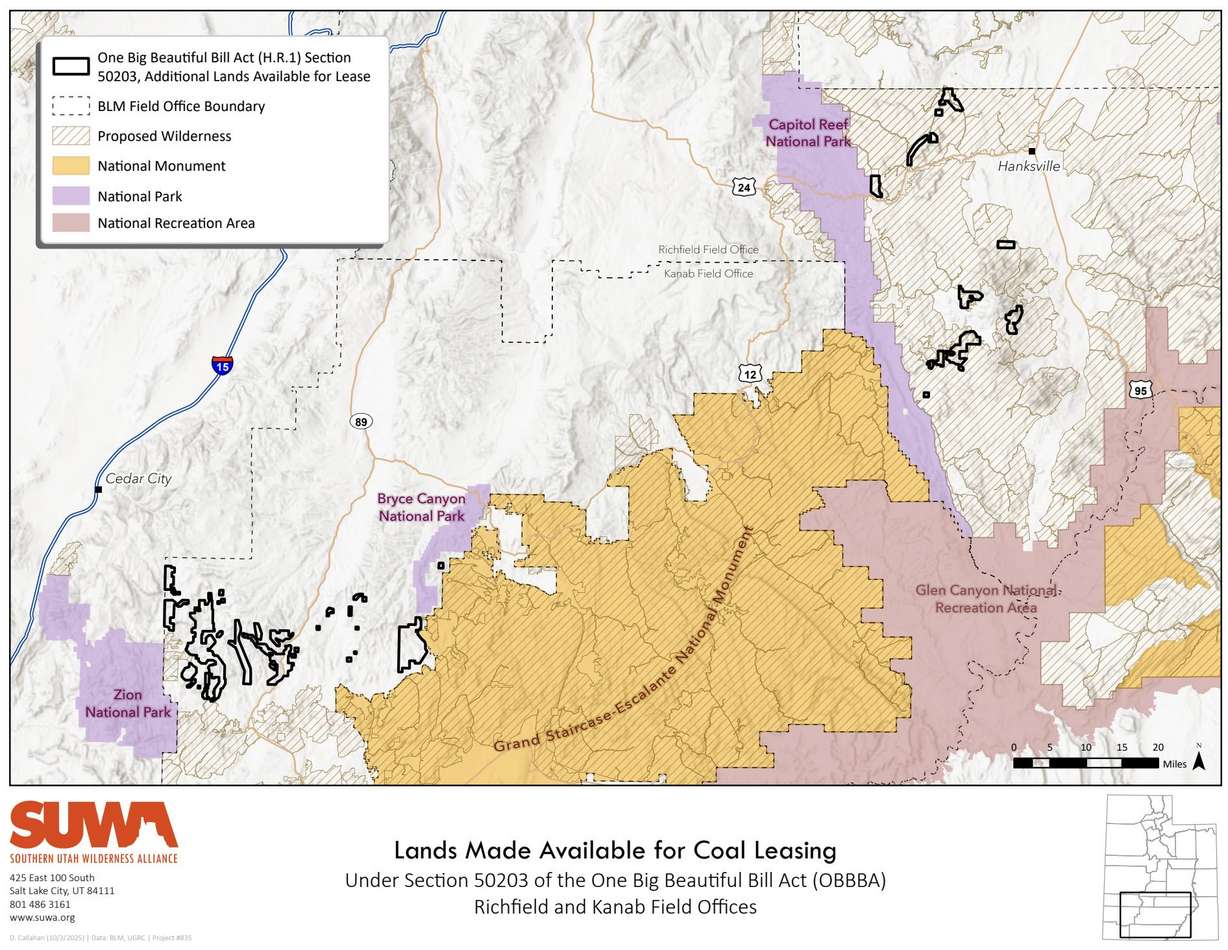
Specifically, parcels available for leasing are directly adjacent to or near Zion, Bryce Canyon and Capitol Reef national parks and Grand Staircase-Escalante National Monument.
"The Trump administration views southern Utah's remarkable red-rock country as just another place to exploit and plunder as they promote new coal mining. Nothing could be further from the truth. America's national parks, national monuments and wild public lands don't deserve this fate, and we'll work tirelessly to stop it from happening," Steve Bloch, legal director with the Southern Utah Wilderness Alliance, said in a statement.
Bryce Canyon and Grand Staircase-Escalante
A nearly 12,000-acre parcel in Utah, available for lease, is situated along the western side of Grand Staircase-Escalante and to the south of Bryce Canyon, with another parcel located on a section of public land between the two.
If coal leasing and development were to move forward, the alliance said impacts would likely be visible from the Bryce Canyon Scenic Drive and its array of overlooks in the southern portion of the national park.
It could also impact the local waterways.
"The potential coal mining lease on the northwestern border with Grand Staircase-Escalante National Monument is a bad idea because the water that flows through this section feeds the tributaries of the Paria River, which breathes life into the landscape of Grand Staircase-Escalante," Jacqualine Grant, executive director of Grand Staircase-Escalante Partners, said in a statement. "National Parks, monuments and private landowners will all feel the impact of these decisions."
Bobby McEnaney, director of land conservation at the National Resource Defense Council, said in a statement that coal mining in the area will "destroy exactly what makes these places singular," specifically mentioning clean air, dark skies, wildlife populations and the economy that relies on tourism to the area.
Zion National Park
The parcels closest to Zion are located on the eastern side of the park, between the park's border and U.S. 89.
They would also include a portion of the North Fork of the Virgin River and North Fork Road, which provides access to the Zion Narrows, as well as the Chamberlain Ranch and Orderville Gulch Trailheads.
"Our current government is lovesick for king coal, and this is the ill-conceived result," Aaron Paul, staff attorney with the Grand Canyon Trust, said in a statement. "Americans don't want to visit Utah's majestic national parks and monuments for a sweeping view of a coal mine."
Capitol Reef National Park and Utah's red-rock wilderness
An approximately 2,000-acre parcel available for coal leasing is situated directly next to Capitol Reef's eastern border, on the way to the Temple of the Sun and Moon monoliths in the Cathedral Valley area of the park, with other parcels also east of the park in the remote Henry Mountains.
A majority of the 48,000 acres — 30,700 — are located in wilderness-eligible lands included within the Utah Wilderness Coalition's legislation, America's Red Rock Wilderness Act.
"These attempts to hand over our public lands and wild spaces to corporate polluters are tone deaf to the voice of the people. We said no during the budget reconciliation process and that no still stands," Franque Bains, director of Utah Sierra Club, said in a statement. "Our national parks and public lands protect and conserve the land, air and water throughout our state, allowing for us to have some of the most beautiful wild spaces in the nation for our communities to recreate in and enjoy. These latest coal leasing announcements show that they're still not set to listen. We'll keep fighting to keep our public lands protected and public."