'%3e%3cpath%20d='M34.1406%205.85938C30.3906%202.10547%2025.3047%200%2020%200C14.6953%200%209.60938%202.10547%205.85938%205.85938C2.10938%209.61328%200%2014.6953%200%2020C0%2025.3047%202.10547%2030.3906%205.85938%2034.1406C9.61328%2037.8906%2014.6953%2040%2020%2040C25.3047%2040%2030.3906%2037.8945%2034.1406%2034.1406C37.8906%2030.3906%2040%2025.3047%2040%2020C40%2014.6953%2037.8945%209.60938%2034.1406%205.85938ZM37.0117%2023.543H31.1602V13.5391H27.6328V19.9414C28.1211%2020.6914%2028.3711%2021.582%2028.3711%2022.5625V22.625C28.3711%2023.668%2028.1172%2024.6055%2027.6328%2025.4297V26.6094H36.082C33.4883%2032.9375%2027.2891%2037.3789%2020.0039%2037.3789C10.3711%2037.3789%202.62109%2029.6289%202.62109%2020C2.62109%2010.3711%2010.3711%202.62109%2020%202.62109C29.6289%202.62109%2037.3789%2010.3711%2037.3789%2020C37.3789%2021.1484%2037.2617%2022.2656%2037.0508%2023.3477C37.0391%2023.4141%2037.0234%2023.4766%2037.0117%2023.543Z'%20fill='white'/%3e%3cpath%20d='M22.3086%2018.5352C20.4336%2018.125%2019.9531%2017.8398%2019.9766%2017.1836V17.1406C19.9766%2016.6992%2020.3477%2016.2148%2021.4023%2016.2148C22.582%2016.2148%2023.8867%2016.6797%2025.0781%2017.4766L26.8516%2015.0195C25.4453%2013.8906%2023.707%2013.3398%2021.5547%2013.3398C18.5195%2013.3398%2016.4375%2015%2016.4063%2017.4766V17.5352C16.3633%2020.2617%2018.5859%2020.9805%2021.293%2021.6016C23.0391%2021.9766%2023.5703%2022.3164%2023.5703%2022.9609L23.5469%2022.9766C23.5469%2023.3906%2023.2578%2023.7031%2022.7852%2023.8359C22.5742%2023.9062%2022.1289%2023.9727%2021.5156%2023.9727C20.7617%2023.9727%2019.7539%2023.8633%2018.6328%2023.4844C18.0898%2023.2891%2017.4727%2023.0039%2016.8047%2022.6133L20.1406%2026.625C20.2813%2026.6602%2021.0977%2026.8516%2021.7734%2026.8516C25.0039%2026.8516%2027.0859%2025.2461%2027.1094%2022.6328V22.5703C27.1602%2020.1133%2025.2148%2019.1719%2022.3086%2018.5352Z'%20fill='white'/%3e%3cpath%20d='M5.24219%2013.5664V26.6133H8.75391V23.7578L10.2969%2021.9531L14.2031%2026.6133H18.3867L12.3555%2019.5195L17.4023%2013.5664H13.4531L8.75391%2019.0586V13.5664H5.24219Z'%20fill='white'/%3e%3c/g%3e%3cdefs%3e%3cclipPath%20id='clip0_97_2430'%3e%3crect%20width='40'%20height='40'%20fill='white'/%3e%3c/clipPath%3e%3c/defs%3e%3c/svg%3e)


Estimated read time: 7-8 minutes
- Mona residents oppose a 3-million-square-foot data center project.
- Concerns include lack of transparency, water usage and impact on local views.
- Local elections and officials face backlash as data center opposition grows.
MONA, Juab County — When driving through Mona, one immediately notices the mountainous backdrop overlooking the town — it can be seen from the backyard porch swings of many homes in the rural town.
Mona residents are now fighting to preserve those views. The town is raging against a 3-million-square-foot mega data center being built — a data center residents say they didn't know about until it was already approved.
The town's Planning and Zoning Commission granted a conditional use permit for the data center developer, which meant they did not need to send letters of notice to landowners within 1,000 feet of the site. This left Mona residents feeling like they were in the dark.
One Planning and Zoning Commission member defended the decision at a Sept. 16 meeting over the need to preserve residents' property rights. "If we can take away property rights from some people, we can take them away from everybody — that's the bottom line," he said.
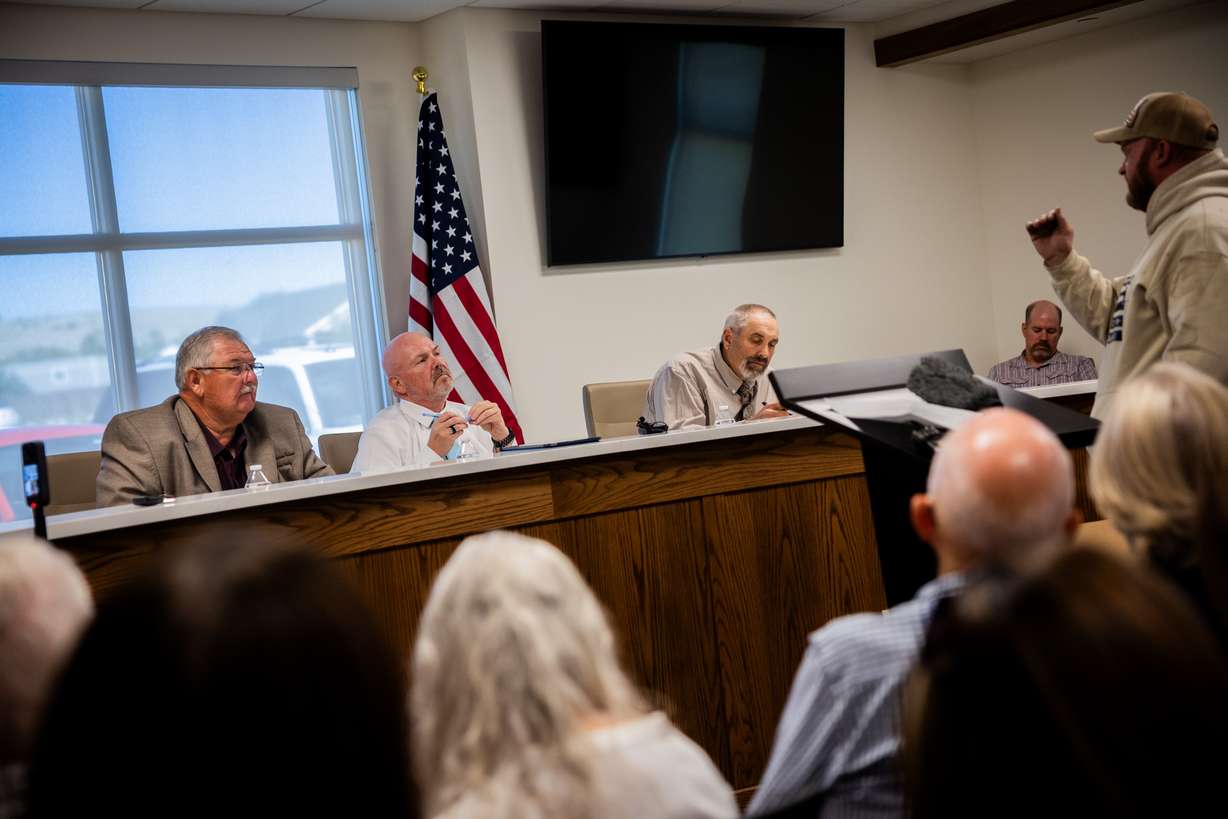
The room immediately erupted into groans and scoffs. After shouting from both sides, the meeting ended with a resident being removed by police.
Taylor Flake, who organizes the grassroots group Mona Cares, adopted the motto "conflict, not contention," in an effort to mitigate hostility.
"To be honest with you, it's been one of the struggles I've had," he said.
The sociological undercurrents
Only 25% of Utahns oppose data centers broadly, a recent survey from Utah State University found. But when asked about a data center within 3 miles of one's home, the opposition jumps to 68%.
"It does seem like as it gets closer to people's home, they are more strongly opposed," said Stacia Ryder, sociologist and USU researcher.
Aside from "run-of-the-mill" issues such as light pollution, traffic and noise, researchers are pointing to a larger, underlying theme.
"A data center is the first physical manifestation (of AI) that we've had as community members," said Gina Gilson, another USU researcher. Gilson said that as artificial intelligence becomes a prominent part of daily life, this is many people's first opportunity "to say no."
Across the United States, there are currently 533 individual data center building permits — 387 of which are delayed, canceled or under review, largely due to local backlash.
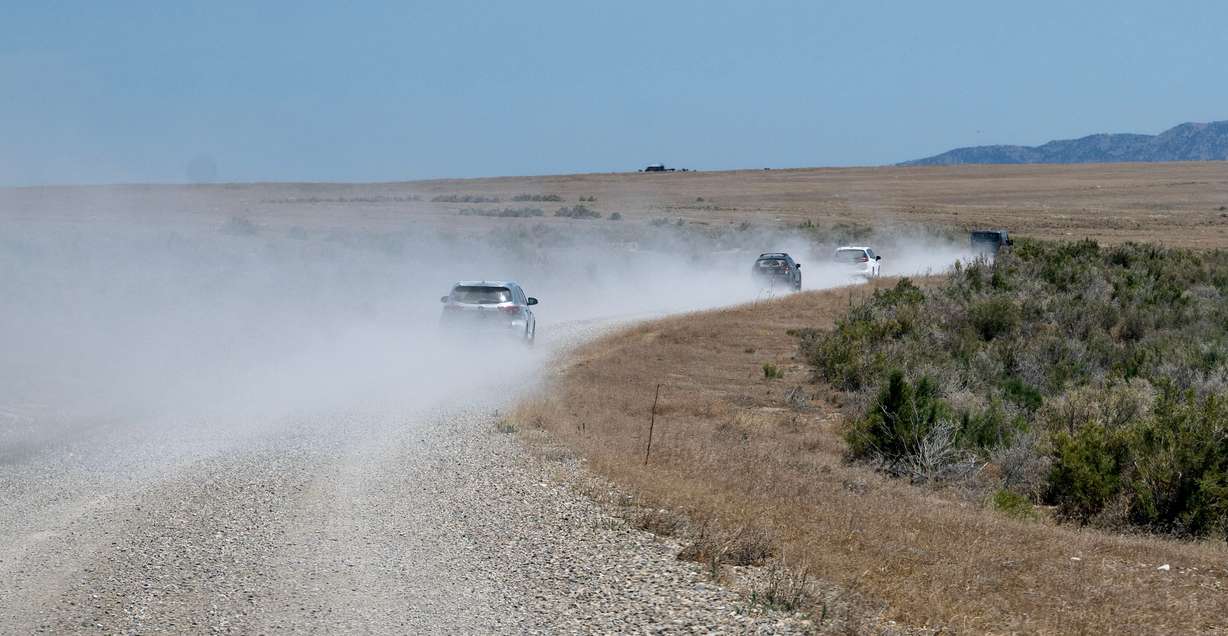
In Utah, there are four data center projects tracked under statuses of delay, denial, litigation, or active appeal: The Stratos Project in Box Elder County, B+F Timpanogos Tech in Provo, a Facebook Data Center in West Jordan, and Mona's mega data center.
USU researchers point to two main reasons for the opposition: First, concerns over water usage, and second, exclusion from the decision-making process.
"I think the flashpoint for us around data centers in Utah was absolutely the proposal of a hyper-scale data center on the shores of Great Salt Lake, which has been a dominant environmental issue in our headlines for years," Ryder said. "When you've got campaigns around telling people to reduce their water use and then something like this gets proposed that the water use and consumption would just be astronomically larger than any one household, I think that is something that really sets people off."
Some of the data centers across the state consume tens of millions of gallons of water annually — such as Aligned Data Centers' West Valley facility, which consumed 80 million gallons in a single year — the same amount 750 homes use annually.
However, developers argue that next-generation direct-to-chip closed-loop systems operate at near zero water consumption after an initial fill. By contrast, Utah's agricultural crop irrigation withdraws 1,090 billion gallons of water per year, making total direct data center water consumption minuscule when compared to the state's overall water budget.
The second largest reason for Utahns' opposition was their inability to participate in the decision-making process — something Mona residents say happened to them.
The electoral fallout
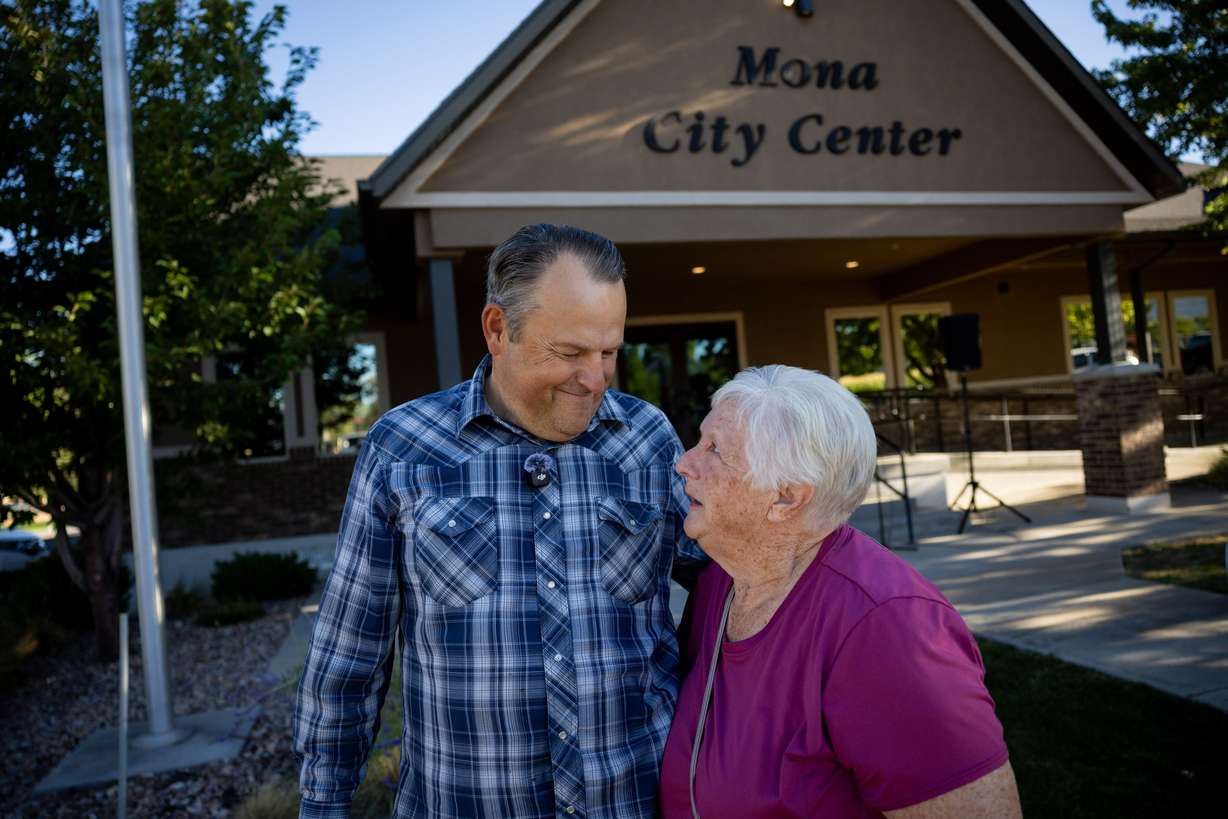
The Juab County Commission held a meeting on Sept. 21, six days after the coalition filed an appeal of the conditional use permit. Standing at the podium, Taylor Flake asked questions about the county's transparency.
Juab County Commission Chairman Clinton Painter replied, accusing Flake of "whipping everyone up into a frenzy."
"I think a lot of the contention lies upon you for doing it that way," he said.
Painter then said he had received about 25 death threats in regard to the data center. He declined a request for an interview.
Across the state, several elected officials have already lost their seats over the data center backlash — including Vicki Lyman, Millard County commissioner; Tammy Pearson, Beaver County commissioner; and Lee Perry, Box Elder County commissioner.
Perry, who voted in favor of the Stratos Project, told the Deseret News his hands were tied, saying voting 'no' on the project left the county vulnerable to being sued for more money than was in its budget.
"And I can tell you, it was not an easy vote for Boyd and I," he added. "It was the hardest thing we've ever done in our lives. And we knew doing it constitutionally, we had an obligation to do it. And yet we knew it was probably going to cost us our election."
In May, Perry voted to let the Military Installation Development Authority create the Stratos project area. In June, he lost his primary election against Nathan Tueller 54%-46%.
"We felt like we had a constitutional obligation to protect the taxpayers of Box Elder County," he said. "In the same breath, we've got all these people showing up and protesting at this point, thinking somehow that we control the complete destiny of the state of Utah and the United States of America on one data center in Box Elder County."
"We continue to get emails on it from people around the United States," he added.
When asked about the delicate balance between citizens utilizing their constitutional rights to vote and elections being shaken up over one contentious issue, USU researcher Ryder pointed to her research, which shows Utahns are frustrated with being kept out of the process.
"So often, the only way people are able to participate in the political process is through votes," she said. "I actually think it's a very good thing and a reminder to elected officials that they are responsible and accountable to the people.
"And that doesn't mean that they have an easy job or that they can always make everybody happy, but I do think it helps keep them grounded and not disconnected from the people that they represent."
Gilson said she expects more local elections to be ruled by "data center" voters — something that might lead cities to take "a proactive response."
Structural reform
Utah currently has two water measures enacted regarding data centers. The first measure (HB76) says that developers must notify their water provider of anticipated water consumption between 90 and 360 days before construction begins. The second bars industrial water use above 200,000 gallons per day within Salt Lake City.
However, there are very few measures compared to other southwestern states such as Texas and California, which have 14 water measures in play — some of which are yet to be enacted.
Ryder said the message from citizens to Utah decision makers and developers is clear: "If you can't solve the water problem, it's going to be a very hard sell.
"That's the key piece for understanding opposition in our region, and I don't think the concern for water is going to go away," she added. Ryder said she believes local governments will try to develop more legislation to address the public's concerns.
Lastly, both Gilson and Ryder spoke to Utahns' personal obligation to study up.
"I don't think there's a clear understanding of benefits of data centers for the common good," Ryder said.
Gilson explained that many residents are unaware of the different types of data centers, instead thinking each data center is a massive structure that strictly helps AI usage. Some data centers are very small, she explained, and support emergency services or local shopping.
"And so that's one thing that I kind of wish that we had a better opportunity to make sure that everyone's on the same page about what a data center is," she said. Gilson explained most people are not opposed to data centers broadly — they're opposed to hyper-scale facilities built to support AI, especially ones approved without their knowledge.
Mona may prove the case study. For now, the mountains are still visible from Mona's back porches. Flake said the coalition's appeal of the conditional use permit remains pending. Whether it succeeds or fails, Flake said the town has already absorbed a harder lesson.
"I wouldn't be doing all this if it was just the pros and cons of a data center, you know," he said. "It's the fact that these were basic rights. You can't treat Americans this way."