'%3e%3cpath%20d='M34.1406%205.85938C30.3906%202.10547%2025.3047%200%2020%200C14.6953%200%209.60938%202.10547%205.85938%205.85938C2.10938%209.61328%200%2014.6953%200%2020C0%2025.3047%202.10547%2030.3906%205.85938%2034.1406C9.61328%2037.8906%2014.6953%2040%2020%2040C25.3047%2040%2030.3906%2037.8945%2034.1406%2034.1406C37.8906%2030.3906%2040%2025.3047%2040%2020C40%2014.6953%2037.8945%209.60938%2034.1406%205.85938ZM37.0117%2023.543H31.1602V13.5391H27.6328V19.9414C28.1211%2020.6914%2028.3711%2021.582%2028.3711%2022.5625V22.625C28.3711%2023.668%2028.1172%2024.6055%2027.6328%2025.4297V26.6094H36.082C33.4883%2032.9375%2027.2891%2037.3789%2020.0039%2037.3789C10.3711%2037.3789%202.62109%2029.6289%202.62109%2020C2.62109%2010.3711%2010.3711%202.62109%2020%202.62109C29.6289%202.62109%2037.3789%2010.3711%2037.3789%2020C37.3789%2021.1484%2037.2617%2022.2656%2037.0508%2023.3477C37.0391%2023.4141%2037.0234%2023.4766%2037.0117%2023.543Z'%20fill='white'/%3e%3cpath%20d='M22.3086%2018.5352C20.4336%2018.125%2019.9531%2017.8398%2019.9766%2017.1836V17.1406C19.9766%2016.6992%2020.3477%2016.2148%2021.4023%2016.2148C22.582%2016.2148%2023.8867%2016.6797%2025.0781%2017.4766L26.8516%2015.0195C25.4453%2013.8906%2023.707%2013.3398%2021.5547%2013.3398C18.5195%2013.3398%2016.4375%2015%2016.4063%2017.4766V17.5352C16.3633%2020.2617%2018.5859%2020.9805%2021.293%2021.6016C23.0391%2021.9766%2023.5703%2022.3164%2023.5703%2022.9609L23.5469%2022.9766C23.5469%2023.3906%2023.2578%2023.7031%2022.7852%2023.8359C22.5742%2023.9062%2022.1289%2023.9727%2021.5156%2023.9727C20.7617%2023.9727%2019.7539%2023.8633%2018.6328%2023.4844C18.0898%2023.2891%2017.4727%2023.0039%2016.8047%2022.6133L20.1406%2026.625C20.2813%2026.6602%2021.0977%2026.8516%2021.7734%2026.8516C25.0039%2026.8516%2027.0859%2025.2461%2027.1094%2022.6328V22.5703C27.1602%2020.1133%2025.2148%2019.1719%2022.3086%2018.5352Z'%20fill='white'/%3e%3cpath%20d='M5.24219%2013.5664V26.6133H8.75391V23.7578L10.2969%2021.9531L14.2031%2026.6133H18.3867L12.3555%2019.5195L17.4023%2013.5664H13.4531L8.75391%2019.0586V13.5664H5.24219Z'%20fill='white'/%3e%3c/g%3e%3cdefs%3e%3cclipPath%20id='clip0_97_2430'%3e%3crect%20width='40'%20height='40'%20fill='white'/%3e%3c/clipPath%3e%3c/defs%3e%3c/svg%3e)


- Gas prices hit a record high of $4.15 per gallon on Labor Day.
- Diesel prices reached $5.90 per gallon, with potential to exceed $6 soon.
- Global conflicts and refinery disruptions are driving fuel prices upward, analysts say.
SALT LAKE CITY — After marking the first month of August that saw U.S. gas prices averaging above the $4 per gallon mark, costs at the pump hit a record mark on Monday and diesel fuel set a new all-time high as ongoing hostilities around the world continue to disrupt the petroleum industry.
Marking the traditional end of the summer travel season, Labor Day travelers that filled up on their way home paid an average price of $4.15 per gallon on Monday, the highest price ever recorded for the September holiday, according to AAA tracking — and one that soared past the previous mark of $3.82 per gallon set back in 2012.
Diesel fuel crossed its own historic high on Friday and kept moving up over the weekend. On Tuesday, the average cost of a gallon of diesel across the country was $5.90, setting a new all-time record and one likely to fall again as crude oil prices approached and later passed the $100 per barrel mark on Wednesday.
In a Tuesday blog post, Patrick De Haan, head of petroleum analysis at GasBuddy, predicted diesel could be moving past the $6 per gallon mark while gasoline costs may get a break from an upcoming seasonal refinery changeover.
"Average gasoline prices rose in nearly three out of five states over the last week, while diesel surged in every state — with some climbing nearly 50 cents per gallon in just seven days," De Haan wrote. "The milestone many hoped to avoid has arrived: The national average price of gasoline on Labor Day set a new record for the holiday (and) diesel's record fell as well, with the national average reaching $5.87 per gallon on Sept. 3, surpassing the prior all-time high of $5.82 per gallon set in 2022 — and with $6 per gallon now a realistic possibility in the weeks ahead if Ukraine's continued attacks on Russian refining infrastructure keep knocking capacity offline.
"These are sobering milestones, and until the global refining supply picture meaningfully improves, diesel prices face continued upward pressure while gasoline may seasonally slow in the weeks ahead."
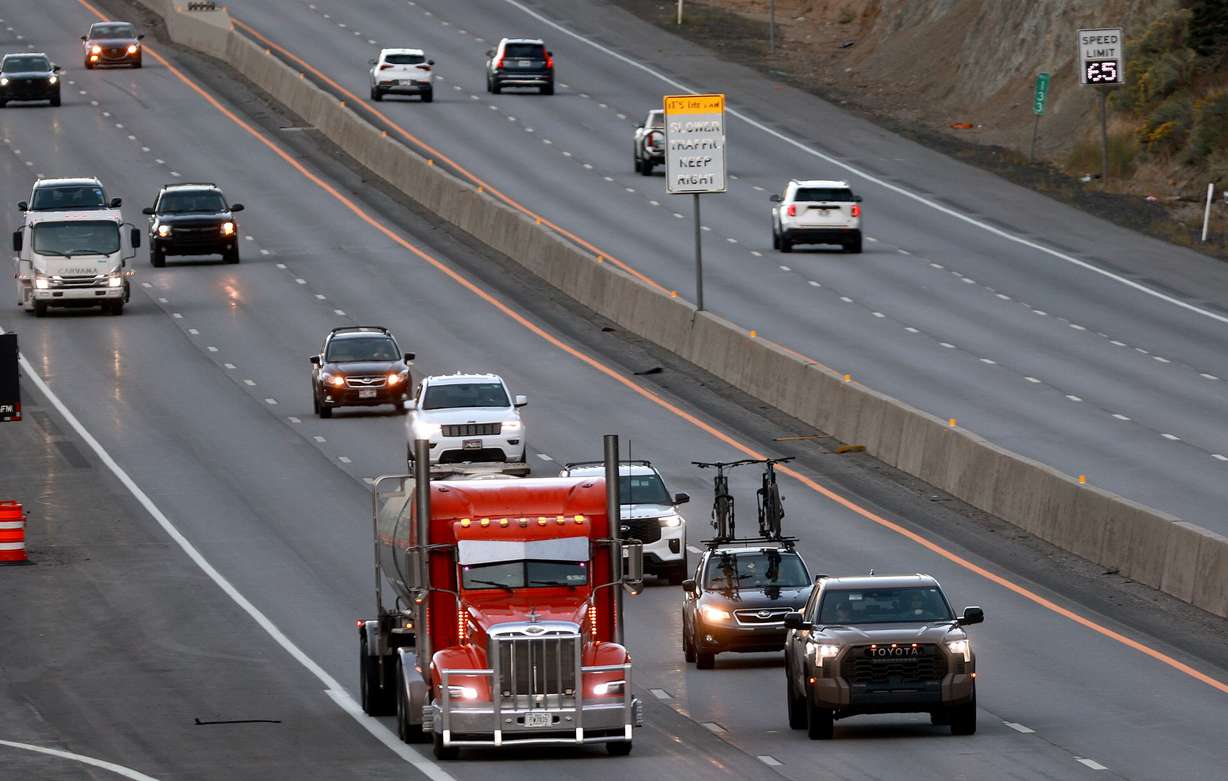
As a general rule, gas prices typically trend downward in early fall as U.S. refineries switch summer formulas to less expensive winter blends. Consumers could catch an earlier than usual break on the seasonal price changes thanks to a decision announced last month by the Environmental Protection Agency that moved up the summer formula cutoff date from Sept. 15 to Sept. 1.
Utah drivers paying even more
On Tuesday, the average price of a gallon of regular in the U.S. was at $4.15 per gallon, up from $4.02 this time last month and $3.20 from one year ago, according to AAA. Utah drivers were paying an average $4.41 to start the post-holiday work week, 8 cents per gallon more than last month and and up from $3.28 per gallon this time last year.
Reports of Houthi militant attacks on Saudi Arabia, paired with ongoing tensions in the Persian Gulf are limiting petroleum deliveries through two critical passageways, the Strait of Hormuz and the Red Sea, according to a Tuesday New York Times report. Ukrainian strikes on Russian processing facilities are also disrupting global fuel supply chains.
The combined impacts could help push crude oil prices above the $120 per barrel mark, and drive consumer prices even higher, according to a new forecast from banking giant Goldman Sachs, according to a report from CBS News .
"The main forces driving prices higher remain geopolitical conflict in the Middle East — both the U.S.-Iran conflict in the Persian Gulf and the confrontation between Saudi Arabia and the Houthis in Yemen — as well as the Russia-Ukraine war," analysts with political risk consultancy Eurasia Group said in a report, per CBS. "A shortage of global refining capacity has added further upward pressure, alongside sustained demand for refined products."