- Six in 10 Utahns are at least somewhat concerned about the hantavirus outbreak, according to a new poll.
- The rare Andes strain, transmissible between humans, killed three on the MV Hondius cruise ship.
- The Centers for Disease Control and Prevention maintains the risk to the general public is low.
SALT LAKE CITY — News of a deadly hantavirus outbreak on a cruise ship has amped up general anxiety about hantavirus and how it spreads. And a new Deseret News/Hinckley Institute of Politics poll conducted by Morning Consult shows that though the outbreak was thousands of miles away, the aftermath has raised concerns among Utahns.
Nearly 6 in 10 of the Utah adults polled say they are at least somewhat concerned about the current hantavirus outbreak.
An outbreak of the rare Andes form of hantavirus — known to be transmissible between humans — killed three of the passengers on the Hondius cruise ship and sickened many more.
Utahns' take on hantavirus risk

Hantavirus is most often transmitted to humans who come in contact with droppings from an infected rodent. There are different strains caused by different orthohantaviruses, of which the Andes strain is just one.
People are generally at greater risk of contracting a hantavirus disease when they clean out sheds or garages and improperly handle the droppings of infected rodents. That Andes spreads between humans has introduced a new worry.
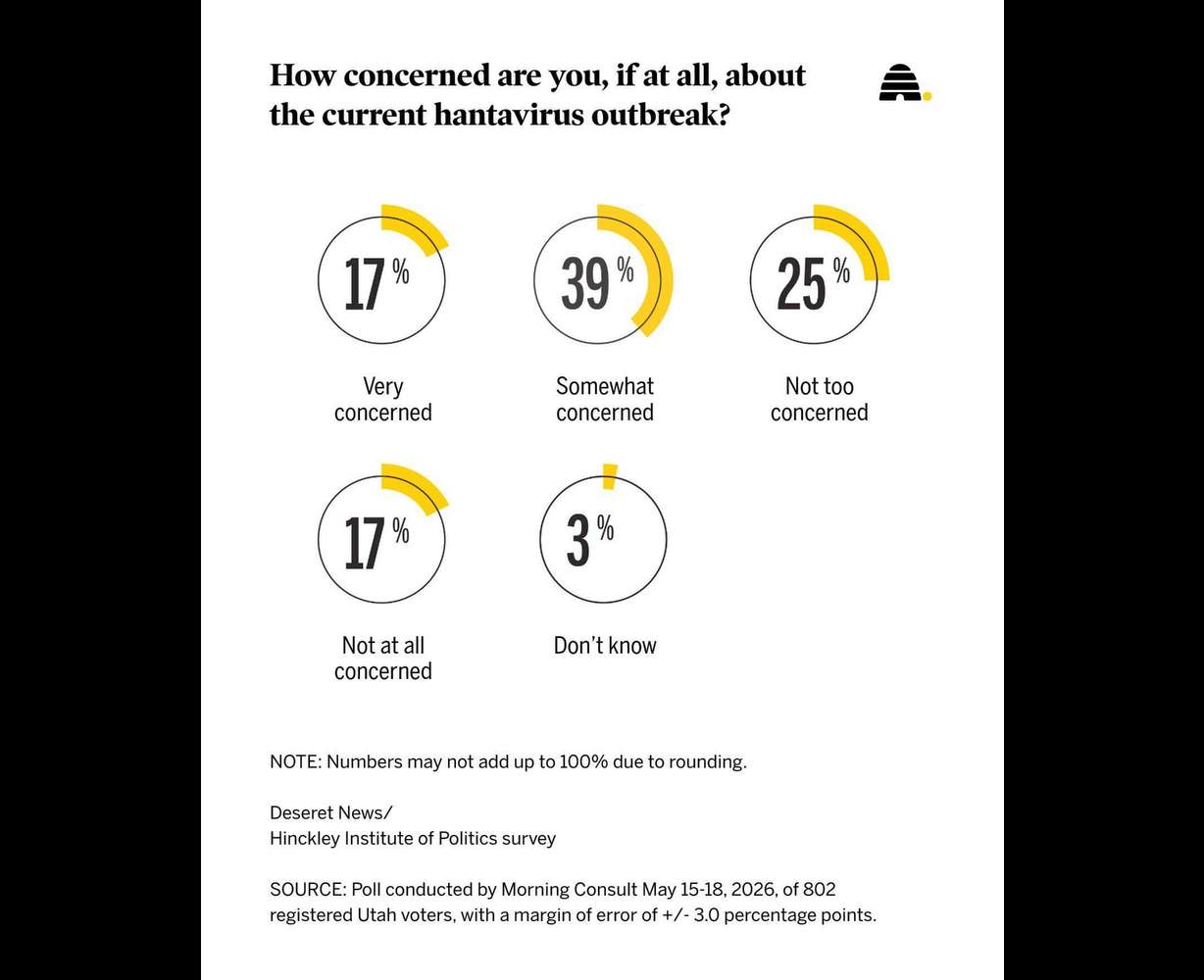
The poll asked, "How concerned are you, if at all, about the current hantavirus outbreak?"
Just 17% said they were "very concerned," but another 39% said "somewhat concerned," raising the number with some degree of worry to 56%. One-fourth responded "not too concerned," and another 17% said "not at all concerned," mirroring the number for the most concerned group. Just 3% had no opinion.
The poll included 802 registered Utah voters and has a margin of error of plus or minus 3 percentage points. It was conducted May 15-18.
In the poll, slightly more men (18%) were very concerned, compared to women (15%). Those 65 and older said they were very concerned in larger numbers, at 22%. Among those "somewhat concerned" were men at 40%, women at 37% and older adults at 36%. But the highest share was among those ages 18-34 (42%), while the same was true of 38% of those ages 35 to 64.
The group with the highest "not at all concerned" response rate was those 35 to 44, at 21%.
There was little difference based on education level. Based on income, just over half of those with incomes between $50,000 and $100,000 were concerned, while the share was 6 to 7 percentage points higher for those with incomes below or above that range.
The biggest gap in terms of how many are at least somewhat concerned could be found between those in urban, rural and suburban communities. Seventy percent of urbanites were at least somewhat concerned, compared with fewer than half in suburban (49%) and rural (43%) communities.
Where are the cruise ship passengers now?
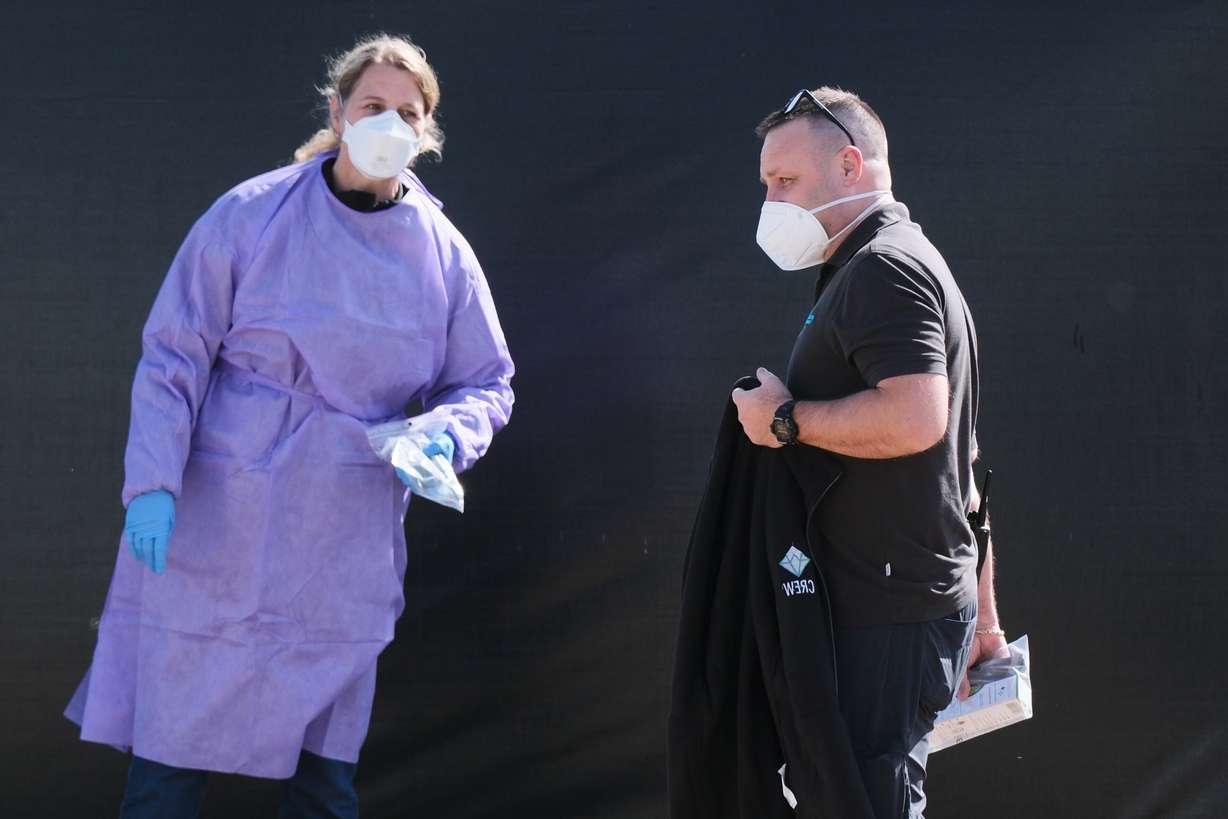
Last week, the ship arrived back in the Netherlands after a protracted journey from southern Argentina.
The 18 Americans onboard Hondius are now in the United States in a special quarantine facility in Omaha, Nebraska, where they are supposed to remain until the end of the potential time when symptoms could appear and it might be possible to pass the illness on to other people.
NBC News reported that the greatest risk of symptoms comes in the first three weeks of the incubation, which will end May 31. Those Americans haven't yet been told if they'll be allowed to go home after that. A quarantine order said that leaving earlier "would potentially endanger the public's health." One of the orders also said that anyone violating it could face a "criminal fine or up to a year in jail."
Meanwhile, the Centers for Disease Control and Prevention maintains that the risk to the general public is low in terms of exposure to the Andes strain. But people can get sick and even die from exposure to other strains of hantavirus if they aren't careful when around rodent droppings.
The advice when cleaning up droppings or areas where rodents could have been is to wear gloves and a mask, spray the area until it's wet with a bleach solution so the droppings won't be inhaled and put it in a sealed plastic bag and trash it. Never vacuum up droppings, which can aerosolize them.

Related stories
Most recent Health stories
Related topics
 Lois M. Collins