'%3e%3cpath%20d='M34.1406%205.85938C30.3906%202.10547%2025.3047%200%2020%200C14.6953%200%209.60938%202.10547%205.85938%205.85938C2.10938%209.61328%200%2014.6953%200%2020C0%2025.3047%202.10547%2030.3906%205.85938%2034.1406C9.61328%2037.8906%2014.6953%2040%2020%2040C25.3047%2040%2030.3906%2037.8945%2034.1406%2034.1406C37.8906%2030.3906%2040%2025.3047%2040%2020C40%2014.6953%2037.8945%209.60938%2034.1406%205.85938ZM37.0117%2023.543H31.1602V13.5391H27.6328V19.9414C28.1211%2020.6914%2028.3711%2021.582%2028.3711%2022.5625V22.625C28.3711%2023.668%2028.1172%2024.6055%2027.6328%2025.4297V26.6094H36.082C33.4883%2032.9375%2027.2891%2037.3789%2020.0039%2037.3789C10.3711%2037.3789%202.62109%2029.6289%202.62109%2020C2.62109%2010.3711%2010.3711%202.62109%2020%202.62109C29.6289%202.62109%2037.3789%2010.3711%2037.3789%2020C37.3789%2021.1484%2037.2617%2022.2656%2037.0508%2023.3477C37.0391%2023.4141%2037.0234%2023.4766%2037.0117%2023.543Z'%20fill='white'/%3e%3cpath%20d='M22.3086%2018.5352C20.4336%2018.125%2019.9531%2017.8398%2019.9766%2017.1836V17.1406C19.9766%2016.6992%2020.3477%2016.2148%2021.4023%2016.2148C22.582%2016.2148%2023.8867%2016.6797%2025.0781%2017.4766L26.8516%2015.0195C25.4453%2013.8906%2023.707%2013.3398%2021.5547%2013.3398C18.5195%2013.3398%2016.4375%2015%2016.4063%2017.4766V17.5352C16.3633%2020.2617%2018.5859%2020.9805%2021.293%2021.6016C23.0391%2021.9766%2023.5703%2022.3164%2023.5703%2022.9609L23.5469%2022.9766C23.5469%2023.3906%2023.2578%2023.7031%2022.7852%2023.8359C22.5742%2023.9062%2022.1289%2023.9727%2021.5156%2023.9727C20.7617%2023.9727%2019.7539%2023.8633%2018.6328%2023.4844C18.0898%2023.2891%2017.4727%2023.0039%2016.8047%2022.6133L20.1406%2026.625C20.2813%2026.6602%2021.0977%2026.8516%2021.7734%2026.8516C25.0039%2026.8516%2027.0859%2025.2461%2027.1094%2022.6328V22.5703C27.1602%2020.1133%2025.2148%2019.1719%2022.3086%2018.5352Z'%20fill='white'/%3e%3cpath%20d='M5.24219%2013.5664V26.6133H8.75391V23.7578L10.2969%2021.9531L14.2031%2026.6133H18.3867L12.3555%2019.5195L17.4023%2013.5664H13.4531L8.75391%2019.0586V13.5664H5.24219Z'%20fill='white'/%3e%3c/g%3e%3cdefs%3e%3cclipPath%20id='clip0_97_2430'%3e%3crect%20width='40'%20height='40'%20fill='white'/%3e%3c/clipPath%3e%3c/defs%3e%3c/svg%3e)



- A bipartisan group of 40 House members introduced the Build America Agenda.
- The 95-page framework addresses housing, permitting reform and healthcare issues.
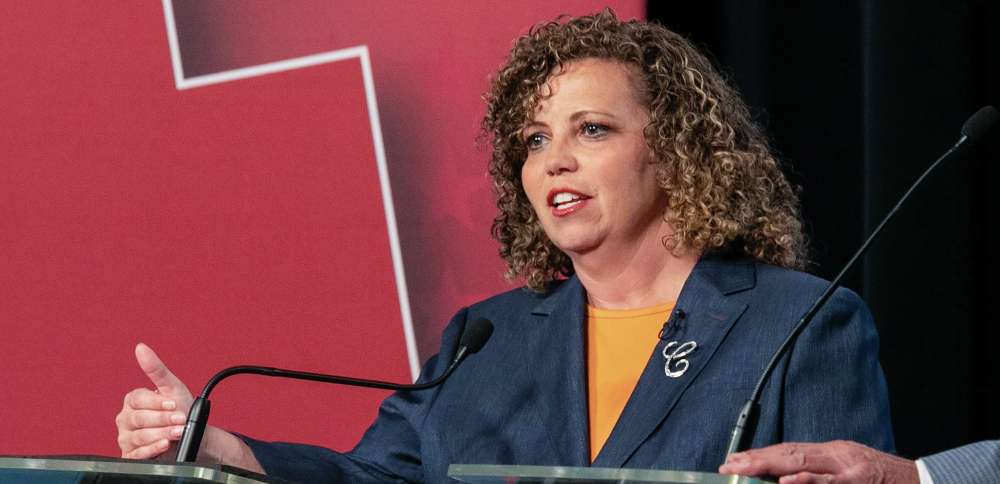
- Rep. Celeste Maloy emphasized bipartisan support and practical solutions for change.
SALT LAKE CITY — The power dynamics of Congress could drastically change next year. A bipartisan group of lawmakers is hoping substantial work can still get done.
The Build America Caucus, a bipartisan group of 40-some House members, unveiled its proposed agenda for the upcoming Congress, tackling issues from housing to permitting reform to healthcare. The 95-page framework, dubbed the Build America Agenda, is designed to guide lawmakers regardless of which party controls Congress next year, its architects say.
"It's an ambitious plan, and I think it's going to take some ambitious plans to change things in Washington," Rep. Celeste Maloy, who co-chairs the Build America Caucus, told the Deseret News. "It's never easy to change the momentum in Washington, D.C., and so we tried to write it in a way that it could pass no matter who's in power. We'll just get to work on it and see."
The Build America Caucus was established last year as a group aimed toward cutting bureaucratic red tape and making the government more efficient for everyday people. The caucus has been working on the latest proposal over the last year with the goal of releasing it before the midterm elections.
The proposal builds on several bipartisan wins from this last Congress, such as the landmark housing bill that became law earlier this year. The latest framework goes further by expanding where housing can be built, reducing costs and unlocking financing for new projects.
It would specifically call for more funding and oversight for the Department of Housing and Urban Development to implement the 21st Century ROAD to Housing Act. The Build America Caucus had a heavy hand in negotiating the housing bill before it passed Congress.
"I talk to Utahns all the time, parents who are worried that their kids aren't going to be able to afford houses, or they won't be able to afford houses in their hometowns and live near their parents if they want to," Maloy said. "We're just working on reducing construction delays and simplifying federal financing for housing and making better use of underused properties — things that don't require a new government program or more government interference."
The framework also has a section on permitting reform, which has become a major focus for lawmakers on both sides of the aisle in recent years. That effort comes in tandem with a bipartisan deal being hashed out in the Senate.
Other issues lawmakers want to tackle in the road map include healthcare, scientific research, infrastructure, childcare, education and more.
The Build America Agenda is a purely House-negotiated framework, Maloy told the Deseret News. But now that it's being circulated, it can be further negotiated with those in the Senate and Trump administration.
The framework is being released just weeks before the midterm elections, when control of Congress is up for grabs. Depending on the results, the power dynamics of the House and Senate could be far different next year.
To ensure lawmakers can continue legislating, Maloy said the goal of the framework was to identify issues that have bipartisan interests — and use it as a road map to guide negotiations in the next Congress.
The issues were partially informed by conversations with constituents to identify what it is that Americans want fixed, according to Maloy.
"The solutions in there very much reflect the things Utahns are telling me they care about," Maloy said. "I think sometimes when you have a big bipartisan agenda, people start to wonder if you're diluting your own values to be able to meet across the aisle. And I think if Utahns look at what's in there, they'll see that these are very Utah-type solutions: very practical and common sense."
Maloy is running for another term in Utah's 3rd Congressional District. Her Democratic opponent said he supports efforts to address affordability and other issues, but said he wants to ensure projects receive adequate environmental review and public input.
"I applaud the American Build Caucus' ambitious vision as we need more affordable homes, reliable energy, modern infrastructure and strong rural healthcare," Kent Udell said in a statement to KSL. "We can make routine, low-impact projects move faster. But environmental review and public participation are not just red tape! This process helps communities identify risks to their health, air, water and land before it is too late."
He also criticized a proposal on the agenda that calls for protecting final permitting approvals from "drawn-out litigation."
"Litigation protections may offer developers certainty, but courts are an essential safeguard when government or developers fail to follow the law," Udell added.
Contributing: Bridger Beal-Cvetko