Estimated read time: 3-4 minutes
- Utah Gov. Spencer Cox criticized federal permitting delays at the Western Governors' conference.
- Permitting Council's Emily Domenech highlighted progress, completing 16 permits out of 57.
- Cox argued delays inflate costs and hinder projects; he called for reform to boost energy production.
SALT LAKE CITY — Federal permitting for large infrastructure projects is slow and expensive. The process costs American manufacturers $7.9 billion each year, and leaders in the Mountain West say they are ready for it to change.
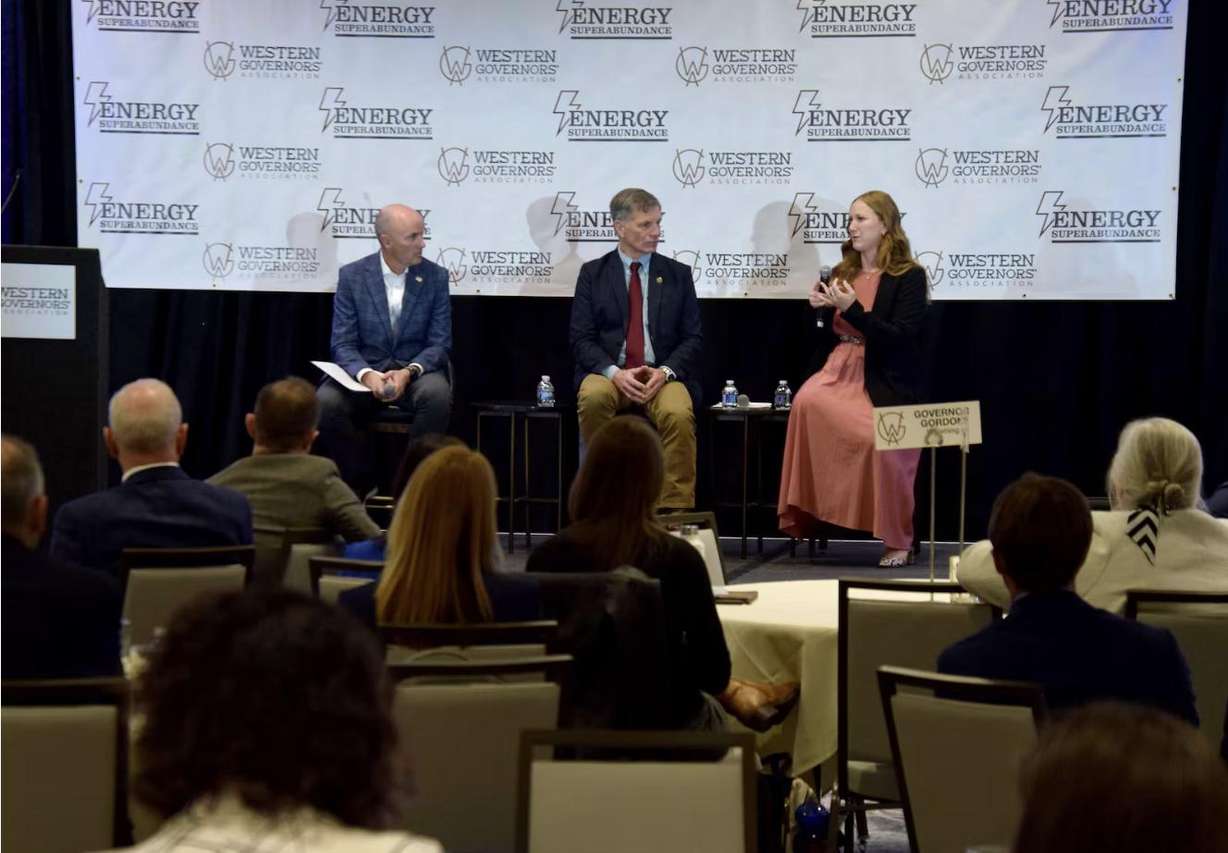
During the Western Governors' Association's conference on energy abundance in Salt Lake City on Wednesday, Utah Gov. Spencer Cox moderated a conversation with Wyoming Gov. Mark Gordon and the federal Permitting Council's Executive Director Emily Domenech.
Federal permitting processes have "defaulted to the largest, longest level of review, whether it's appropriate under the law or not," Domenech explained.
During former President Joe Biden's administration, the Permitting Council finished one mining permit. "Now we have 57, and we've finished permitting on 16, which is a pretty big number considering many of them have been there for a decade. We want to finish all of those," Domenech said.
The regulatory structure built in the federal government over the last century does not simply need reform, Gordon said. "It is time, in my mind, that we erase the board."
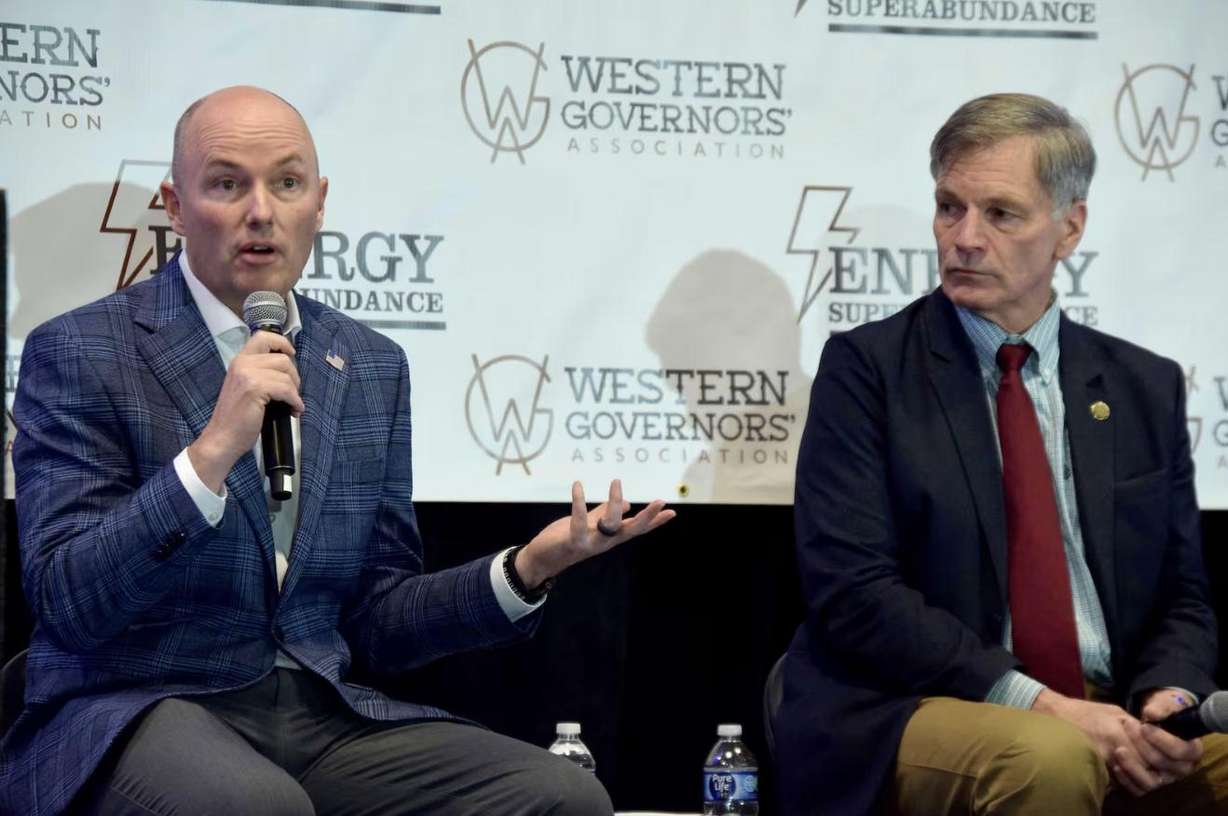
"Things are so different now than they were in the '60s, '70s, '80s, '90s and even the early 2000s," he explained. "We can't afford to have this sort of archaic system."
Federal permitters should "think not about what we shouldn't be doing, but incentivizing based on what outcomes we would like to see," Gordon said.
The panelists agreed that permitting reforms are necessary for Western states to scale energy production. "We're at this really interesting moment in time where there's a colossal need for more energy," Cox said. The increased need for power is largely to support artificial intelligence.
The event was sponsored by Advanced Energy United, American Clean Power, Arnold Ventures, Amazon Web Services, Deloitte, Idaho National Laboratory, JP Morgan Chase, McKinsey & Company, Pew Research and others.
Time does not ensure safety, Cox says
There is a misnomer that speed and environmental safety are mutually exclusive, Cox said. "That's certainly not true."
However, delays do make projects more expensive. Every three-year delay doubles the price of an infrastructure project in the U.S., Cox said.
"It takes 15 years to get a project done. That's 25 times more expensive," he continued. "What that means is not just that a project got more expensive, but there were 20 other projects that just never got anywhere."
He continued, "A fast 'no' is better than a 'maybe someday' because you can't do anything with 'maybe someday.' ... That's how you kill projects. That's how you kill innovation."
Cox added that the U.S. shouldn't allow environmental groups to block major infrastructure projects once regulators have given them the green light.
Environmental lawsuits have halted many infrastructure projects across the West. In Utah, for example, environmental litigation has halted a 4.5-mile highway for multiple decades. The road would cross a small portion of the Red Cliffs National Conservation Area and has been approved locally and federally; however, lawsuits from conservation groups have halted any progress.
"How are we going to stay alive if we are never going to build?" Cox asked.