'%3e%3cpath%20d='M34.1406%205.85938C30.3906%202.10547%2025.3047%200%2020%200C14.6953%200%209.60938%202.10547%205.85938%205.85938C2.10938%209.61328%200%2014.6953%200%2020C0%2025.3047%202.10547%2030.3906%205.85938%2034.1406C9.61328%2037.8906%2014.6953%2040%2020%2040C25.3047%2040%2030.3906%2037.8945%2034.1406%2034.1406C37.8906%2030.3906%2040%2025.3047%2040%2020C40%2014.6953%2037.8945%209.60938%2034.1406%205.85938ZM37.0117%2023.543H31.1602V13.5391H27.6328V19.9414C28.1211%2020.6914%2028.3711%2021.582%2028.3711%2022.5625V22.625C28.3711%2023.668%2028.1172%2024.6055%2027.6328%2025.4297V26.6094H36.082C33.4883%2032.9375%2027.2891%2037.3789%2020.0039%2037.3789C10.3711%2037.3789%202.62109%2029.6289%202.62109%2020C2.62109%2010.3711%2010.3711%202.62109%2020%202.62109C29.6289%202.62109%2037.3789%2010.3711%2037.3789%2020C37.3789%2021.1484%2037.2617%2022.2656%2037.0508%2023.3477C37.0391%2023.4141%2037.0234%2023.4766%2037.0117%2023.543Z'%20fill='white'/%3e%3cpath%20d='M22.3086%2018.5352C20.4336%2018.125%2019.9531%2017.8398%2019.9766%2017.1836V17.1406C19.9766%2016.6992%2020.3477%2016.2148%2021.4023%2016.2148C22.582%2016.2148%2023.8867%2016.6797%2025.0781%2017.4766L26.8516%2015.0195C25.4453%2013.8906%2023.707%2013.3398%2021.5547%2013.3398C18.5195%2013.3398%2016.4375%2015%2016.4063%2017.4766V17.5352C16.3633%2020.2617%2018.5859%2020.9805%2021.293%2021.6016C23.0391%2021.9766%2023.5703%2022.3164%2023.5703%2022.9609L23.5469%2022.9766C23.5469%2023.3906%2023.2578%2023.7031%2022.7852%2023.8359C22.5742%2023.9062%2022.1289%2023.9727%2021.5156%2023.9727C20.7617%2023.9727%2019.7539%2023.8633%2018.6328%2023.4844C18.0898%2023.2891%2017.4727%2023.0039%2016.8047%2022.6133L20.1406%2026.625C20.2813%2026.6602%2021.0977%2026.8516%2021.7734%2026.8516C25.0039%2026.8516%2027.0859%2025.2461%2027.1094%2022.6328V22.5703C27.1602%2020.1133%2025.2148%2019.1719%2022.3086%2018.5352Z'%20fill='white'/%3e%3cpath%20d='M5.24219%2013.5664V26.6133H8.75391V23.7578L10.2969%2021.9531L14.2031%2026.6133H18.3867L12.3555%2019.5195L17.4023%2013.5664H13.4531L8.75391%2019.0586V13.5664H5.24219Z'%20fill='white'/%3e%3c/g%3e%3cdefs%3e%3cclipPath%20id='clip0_97_2430'%3e%3crect%20width='40'%20height='40'%20fill='white'/%3e%3c/clipPath%3e%3c/defs%3e%3c/svg%3e)


- A public forum was held Tuesday on the controversial Box Elder County data center proposal.
- One participant, a member of the state body that voted for the plans, thinks if voters pass a ballot question to halt the plans their wishes should be honored.
- Critics worry about the data center's environmental impacts while supporters say it's key to national security.
BRIGHAM CITY — If Box Elder County residents vote to halt a controversial data center project under consideration in the county, one of the officials involved in the initial decision to allow the plans to proceed says their wishes should be honored.
"I'm all about hearing from the public," said Mark Shepherd, a member of the board of Utah's Military Installation Development Authority, or MIDA, which approved several measures in late April that prodded the project forward. "I fully support the referendum process. We'll run this thing through. If that's what's decided, I fully support that."
Whether the issue makes it to the ballot box in the form of a referendum remains the focus of a legal fight. A group of Box Elder County residents filed paperwork last May to petition for a ballot question on the issue, but Box Elder County officials rejected the effort, saying it didn't comply with state guidelines. The residents in turn filed a suit in 1st District Court in Brigham City to reverse the county decision.
Either way, Shepherd, also the mayor of Clearfield, said he favors hearing from the public in the name of transparency, emphasizing that he was voicing his own view, not speaking on behalf of MIDA. He was one of four speakers on the data center issue at a forum on Tuesday in Brigham City hosted by Grow the Flow, an environmental organization that has raised numerous concerns with the plans.
"If the referendum process moves forward then we support that, we certainly will respect that," Shepherd said.
A crowd of around 80 people, who seemed mostly critical of the plans gauging by their comments and questions, attended the forum, held at Utah State University's Brigham City campus, and many peppered Shepherd with questions. The MIDA Board on April 24 approved four resolutions and a tax ordinance central to the Stratos Project Area plans, as the data center proposal is called.
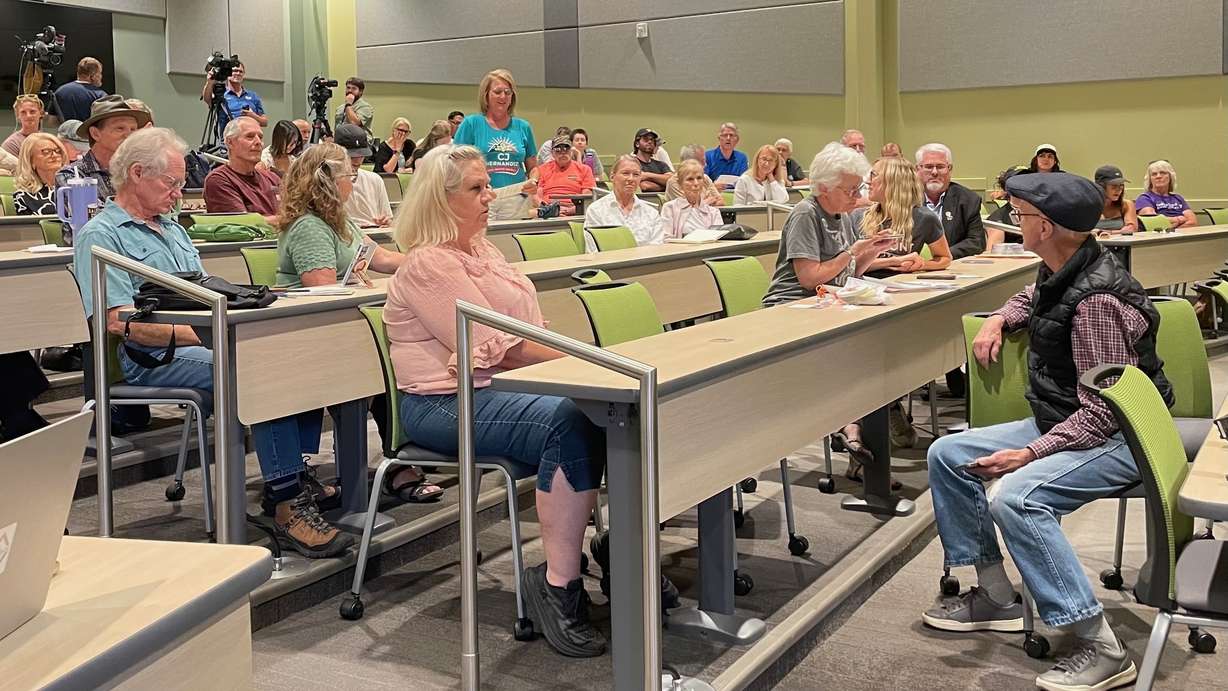
Brigham Daniels, co-director of the Wallace Stegner Center for Land, Resources and the Environment at the University of Utah, lauded Shepherd's remarks and others in the audience similarly praised him for his willingness to take part in Tuesday's forum. The Wallace Stegner Center provides environmental and natural resources programming for law students at the U.
"I do find it really quite hopeful, mayor, that you would be supportive of the referendum," said Daniels, one of the other panelists.
Even if the residents seeking a ballot question win in their court fight, they'd still have to collect enough signatures on petitions to force the issue to the ballot box, and voters would have to approve the referendum or referendums. The petition effort, spearheaded by Box Elder Accountability Referendum, or BEAR, another host of Tuesday's forum, seeks to reverse two Box Elder County Commission resolutions approved on May 4 that are key to the Stratos project, thus, they hope, halting the plans.
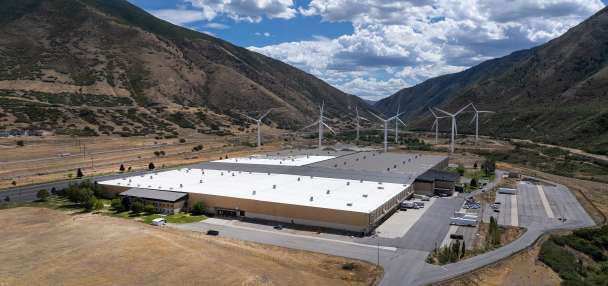
The Box Elder County data center plans, spearheaded by Canadian businessman Kevin O'Leary, call for development of a complex of data centers on a 20,000-acre expanse in the Hansel Valley and up to 9.5 gigawatts of power-generating capacity to support it. Supporters say the plans would provide a big economic boost to the area and are key to national security.
But they have sparked widespread opposition from critics who fear they would have an adverse environmental impact, notably on the nearby Great Salt Lake by sapping underground water supplies. Those concerns — along with complaints that those behind the project didn't properly investigate the potential impact of the plans and allow for greater public input ahead of time — were brought up by other panelists and audience members.
Brenna Williams of BEAR, one of the panelists, said the plans represent an "existential threat" to the area given the potential environmental impacts.
"We haven't seen any economic impact studies. We haven't seen any water-use studies. We haven't seen any environmental-impact studies," she said. Such inquiries "need to be done before anything happens. Data centers notoriously are known for overpromising and underdelivering."
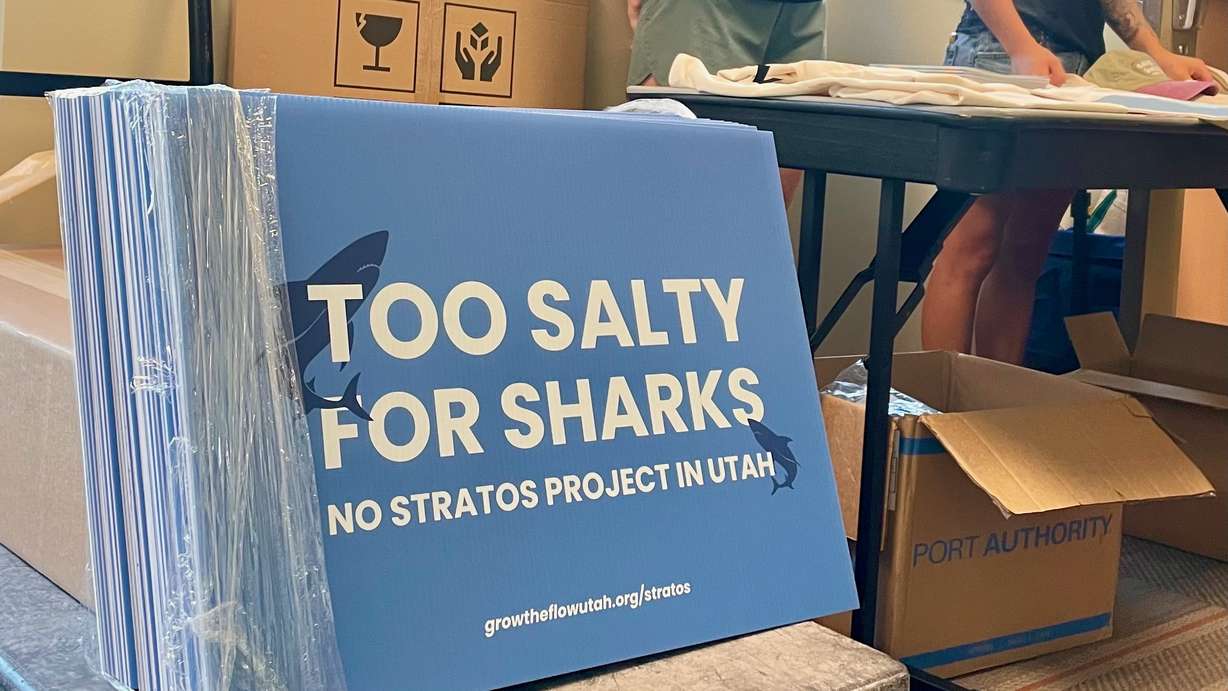
Shepherd, for his part, noted that no one spoke out against the plans when the MIDA Board considered them in late April, which surprised him. Maybe the public wasn't aware of the meeting, he said, though the MIDA website provides information about the body's meetings. Whatever the case, he saw the proposal as a positive and also emphasized that the plans would still be subject to continued review by environmental and other officials.
The proposal "made great sense," and the potential economic impact and benefit to national security aligned with MIDA goals, Shepherd said.
Looking back in the context of the strong opposition the plans have spurred, he was hard-pressed to say what, if anything, he would have done differently.
"I think that's probably one question I get asked more than any ... if I could go back in time, what would I do different. I have yet in 19 years as an elected official to backtrack on anything I've done because I truly believe I take the best information I can ... before I can pass the vote," he said.

Related stories
Most recent Environment stories
Related topics
 Tim Vandenack