'%3e%3cpath%20d='M34.1406%205.85938C30.3906%202.10547%2025.3047%200%2020%200C14.6953%200%209.60938%202.10547%205.85938%205.85938C2.10938%209.61328%200%2014.6953%200%2020C0%2025.3047%202.10547%2030.3906%205.85938%2034.1406C9.61328%2037.8906%2014.6953%2040%2020%2040C25.3047%2040%2030.3906%2037.8945%2034.1406%2034.1406C37.8906%2030.3906%2040%2025.3047%2040%2020C40%2014.6953%2037.8945%209.60938%2034.1406%205.85938ZM37.0117%2023.543H31.1602V13.5391H27.6328V19.9414C28.1211%2020.6914%2028.3711%2021.582%2028.3711%2022.5625V22.625C28.3711%2023.668%2028.1172%2024.6055%2027.6328%2025.4297V26.6094H36.082C33.4883%2032.9375%2027.2891%2037.3789%2020.0039%2037.3789C10.3711%2037.3789%202.62109%2029.6289%202.62109%2020C2.62109%2010.3711%2010.3711%202.62109%2020%202.62109C29.6289%202.62109%2037.3789%2010.3711%2037.3789%2020C37.3789%2021.1484%2037.2617%2022.2656%2037.0508%2023.3477C37.0391%2023.4141%2037.0234%2023.4766%2037.0117%2023.543Z'%20fill='white'/%3e%3cpath%20d='M22.3086%2018.5352C20.4336%2018.125%2019.9531%2017.8398%2019.9766%2017.1836V17.1406C19.9766%2016.6992%2020.3477%2016.2148%2021.4023%2016.2148C22.582%2016.2148%2023.8867%2016.6797%2025.0781%2017.4766L26.8516%2015.0195C25.4453%2013.8906%2023.707%2013.3398%2021.5547%2013.3398C18.5195%2013.3398%2016.4375%2015%2016.4063%2017.4766V17.5352C16.3633%2020.2617%2018.5859%2020.9805%2021.293%2021.6016C23.0391%2021.9766%2023.5703%2022.3164%2023.5703%2022.9609L23.5469%2022.9766C23.5469%2023.3906%2023.2578%2023.7031%2022.7852%2023.8359C22.5742%2023.9062%2022.1289%2023.9727%2021.5156%2023.9727C20.7617%2023.9727%2019.7539%2023.8633%2018.6328%2023.4844C18.0898%2023.2891%2017.4727%2023.0039%2016.8047%2022.6133L20.1406%2026.625C20.2813%2026.6602%2021.0977%2026.8516%2021.7734%2026.8516C25.0039%2026.8516%2027.0859%2025.2461%2027.1094%2022.6328V22.5703C27.1602%2020.1133%2025.2148%2019.1719%2022.3086%2018.5352Z'%20fill='white'/%3e%3cpath%20d='M5.24219%2013.5664V26.6133H8.75391V23.7578L10.2969%2021.9531L14.2031%2026.6133H18.3867L12.3555%2019.5195L17.4023%2013.5664H13.4531L8.75391%2019.0586V13.5664H5.24219Z'%20fill='white'/%3e%3c/g%3e%3cdefs%3e%3cclipPath%20id='clip0_97_2430'%3e%3crect%20width='40'%20height='40'%20fill='white'/%3e%3c/clipPath%3e%3c/defs%3e%3c/svg%3e)


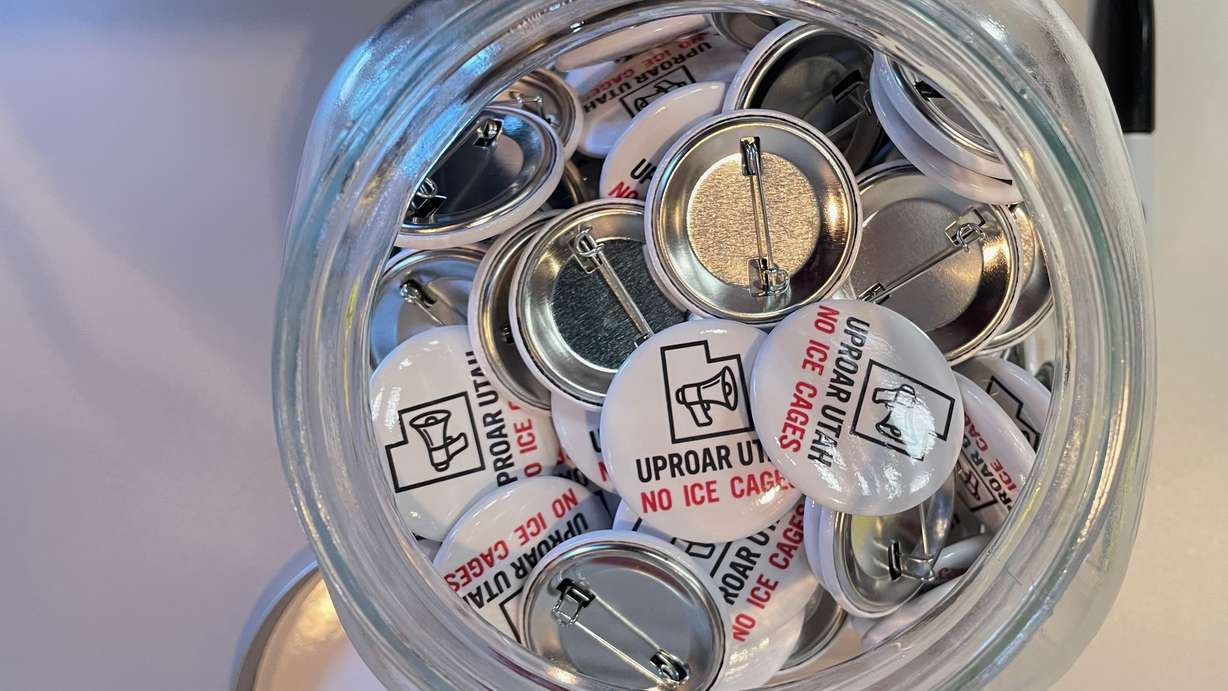
- Uproar Utah plans to sue federal authorities to halt development of a proposed immigration detention center in Salt Lake City.
- The new group, affiliated with the Utah Refugee Justice League, cites environmental, health, legal and humanitarian concerns.
- Separately, Salt Lake City and Salt Lake County announced Monday they had filed a lawsuit, also to stop the plans.
SALT LAKE CITY — A new nonprofit group plans to sue federal authorities to force a halt to plans to build a massive immigration detention facility, paralleling efforts by Salt Lake City and Salt Lake County.
Uproar Utah, affiliated with the Utah Refuge Justice League, which advocates for the local refugee community, announced the legal effort Tuesday, though an attorney involved in the initiative hinted at the plans last month. Group members said federal authorities didn't carry out studies into the potential impact of the facility, running afoul of the Administrative Procedure Act, or APA, and the National Environmental Policy Act, or NEPA.
"The federal government cannot impose a massive immigrant jail on Salt Lake City without complying with environmental laws, administrative requirements and basic principles of public health and government accountability," said Brent Ward, an attorney with Parker and McConkie and member of the Uproar Utah Executive Committee. "This proposed facility threatens immigrant communities, promises to separate immigrant children from their parents, threatens public health and raises serious legal, environmental and humanitarian concerns."
More specifically, they warn in their letter on Tuesday to federal authorities announcing their intent to sue that the facility could exacerbate declining water levels in the Great Salt Lake, leading to health issues caused by blowing dust. They said the massive facility, holding up to 10,000 people, would pose a health threat to detainees and that it would potentially overwhelm Salt Lake City's sewer system.
Separately, leaders of Salt Lake City and Salt Lake County on Monday announced they had jointly filed a federal lawsuit against U.S. Immigration and Customs Enforcement and the U.S. Department of Homeland Security, also to halt the detention center plans. Those involved in the Uproar Utah initiative say the new lawsuit could be filed within weeks and that they plan to coordinate their efforts with officials in Salt Lake City and Salt Lake County.
"We want to supplement or support that case as much as we possibly can with our case and avoid any unnecessary conflicts," said Ward, also noting contacts with those involved in legal efforts in Maryland to halt a proposed detention center there. Meantime, he said more plaintiffs in addition to Uproar Utah are sought for the planned new lawsuit.
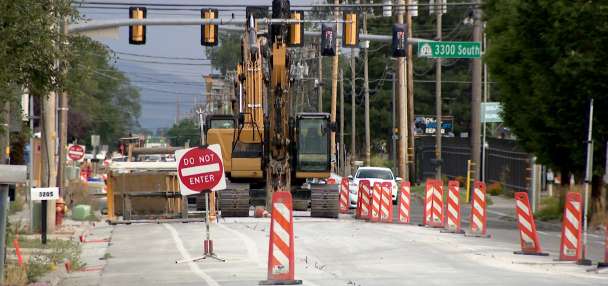
Immigration and Customs Enforcement, or ICE, purchased an empty warehouse at 6020 W. 300 South in Salt Lake City for $145.44 million earlier this year for conversion into an immigrant detention center, part of President Donald Trump's crackdown on illegal immigration. ICE officials told Salt Lake City Mayor Erin Mendenhall the facility would be designed to hold 7,500 to 10,000 people and serve as one of a handful of "mega centers" around the country.
While some leaders welcome the plans as needed to help facilitate the deportation of immigrants in the country illegally, others oppose the plans and have regularly demonstrated at the 300 South location. The warehouse, located in an industrial area west of Salt Lake City International Airport, would need to be retrofitted to serve as a detention center.
"This is not simply a land-use dispute," said Jim McConkie, legal advocate for the coalition. "It is a challenge to a federal detention scheme that would transform Salt Lake City into a hub for mass immigrant incarceration. Utah communities deserve transparency, lawful process and humane treatment for all people."
Mike Anderson, KSLMore recently, federal officials have said they're taking a second look at plans to build detention centers around the country, even as some of the initiatives have faced legal challenges. A statement from Uproar Utah acknowledged as much, but said it wants to send a message that Utah citizens "stand firmly against" such initiatives.
Representatives with ICE didn't immediately respond to a query Tuesday seeking comment on the legal challenges.
McConkie is also with Parker and McConkie, involved with the Utah Refugee Justice League and a member of the Uproar Utah executive committee.
'A moral issue'
Several speakers addressed the press conference on Tuesday at which the Uproar Utah plans were announced. They variously warned about the environmental impacts of a detention center and lauded immigrants' contributions.
"We cannot stand idly by. This is, at its core, a moral issue. We either love our neighbors and treat them with dignity, or we do not," McConkie said in a statement.
Marie Cornwall, a retired Brigham Young University sociology professor and the executive director of Uproar Utah, said the new group came into being partially in response to the talk of the new detention center.
"We are doing this because we can't count on our state and national leadership to gather all the facts and understand the problems facing us. Our governor, senators and state representatives aren't paying attention," she said.
Read more:

Voces de Utah
Looking for more news from Utah's Latino community? Visit our Voces de Utah section for more stories, events and features.Liliana Bolaños, state programs manager for Mormon Women for Ethical Government, recounted her experience as an immigrant from Mexico and the years of painstaking efforts it took her to become a legal permanent resident. She also countered the stories from many federal officials about the immigrants they're targeting as part of the immigration crackdown.
"Too often, the public is told that the people being taken into custody are dangerous criminals. Too often, leaders in Washington, D.C., repeat that narrative as if it were fact," she said. "But I am living proof that this narrative is false."
McConkie said he has heard no new information on plans to build a detention center in Utah. Legal efforts are afoot in Maryland and elsewhere to halt other detention center initiatives; however, he said the threat of action can sometimes cause federal officials to back off.
Correction: An earlier version incorrectly stated the group is required to wait six months after announcing plans to sue before taking legal action against the federal government, but it could be filed within weeks.
This story may be updated. To be notified about updates, please click Follow This Story below on the KSL app.

Related stories
Most recent Salt Lake County stories
Related topics
 Tim Vandenack