'%3e%3cpath%20d='M34.1406%205.85938C30.3906%202.10547%2025.3047%200%2020%200C14.6953%200%209.60938%202.10547%205.85938%205.85938C2.10938%209.61328%200%2014.6953%200%2020C0%2025.3047%202.10547%2030.3906%205.85938%2034.1406C9.61328%2037.8906%2014.6953%2040%2020%2040C25.3047%2040%2030.3906%2037.8945%2034.1406%2034.1406C37.8906%2030.3906%2040%2025.3047%2040%2020C40%2014.6953%2037.8945%209.60938%2034.1406%205.85938ZM37.0117%2023.543H31.1602V13.5391H27.6328V19.9414C28.1211%2020.6914%2028.3711%2021.582%2028.3711%2022.5625V22.625C28.3711%2023.668%2028.1172%2024.6055%2027.6328%2025.4297V26.6094H36.082C33.4883%2032.9375%2027.2891%2037.3789%2020.0039%2037.3789C10.3711%2037.3789%202.62109%2029.6289%202.62109%2020C2.62109%2010.3711%2010.3711%202.62109%2020%202.62109C29.6289%202.62109%2037.3789%2010.3711%2037.3789%2020C37.3789%2021.1484%2037.2617%2022.2656%2037.0508%2023.3477C37.0391%2023.4141%2037.0234%2023.4766%2037.0117%2023.543Z'%20fill='white'/%3e%3cpath%20d='M22.3086%2018.5352C20.4336%2018.125%2019.9531%2017.8398%2019.9766%2017.1836V17.1406C19.9766%2016.6992%2020.3477%2016.2148%2021.4023%2016.2148C22.582%2016.2148%2023.8867%2016.6797%2025.0781%2017.4766L26.8516%2015.0195C25.4453%2013.8906%2023.707%2013.3398%2021.5547%2013.3398C18.5195%2013.3398%2016.4375%2015%2016.4063%2017.4766V17.5352C16.3633%2020.2617%2018.5859%2020.9805%2021.293%2021.6016C23.0391%2021.9766%2023.5703%2022.3164%2023.5703%2022.9609L23.5469%2022.9766C23.5469%2023.3906%2023.2578%2023.7031%2022.7852%2023.8359C22.5742%2023.9062%2022.1289%2023.9727%2021.5156%2023.9727C20.7617%2023.9727%2019.7539%2023.8633%2018.6328%2023.4844C18.0898%2023.2891%2017.4727%2023.0039%2016.8047%2022.6133L20.1406%2026.625C20.2813%2026.6602%2021.0977%2026.8516%2021.7734%2026.8516C25.0039%2026.8516%2027.0859%2025.2461%2027.1094%2022.6328V22.5703C27.1602%2020.1133%2025.2148%2019.1719%2022.3086%2018.5352Z'%20fill='white'/%3e%3cpath%20d='M5.24219%2013.5664V26.6133H8.75391V23.7578L10.2969%2021.9531L14.2031%2026.6133H18.3867L12.3555%2019.5195L17.4023%2013.5664H13.4531L8.75391%2019.0586V13.5664H5.24219Z'%20fill='white'/%3e%3c/g%3e%3cdefs%3e%3cclipPath%20id='clip0_97_2430'%3e%3crect%20width='40'%20height='40'%20fill='white'/%3e%3c/clipPath%3e%3c/defs%3e%3c/svg%3e)


- Stefani Ellison shares her husband's struggle with post-sepsis syndrome after leg amputation.
- Stephen Ellison's cognitive and emotional decline led to his death by suicide on July 18, 2025.
- Stefani emphasizes the importance of awareness about post-sepsis syndrome to prevent tragedies.
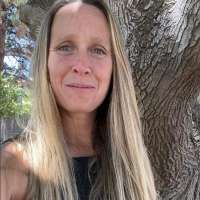
CEDAR CITY — It was the third Friday in July, and Stefani Ellison found herself deep in grief.
"It's a 'traumaversary,'" she said. "The third Friday in July of 2023 is when he had his leg amputated. It was the third Friday in July of 2025 when he took his life. Today is the third Friday in July, so here we are again."
On July 18, 2025, Stefani Ellison's husband, Stephen Ellison, 68, succumbed to a condition known as post-sepsis syndrome, which affects up to 50% of sepsis survivors, according to the National Institute of Health.
Sepsis is the body's extreme response to infection and is a life-threatening condition. For sepsis survivors, however, the battle is far from over, and Stefani Ellison said that it was something she and her husband weren't prepared for.
"Medicine is doing so much better at helping people with sepsis survive the infection, but so many are suffering the after-effects and still succumbing to the sepsis," she said. "I don't think we understand that. We think, 'Oh, yay. They're better. They got out of the hospital, and now they're done,' when it's really just the beginning of a whole new life."
The Ellisons live in Cedar City and raised 19 children —14 of whom have special needs and were brought into the family by way of international adoption. Stefani Ellison worked as an international adoption specialist, and Stephen Ellison was a truck driving instructor. In the spring of 2023, their life forever changed when Stephen woke up with an ulcerating sore on his left foot that stemmed from a broken foot many years prior. On that day, he put his boot on and went to work as he had done many times before, but as the day went on, that sore grew and developed into an infection.
"He left in the morning and came back, and he couldn't take his work boot off," Stefani Ellison recalled. "It was all swollen and infected. He finally got his boot off, and his foot was black. We went to the hospital, and that night he had surgery to remove his toes that they weren't going to be able to save."
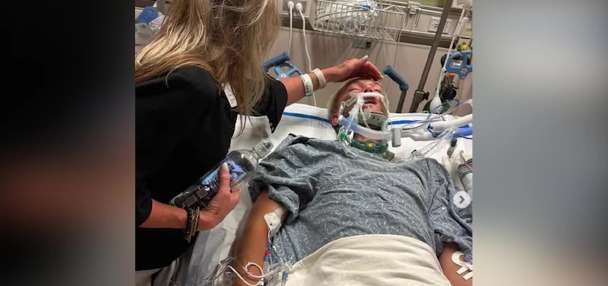
The couple thought they had weathered the storm, but only a few short weeks later, the infection turned into sepsis. Stephen Ellison would encounter sepsis two more times over the next several months, which eventually led him to needing his leg amputated just below the knee.
"After six months, he was doing well, and he was fitted for his prosthetic leg, and it looked like, 'OK, we should be ready to go,'" Stefani Ellison recalled. "But he never regained his former self."
Post-sepsis syndrome
Ellison recalled watching a steep cognitive decline in her husband, who she described as being "very sharp" intellectually and always able to "figure things out." She suggested he talk to a therapist, knowing that what he had gone through was very traumatic, adding that they both didn't know that what he was going through had a name.
"We suggested therapy, but he is from that generation where you just don't talk about what's going on," she said. "He kept telling everyone he was OK, hoping that he could convince himself that he was. He had to have known, 'I'm not fine.' I'm sure he thought, 'I used to be able to figure this out. I used to be able to do this. What is wrong with me? I think I'm going crazy."
It wasn't just her husband's cognitive functioning but his emotional state that was deteriorating. Stefani Ellison said he was also suffering from lack of sleep and feelings of defeat, which led to an overall sense of frustration felt by the entire family.
"It just affected everybody in his circle," she said. "When you get to the two-year mark, I think he was thinking, 'I should be better than where I'm at.'"
Two years to the day after her husband had his leg amputated, Ellison described as being "really hard."
"I'm sure he was having those feelings of, 'Why am I not further ahead?'" she recalled. "As his caregiver, I was also exhausted and couldn't figure out why we were not further ahead. It was a very rough day, and I just thought he'd gone to visit the children, and then he sent me a goodbye text, and that's how we knew."
Ellison recalled noticing that the gun safe had been opened and having the immediate sinking and devastating knowledge that her husband had taken measures to end his pain.
"We were able to ping his phone and find him, but he was already gone by then," she said. "It was very unexpected and highly traumatic because we had kids going in every direction. We didn't know where he was, but we knew he was in trouble."
'Had we known what to look for'
As Ellison began her own healing journey, she learned that what her husband was experiencing wasn't uncommon, and she wants to share what she's learned with others.
"I had never heard of post-sepsis syndrome, and our family doctor had never heard of it, either," she said. "I sincerely believe that had we known what to look for, that things wouldn't have ended this way."
Many things Ellison has learned came from the Sepsis Alliance, which names many physical, cognitive and emotional symptoms including anxiety, panic attacks, post-traumatic stress disorder, accompanied by an ongoing fear of sepsis recurring.
"It's very significant for us to learn about because sepsis is one of the leading causes of death in hospitals," she said. "It's imperative that we are given this information. Some of this information is scary to know, but it's scarier not to know."
As the "traumaversary" of her husband's passing came and went, she hopes that talking about what happened to him will help those suffering the effects of post-sepsis syndrome.
"I hope that when we talk about it, we're able to help other people see that the pain just doesn't dissolve," she said. "If I take my life, that pain isn't over. It doesn't go away. The law of physics says, it just transfers form. It goes to the people that are left behind. That pain remains.
"His children and grandchildren have to live so much longer without him," she added. "It didn't have to be this way, and I feel bad about that. He loved dearly his children and grandchildren."
Suicide prevention resources
If you or someone you know is struggling with thoughts of suicide, call 988 to connect with the 988 Suicide and Crisis Lifeline.
Crisis hotlines
- Huntsman Mental Health Institute Crisis Line: 801-587-3000
- SafeUT Crisis Line: 833-372-3388
- 988 Suicide and Crisis LifeLine at 988
- Trevor Project Hotline for LGBTQ teens: 1-866-488-7386
Online resources
- NAMI Utah: namiut.org
- SafeUT: safeut.org
- SafeUTFrontline: SafeUT Frontline.org
- SafeUTNG: SafeUTNG.org
- Suicide and Crisis Lifeline: 988lifeline.org
- American Foundation for Suicide Prevention, Utah chapter: afsp.org/chapter/utah
- Encircle Utah.org LGBTQ+ family and youth resource center.
- Utah Pride Center.org empowers Utah's diverse LGBTQ+ community.
- U.S. Department of Veterans Affairs Mental Health suicide prevention
- Centers for Workplace Mental Health offers suicide prevention and response for employers.