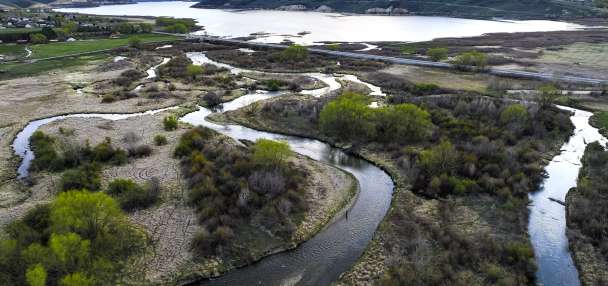
- Utah officials are partnering with EutroPHIX to combat algal blooms at Willard Peak Pond, which have prompted its closure in years past.
- The company treated the Box Elder County pond with lanthanum-modified bentonite, designed to bind phosphorus, thus preventing algae production.
- The demonstration project aims to help determine if similar efforts would be feasible at other lakes with algae issues.
WILLARD, Box Elder County — Forget about rain, overcast skies or chilly weather.
Algal blooms are an increasing hindrance to enjoying a hot summer day at the beach in Utah, and in a bid to combat the green, slimy substance, Utah officials are teaming with a private company on a potential fix. "You know, they're fairly common, and we're seeing more and more of them. I'm not sure why," said Scott Strong, director of the Utah Division of State Parks.
As part of the new effort, EutroPHIX, a company that specializes in restoring water quality, is treating Willard Peak Pond at Willard Bay State Park to prevent algal blooms. Strong, company reps and other state officials gathered at the site on Tuesday to promote the initiative. EutroPHIX, a division of SePRO in Carmel, Indiana, treated the 10-acre pond with lanthanum-modified bentonite, designed to bind phosphorus in the lake, which drives algal growth and production.
"Phosphorus is driving these harmful algal blooms, so we'll essentially be able to improve water quality by addressing the phosphorus in the sediments here," said Alexis Fischer, a EutroPHIX water quality technical specialist. "Hopefully, this summer, we won't have the water body shut down like it has been in the past."
Strong said the manmade pond opened to the public in 2022, but late-summer algal blooms have forced its closure the last two or three years, same as at other Utah lakes, including Utah Lake in Utah County. The green substance, which typically floats on water bodies, hampers access to water and can pose a health threat.
"We have thousands, literally thousands of people who want to come and recreate at the Willard Peak Pond here and can't, which is so devastating because we have fishing opportunities, or paddle sports," Strong said. The pond also features a beach.
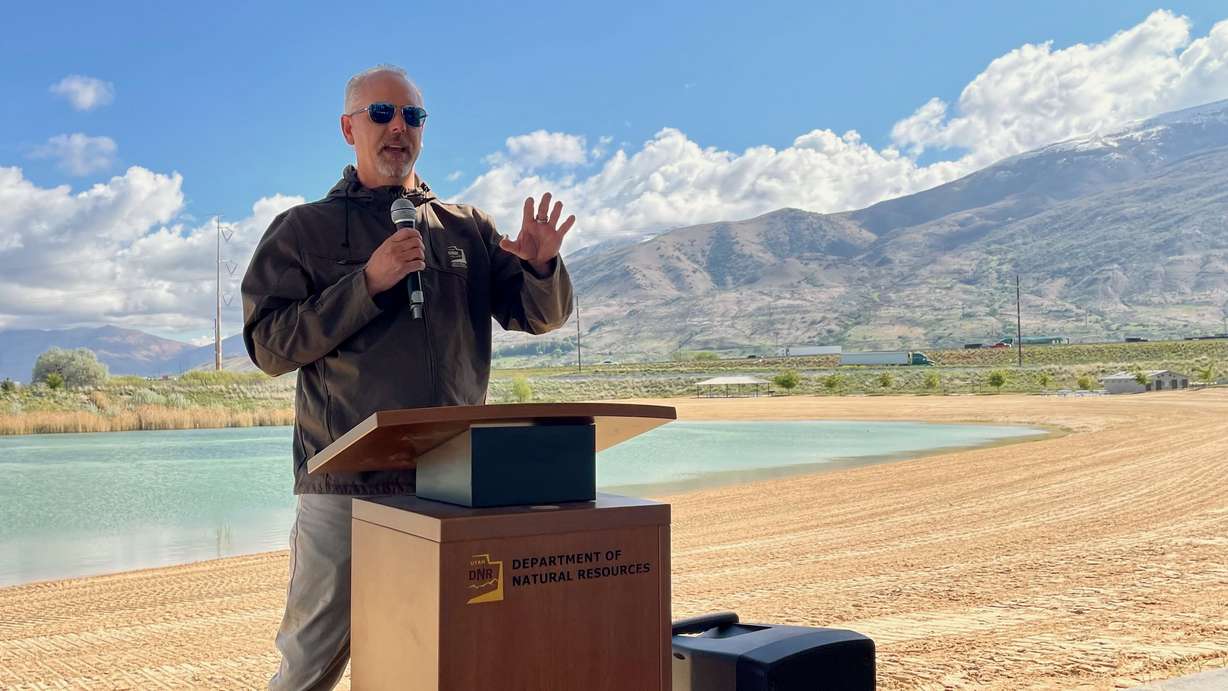
EutroPHIX is covering the cost of treating Willard Peak Pond, and officials regard the initiative as a demonstration project to determine whether the same approach could be replicated at other Utah lakes with algal blooms. "We have seen a huge increase of harmful algal blooms throughout our state, and it's really making a lot of our water in our state unusable," said Utah Rep. Tom Peterson, R-Brigham City.
Cost could be an issue of treating other lakes, like Utah Lake, which has experienced algal blooms over the years, prompting advisories against swimming and other water activities.
Alex Cabrero, KSL"We would love to treat Utah Lake. That would come at a cost of anywhere between five and six hundred million dollars. It's so big," Peterson said. "The quality of the lake would be much more usable, but it is a huge price tag."
More immediately, he said Utah lawmakers set aside $500,000 to treat the Mantua Reservoir east of Brigham City, which also experiences algae issues. State officials are seeking federal grants to complement that funding. "It seems to be the most polluted reservoir in our state right now in terms of phosphorus and algal blooms," Peterson said.
As for Willard Peak Pond, a boat traveled around the body of water on Tuesday, treating it with lanthanum-modified bentonite, a mixture of two naturally occurring substances: lanthanum, a rare-earth mineral and bentonite clay. Officials will keep an eye on the pond into the summer.
"We've looked at their data from other sources of water they've treated, and we believe that this is a great solution for Utah to get our citizens back in the water that they've recreated in for decades," Peterson said.

Related stories
Most recent Environment stories
Related topics
 Tim Vandenack