Estimated read time: 8-9 minutes
- Utah law allows unelected developers to form public infrastructure districts.
- Such districts can issue bonds and taxes, raising $3.8 billion in debt since 2019.
- Critics argue this creates taxation without representation and lacks financial oversight.
The following story was reported by the Utah Investigative Journalism Project in partnership with KSL.com.
SALT LAKE CITY — When a city decides to issue a bond and increase property taxes or other fees on residents, it's a big deal in Utah.
Notices go out, articles are written and people line up at microphones to give their two cents about the proposals at city and county council meetings. If a bond passes, a council member knows they might pay for it at the ballot box come next election if it's not popular.
Utah politicians don't even like to say the "T" word, let alone vote for one.
But what if a board could impose a tax without worrying about angry calls and emails from voters? And certainly not worry about getting kicked out of office?
A little-publicized law passed in 2019 allows local government to appoint developers to the board of special public infrastructure districts. These districts, run by unelected developers, have the power to issue bonds and pass those costs on to homebuyers in the new districts. These taxes can amount to second mortgages that are paid off for decades on top of the existing mortgage.
Jen Brown is a director of the advocacy group Utah Citizens for the Constitution. She remembers being startled when she heard how public infrastructure districts are set up.
"Wait a minute," she recalled thinking. "We can't have taxes issued … by a nonelected board. That is taxation without representation."
She's not the only one with concerns. The state treasurer and auditor are watching public infrastructure districts (PIDs) closely and have raised alarms about the explosive amount of debt they've taken on, all while lacking the oversight and accountability that traditionally come with municipal bonds.
Since public infrastructure districts were allowed by state law in 2019, the number of these districts has skyrocketed. There are now hundreds across the state that have issued more than $3.8 billion in bond debt — more than triple the bond debt of the entire state of Utah.
Related:
Hidden developers' tax is zapping Utah homebuyers for billions
Utah homebuyers face unexpected taxes due to public infrastructure districts (PIDs).Public infrastructure districts have another unusual feature: While they get created by cities, cities don't consider the bonds as PID debt. So they don't have to worry about the project tanking and bringing down their budget numbers.
That's the hope, at least.
'That's not how money works'
Public infrastructure district power was a lot stronger before the last legislative session. Lawmakers reformed the original law in key ways.
Rep. Calvin Roberts, R-Draper, who co-chairs the Utah Commission on Housing Affordability, passed major reforms with his HB507.
Previously, public infrastructure districts could keep issuing bonds even after they finished paying off their original project. Now they dissolve after their infrastructure project is complete. A PID formed by one city or county previously could jump city and county lines and acquire new property in a different location without consent from the local government in the new location. That's also been stopped for typical public infrastructure districts. Previously, such districts were not required to inform homebuyers of PID taxes before closing on a property.
"My bill was really trying to rein PIDs in," Roberts said.
But the bill also did something else, meant to help protect cities and counties, which concerns State Auditor Tina Cannon.
The bill tries to put distance between a public infrastructure district's debt and the financial statements of the city or county that created it. Under governmental accounting standards, local government can keep a public infrastructure district's debt off its balance sheet so long as there is no benefit to the city from what the PID does.
HB507 was written into law that when a PID develops public infrastructure and transfers that property back to the local government, there is zero value attached to that infrastructure.
"That's not how money works," Cannon said. Her office even went so far as to issue a bulletin in March to clarify that such a transaction "constitutes a financial benefit regardless of assertions in statute to the contrary."
Whether that's a legal obligation or not is unclear.

Matt Ence is an attorney and shareholder at the firm of Snow Jensen and Reece that serves as legal counsel for a number of public infrastructure districts across the state.
As for the legal question about whether a city or county that forms a PID — known as a "creating entity" — can be held liable for the public infrastructure district's debt if something goes wrong, he says the accounting standard is different from the legal standard.
"I'm not aware of any case where one (creating) entity has been found liable by an accounting standard because of the debt of another entity," he said.
Cannon is still wary.
She points out that it's not Utah that gets to decide who qualifies for municipal bonds, but the federal government through the Securities and Exchange Commission.
"I have cautioned legislators," Cannon said. "'Watch yourself carefully because you're not going to do the state any favors if you create something that is not financially viable under SEC rules.'"
How could it run afoul of the SEC?
There are two main concerns. One is the "zero benefit" claim made under recent legislation. Municipal bonds are popular investments because investors usually know they are completely safe because the debt is backed by a city or local government that will pay it off no matter what.
"These bonds are high on the market because there's a perception that they cannot fail because of that municipal financing," Cannon said.
But Utah legislation seeks to remove that possibility. Now, local governments create public infrastructure districts, but then just disown them if they go belly up.
Developers running the boards of PIDs, meanwhile, get to issue lucrative municipal bonds that investors assume are as safe as any other municipal bond.
It's a having-the-cake, eating-it-and-pretending-it's-fat-free situation. That is, unless the SEC looks closer at the arrangement and decides otherwise.
The other concern that might cause the SEC to question public infrastructure districts is considering the "public" in public infrastructure district.
That's because PID projects often contain private components. Developers pitch these as being paid with separate funding sources like membership sales or traditional loans. But they are wrapped up in projects receiving the majority of their funding from the municipal bonds for public infrastructure.
A Utah County PID, for example, issued a $40 million bond in late 2024 but noted the project was also using other loans and private membership sales to fund $17.5 million in private improvements like a "surf lake park, event center and golf course."
Does a project that is primarily funded by municipal bonding also get to use that leverage to add in massive private attractions and features? Again it's another unknown that Cannon worries about local government finding out the hard way.
Are they constitutional?
In 2019, Sen. Dan McCay, R-Riverton, and employed in real estate investment and development, introduced SB228 to create public infrastructure districts for the first time. He made it clear to the Senate Business and Labor Committee that such districts are created only with everyone's buy-in.
"First off, if there's any registered votes, 100% have to consent," McCay said. "If there's any property owners, they have to consent as well and then thirdly, it would require the discretionary consent of the county or city to implement."
Brown, with Utah Citizens for the Constitution, says that the setup sounds very Democratic until you realize how it plays out in real life.
"One thing that is said is that 100% of homeowners have to approve, well, yes, that is true, but there's one very important piece that gets overlooked," Brown said. "When PIDs are being created, they are developing land from scratch, there are no existing homeowners. And so, who makes up the PID board? Well, it's whoever the developer designates. So it could be him, his wife and maybe one of his employees could be the full PID board."
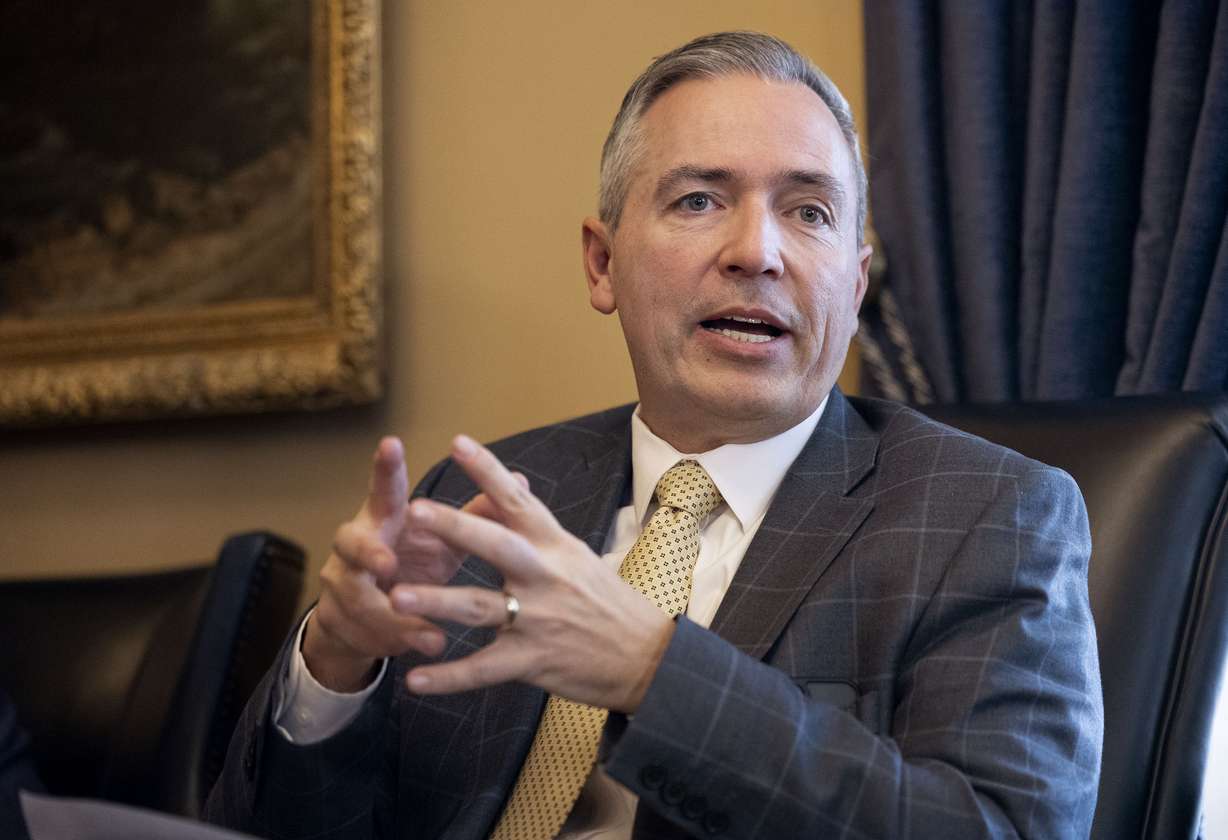
For Brown, giving the power of the purse strings to unelected developers clashes with how Utah and America work.
"With a constitutional republic, taxation cannot be delegated," Brown said.
But she says developers have a strong lobby presence with lawmakers, not that they really need one. As it stands, nearly a quarter of lawmakers are involved in the real-estate industry either through construction, property management, development or legal representation of the industry. That also includes the Legislature's two most powerful members, House Speaker Mike Schultz and Senate President Stuart Adams, both of whom are real estate developers.
Ence, however, says public infrastructure districts are facing too much heat.
He says not all programs are perfect and the industry has not challenged common sense reforms like those passed in the recent legislative session. But he also says it's interesting that public infrastructure districts are catching flak for operating like other entities in the state, such as special service districts that also issue bonds like water districts or districts that fund utility projects.
"It's interesting that PIDs are being targeted because there are other entities in Utah that can do similar things," he said.
According to the Utah Association of Special Districts, however, special service districts have more oversight by the local government entities that create them. "In reality, special service districts are still ultimately under the control of their creating entities," the association's website notes.
While Ence cautions that he's not an expert on affordability issues, he does see public infrastructure districts as a way to address Utah's booming population growth and potentially help bring housing costs down.
"If you want to have cheaper housing, you need to have more supply," he said.
Brown, however, sees the affordable housing argument as a smokescreen for a move that is not only unconstitutional but a perversion of the free market system.
Previously, a developer's project had to succeed because it deserved to.
"They had to pay those upfront costs and on those upfront risks because they have the potential to make a tremendous amount of money, and that's what the free market was," Brown said. But now, thanks to developers and their lobbyists, "they're saying, 'Let's move the risk, but all the profits stay the same to us.'"