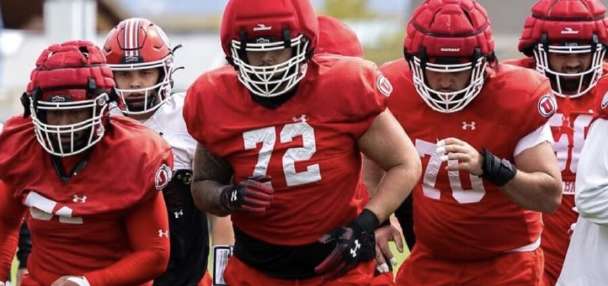
- Chari Hawkins, a Utah State alum, overcame Olympic disappointment to achieve personal growth.
- After failing in high jump at the 2024 Olympics she chose to persevere.
- Hawkins will be the grand marshal for the 2026 Salt Lake Marathon.
SALT LAKE CITY — Everyone saw Chari Hawkins biggest failure. No one saw her greatest triumph. That's because the failure happened on the world's biggest sports stage — the Olympic Games. But she earned that victory in the darkness of her loneliest night.
"You never know how truly strong you are until you are pushed past the point of wanting to quit and you choose to fight instead," said Hawkins, who spent a decade as a professional heptathlete working to make the U.S. Olympic team.
Finally, at 33 years old, the Utah State alum achieved that goal, earning the chance to compete at the 2024 Summer Games in Paris. But in a matter of minutes, she went from reveling in the joy of living her dream to drowning in the agony of a self-made nightmare.
"It all happened so fast," said Hawkins, who now lives in Utah and will act as the grand marshal for the Salt Lake Marathon on Saturday. "If you look at the video (of the event) ... I look so shocked."
Hawkins had already navigated a tough, unpredictable road just to get to the Games. As she prepared for the first of her eight events, the high jump, she was overwhelmed with gratitude.
"I decided I wanted to meditate, and just soak in the moment," she said. "I've never been in a better place, and ... I was (thinking) I can't believe I'm here, and I'm so lucky."
Normally, she watches the other competitors jump as she waits for her turn. But on this day, she found a quiet spot and lost herself in mediation.
"The next thing I hear is, 'Chari, you're up!' and I look, and it's my turn," she said. "The clock is ticking; I'm in my sweats. Luckily, I have my spikes on, but by the time I was able to get all my stuff together and get to the mat, I had 15 seconds to jump."
She failed to clear the bar. But she had two more attempts.
She talked to her coach, tried to calm herself, and attempted to get back into her tried and true routine. It didn't work. She failed all three attempts and got zero points in her best event. Any medal hopes were gone.
"I was so embarrassed," she said. "I'm shocked; I'm angry. ... I've never done that in high jump; it's my most consistent event. So being in that position was so jarring."
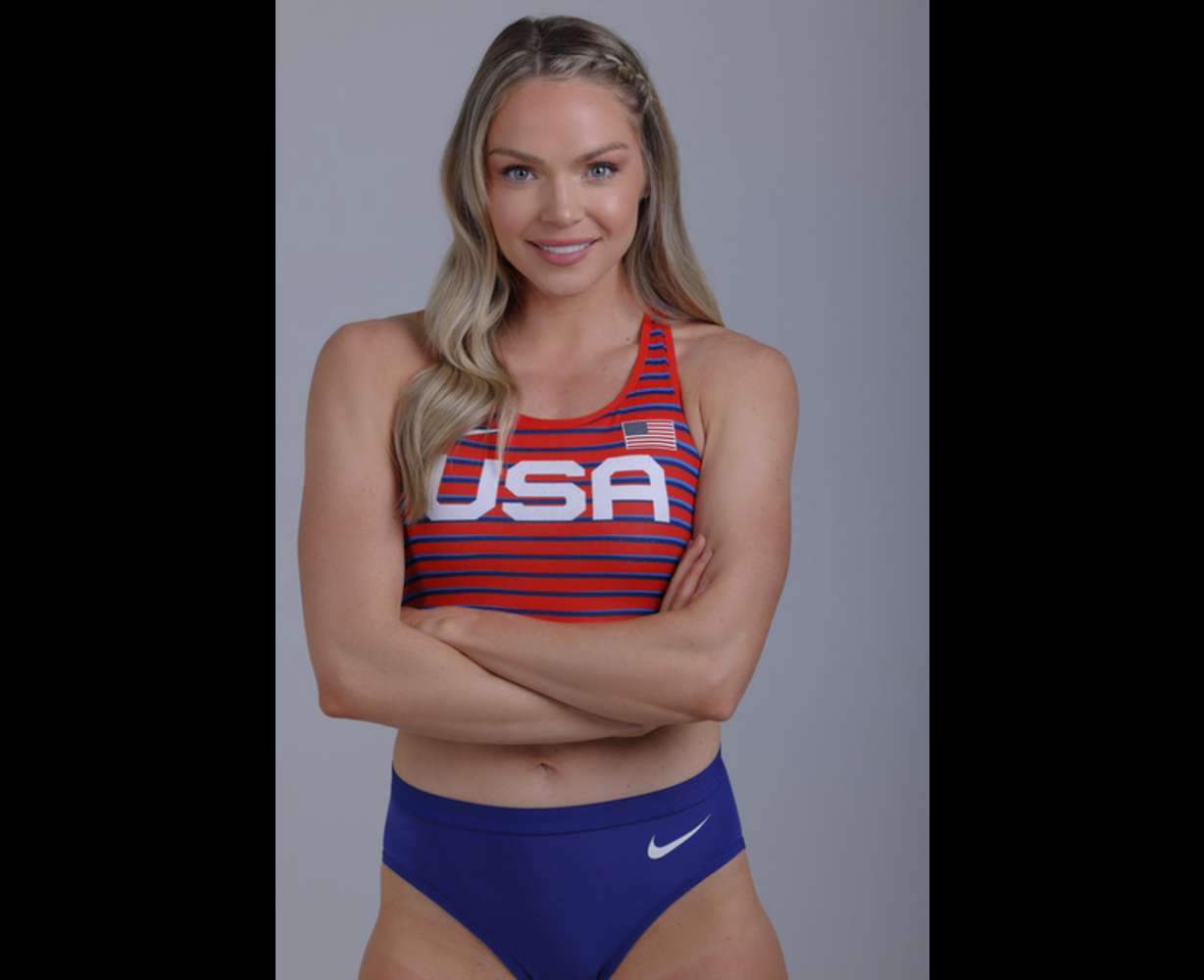
She left the arena and returned to her room in the athlete village.
"I had seven hours (before the next event), and I cried the entire time," she said. "I did not want to go back on that stage. I was so embarrassed. I just wanted to go home."
Hawkins faced a brutal decision: She could end the nightmare by dropping out of the other seven events — no one would blame her and it wasn't an unusual choice for an athlete in that situation — or she could remain in the competition knowing even her best in everything else meant she'd still finish in last place.
And then she thought about her greatest triumph, about the version of her who did something she didn't want to do, something she didn't think she could do. It was 2021. A year earlier, she'd failed to make the Olympic team. That was the team she was supposed to make. It was a shock when she failed.
All seven of her sponsors dropped her. People she'd worked with for years told her they didn't have time for her anymore. Her family wanted to give her space, but she said the silence felt like everyone had abandoned her.
"I went three months without a call or text," she said. "I'd spent 10 months limping (because of an injury) to make that team. .. I put myself through the ringer, for what?"
She said her thoughts got so dark, she convinced herself that her family didn't love her if she wasn't successful. And one night, when her husband was traveling, she had a thought: "Maybe I shouldn't be on this earth."
It was in this dark, painful place she decided to do something she didn't want to do. She called a suicide hotline.
"It felt like I was wasting time, their time," she said, "and that this wasn't going to help. ... Even though I was having the ideations I was having, it still felt unnecessary. I felt like I was being a drama queen."
But that call saved her life — and changed her perspective. She is grateful to the stranger who talked her through some agonizing moments. But she's also grateful to the sad, scared version of herself who mustered enough strength and courage to reach out for help.
She said strengthening mental muscle is much like strengthening other muscles. You have to use them if you want to get stronger.
"I think the more you flex the muscle of reaching out and being willing to be brave and be vulnerable ... it makes your ability to push through stronger," she said.
And in the months and years after that, she reached out for help and support many times. So when she found herself alone in her room in France in 2024, weighing whether she could finish the Olympic competition, she found herself thinking about her darkest night and how it became her greatest triumph.
"I asked myself, 'What would 2021 me ... the one who was alone and lost and wishing more than anything she was at the Olympics. What would she need you to do right now?"
And then she thought about her friends and family who spent thousands of dollars traveling to France to support her.
"And then I thought about the girl you're talking to now, future Chari, and what she might need from me," she said, choking back on emotion. "I am so grateful for her because I know how much her body hurt, how much her head hurt, how broken her heart was, and she thought about me and what I needed. ... I don't think I'd be able to talk about this, to be proud of this, to share this if I'd just gone home.
"But like I said, sometimes you never know how strong you really are until you're pushed to that moment where you want to quit, and you choose to fight instead."
So she dried her eyes and headed back to the track. She accepted comfort from family and competitors, and decided that the girl who had the strength to call that hotline for help deserved her Olympic experience.
"I knew that if I was going to go back onto that track, I was going to do it with the same energy and Olympic spirit that I had been having this entire time," she said. "Because that's the girl that every single one — past me, present family and future me — needed me to be."
She gave the rest of the competition her best, and reveled in every moment. She is proud of that last place finish because she knows what it took to get there, even if the rest of the world doesn't.
Hawkins ran her first marathon a year ago and was thrilled to be invited to be the grand marshal for the 2026 Salt Lake Marathon.
"This is a full-circle moment for me," she said. "I'm so excited to watch everybody do something they've worked so hard to do, maybe something they once didn't think was possible."
NOTE: There is a free shake-out run at noon on Friday, April 24 at the Utah State Fairpark.

Most recent Sports stories
Related topics
 Amy Donaldson