- Salt Lake City considers expanding camping bans to address homelessness and safety issues.
- Advocates argue the city lacks resources and fear increased criminalization of homelessness.
- A public hearing is planned for May, before a potential vote later in the month.
SALT LAKE CITY — Utah's capital city is exploring a measure that would expand its overnight camping policies to combat public safety concerns tied to homelessness in Salt Lake City.
However, some of the state's top homeless resource advocates say they don't believe the city has the resources to handle the situation, and they believe it could push the issue to other cities.
Camping in public parks and streets is already illegal in Salt Lake City, but the city is mulling a new ordinance would extend the overnight ban — 11 p.m. to 5 a.m. in most cases — to other public properties like sidewalks and park strips, where there have been "growing challenges" with people sleeping, storing property or preparing meals in recent years, city officials wrote in a memo.
The measure would clarify what camping is, aligning the city code's language closer to existing challenges, while also applying to people camping in vehicles for the first time, which has been a growing problem lately, said Andrew Johnston, Salt Lake City's director of homeless policy and outreach, as he presented the potential new ordinance to members of the City Council on Tuesday.
It would also prohibit anyone from leaving personal property in an area closed to the public, while establishing a process to remove encampments and personal property on public property for "health, safety and welfare" of residents and visitors, per the city.
"(The existing ordinance) did not necessarily envision people living in vehicles full time ... or the number of people without housing finding places to sleep at night, so we tried to update this to reflect the new reality," he said.
There would be a few exceptions, such as permission from a property owner or in areas along the route within 24 hours of a permitted parade, like the annual Days of '47 Pioneer Day parade. The mayor would also be able to declare a local emergency to allow some camping, if necessary.
The city also calls on police to handle violations with "humane and compassionate enforcement."
"The public is calling for safer parks. We hear it all the time," said Salt Lake City Police Chief Brian Redd, when asked about it on Monday. "People want to be able to go there and not see the drug use and be threatened by needles or harassed."
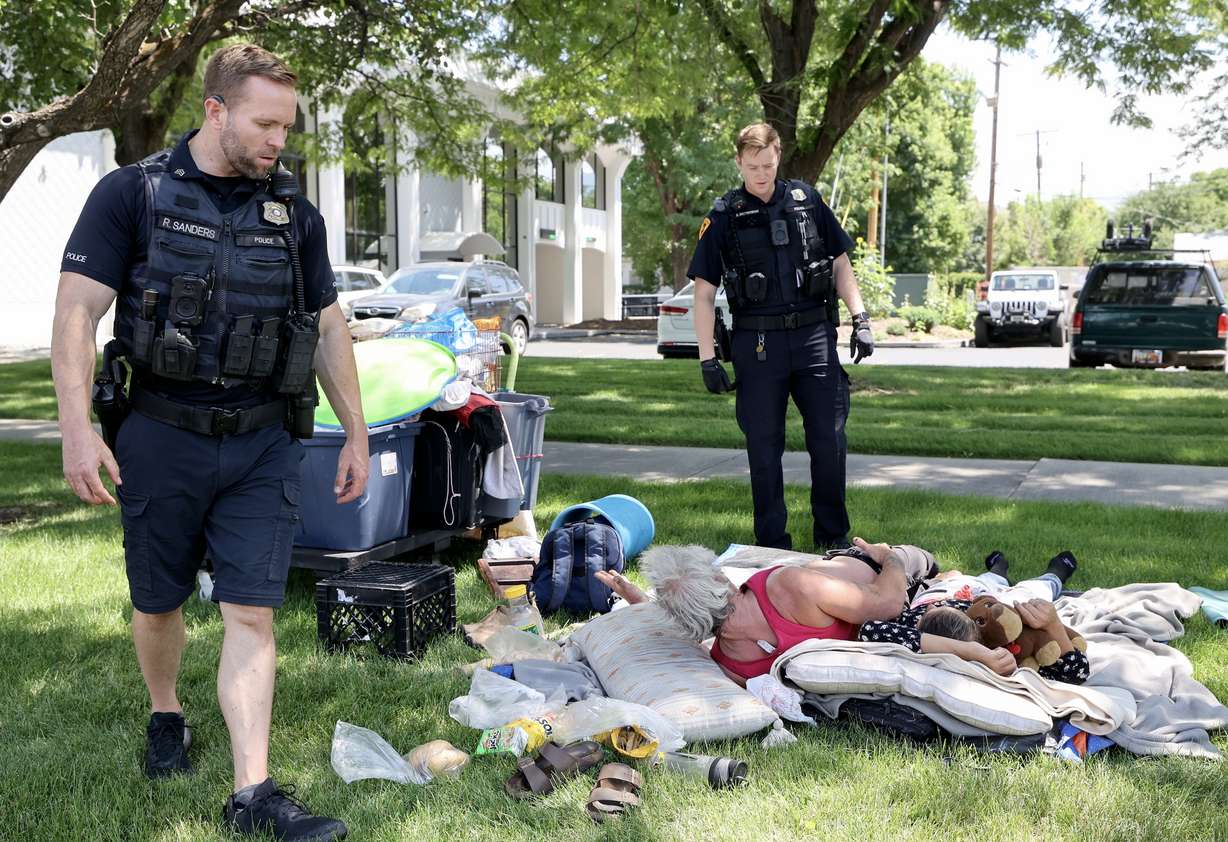
However, Kseniya Kniazeva, director of the Nomad Alliance, a nonprofit working to address the state's homelessness, argues that there are not enough available resources to handle what Salt Lake City is proposing, citing the persistent capacity issues within shelters, transitional housing and affordable housing.
She's worried that it might lead to more tickets that further entrench people experiencing homelessness in the criminal justice system, which will make it even more difficult for them to escape it, among other issues.
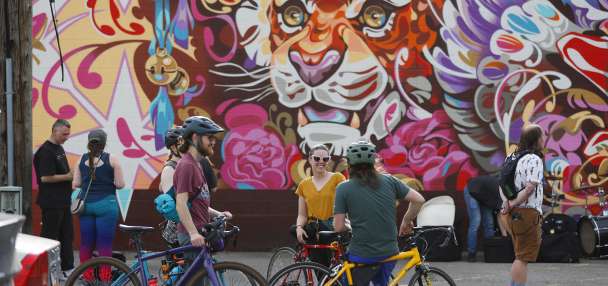
"I don't believe we need to implement more measures or greater measures to circumvent camping. ... There are no beds for people. The streets are the only place for them," she told KSL after hosting an event on Monday that brought police and people experiencing homelessness together to come up with solutions to barriers in accessing homeless resources.
Another issue is what has happened during other crackdowns. When police raided the Jordan River Trail last year, closing a section down to combat crime and homelessness concerns there, they found new issues in Liberty Park and Herman Franks Park near the center of the city, and then ultimately Sugarmont Park in Sugar House, with every law enforcement sweep.
Salt Lake City's new measure may push people to new parts of the city, other communities in the valley or neighboring counties unless there are safe places to go, Kniazeva said. That's why she believes the city should explore more sanctioned camping sites as a better alternative.
"We need some place for them to go," she said.
Salt Lake City is aware of this "huge problem," Johnston said. The city's camping issue has improved a bit over the past few years, but he noted other cities have had challenges since then, too, so there's a need for housing in the county to address.
The city is still exploring places people can legally stay during overnight hours, while ensuring its camping code aligns closely with other cities to avoid pushing camping problems around the valley, he added.
Salt Lake City leaders are bracing for what could be a complex debate.
"I realize we're balancing two things here," said Salt Lake City Council Vice Chairwoman Erika Carlsen, explaining she's well aware of the residential safety concerns but also gives pause at the idea of policies that come across as criminalizing poverty.
Others agreed, saying they've heard the concerns from both sides of the conversation.
"Personally, I wanted to try and narrow it down to make sure there was more enforcement around neighborhoods, since neighborhoods experience more of the challenges," said City Council Chairman Alejandro Puy. "Unfortunately, we couldn't really we couldn't find a way of doing it."
A public hearing on the item is tentatively scheduled for May 5 (7 p.m. inside the Salt Lake City-County Building), before a final vote that could be held as early as May 19.