Estimated read time: 6-7 minutes
Paul had been living with dental problems for most of his adult life. Crowns that never fit quite right. Pain that made eating difficult. Then, one afternoon, one of his front teeth broke out completely.
"I was so ashamed," Paul said. "I can't go around like this. I need to do something."
He researched options in Utah, looked at the costs, and concluded that traveling to Mexico for dental care was his best shot. He booked a flight to Cancun, signed paperwork he couldn't fully read, and underwent a full-mouth restoration using a procedure called All-on-4.
What came next, he said, was one of the most stressful experiences of his life.
'The minute they put it in, I knew something was wrong'
All-on-4 is one of the most widely marketed full-arch dental implant solutions in the world. The procedure anchors a full set of prosthetic teeth to four implants. For patients who have lost most or all of their teeth, it can be a meaningful improvement over traditional dentures.
But for Paul, and for many others just like him, the result was not what he had imagined.
Paul's All-on-4 teeth
The prosthetic extended across his palate and pushed out past his lips. He developed a lisp. Eating became a new kind of ordeal — food collected in gaps he couldn't reach.
"It was interfering with everything I wanted to do," Paul said. "It felt like a trap on my mouth."
He lost weight because eating was so difficult. He stopped sleeping well. And when he returned asked the clinic in Cancun to address his concerns, they were not helpful.
"They did half a procedure and then bailed," he said. "They literally just disappeared."
A common experience — and a growing alternative
Paul's experience is more common than many patients realize. Dentists at Smile Clinic — a Midvale-based dental implant practice — say one of the most frequent calls they receive comes from people who have just had an All-on-4 procedure and are searching for alternatives.
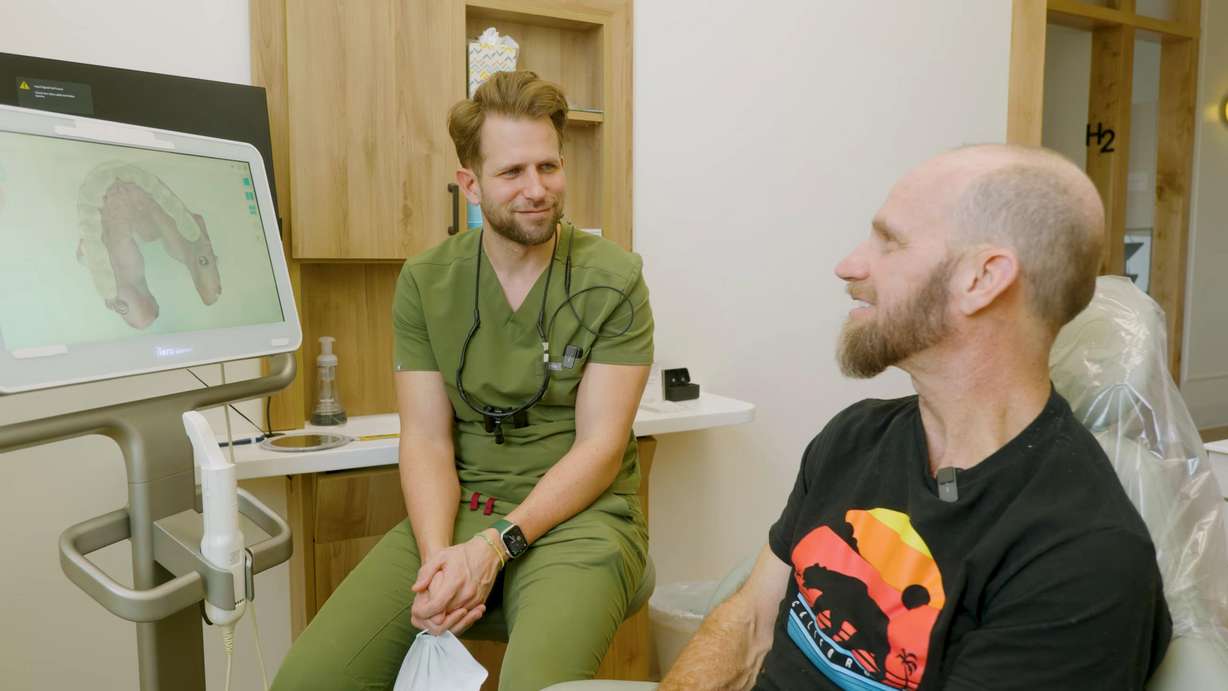
"They'll have an All-on-4 done in the states or abroad, and they'll be like, 'This isn't what I thought it was going to be,'" said Dr. Logan Locke at Smile Clinic who converted Paul's case. "And so they immediately go to the internet and then they find us."
Smile Clinic Utah offers a procedure called 3 on 6 — a full-arch restoration anchored by six implants with three separate zirconia bridges. The procedure was developed by Dr. Randy Roberts and is designed to address several of the functional and aesthetic limitations associated with traditional All-on-4 designs.
What makes the 2 procedures different
Both All-on-4 and 3 on 6 are permanent, implant-supported solutions for patients who have lost most or all of their teeth. But there are meaningful clinical differences in how each is constructed and maintained.
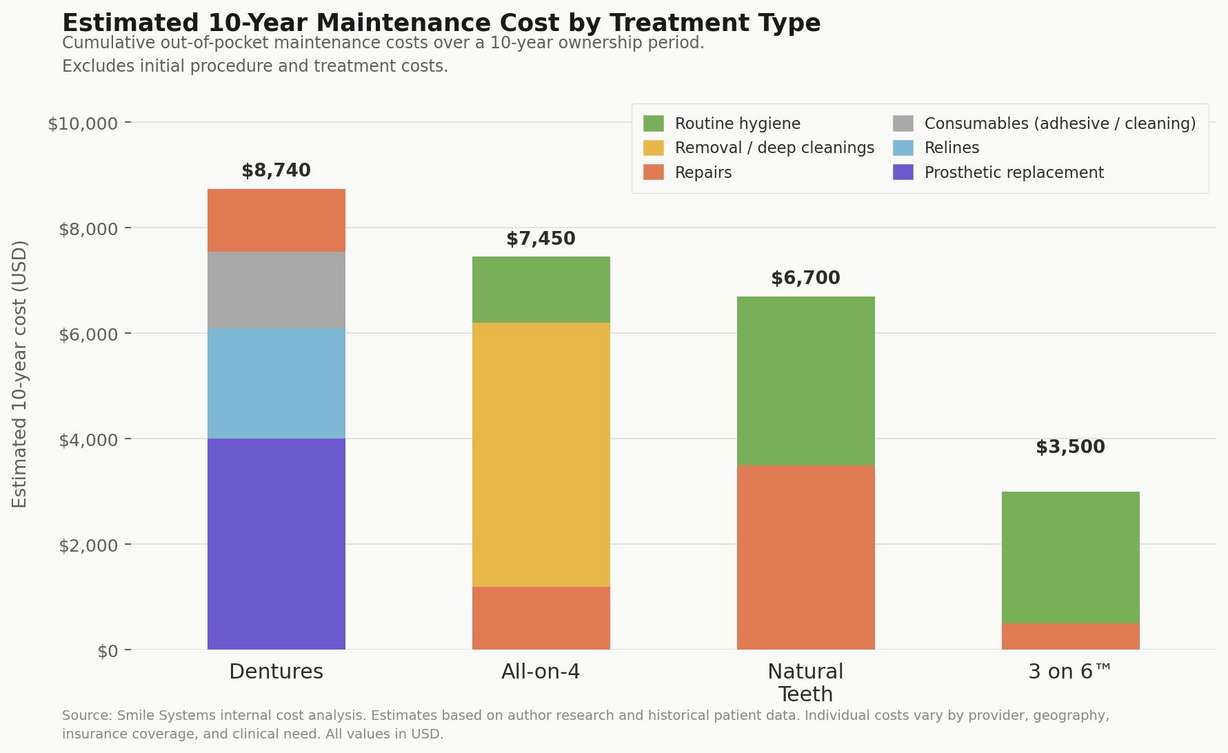
The All-on-4 uses four implants to support a single, full-arch prosthetic. Because it is one connected piece, it must be removed annually for deep cleaning — a process that requires replacing the screws each time and adds long-term maintenance costs. If any portion of the prosthetic chips or breaks, the entire piece typically must be replaced, which can cost several thousand dollars.
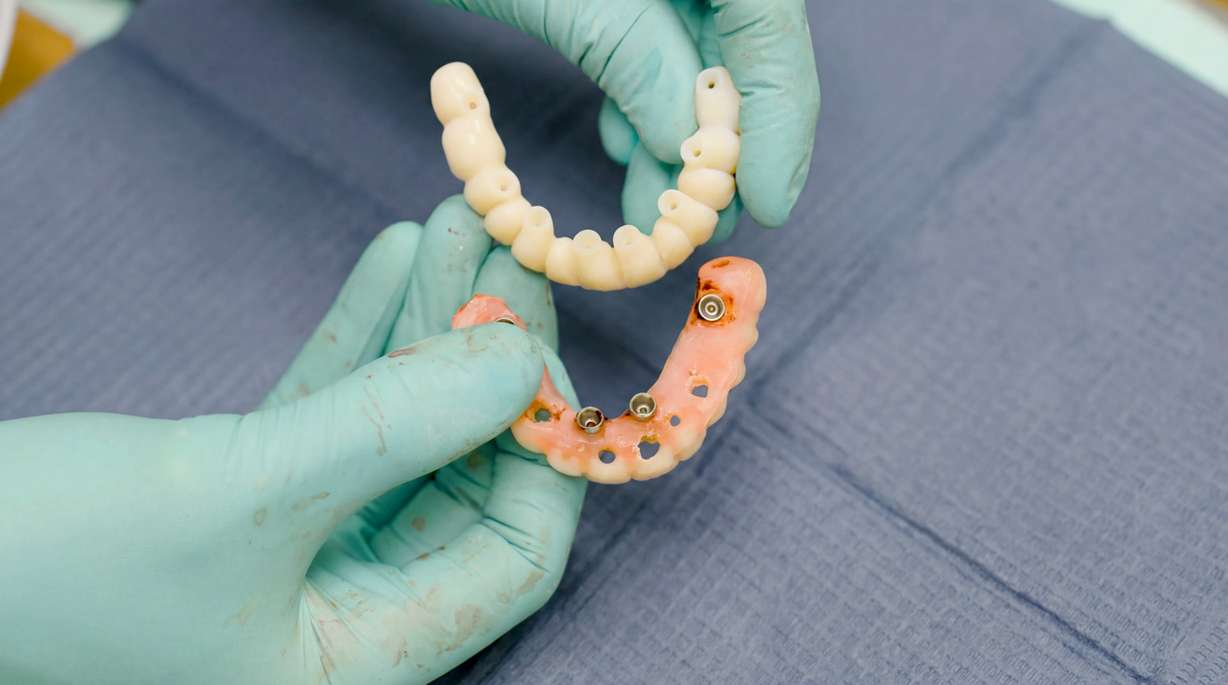
All-on-4 prosthetics are also often designed with a thick acrylic base that mimics gum tissue — which often requires the remove of the patient's natural bone and gum tissue. The bulky prosthetic can affect eating and speech. Because the design does not preserve the natural gum line, cleaning the area between the prosthetic and actual gum tissue can be difficult.
The 3 on 6 approach uses six implants — two additional anchoring points — and divides the arch into three separate bridges. The segmented design allows for standard brushing and flossing, and a water pick can pass freely beneath each bridge. Because the bridges are individual pieces, a damaged tooth can be repaired or replaced in isolation rather than requiring replacement of the entire arch.
Perhaps most notably for patients like Paul, the 3 on 6 does not use artificial gum tissue. It is designed to work with a patient's existing bone and tissue structure, producing a natural gum line and a thinner, more anatomically accurate tooth profile.
Dentists note that All-on-4 remains a viable option — particularly for patients who have suffered extreme bone loss. Unfortunately, few patients realize they have other treatment options available to them until after they've undergone irreversible bone and tissue removal.
Dr. Locke shows the thickness of Paul's All-on-4 compared to the 3 on 6
Paul's conversion — and recovery
Paul arrived at Smile Clinic Utah about 10 days after his procedure in Cancun. His dentist there assessed the All-on-4 work and determined that, despite Paul's functional discomfort, the underlying implants were reasonably well placed — and, critically, that Paul still had strong bone density.
"He's young, he had teeth before they did the surgery, and he has a good amount of bone for us to use," Dr. Locke explained during the procedure. "3 on 6 is a more conservative treatment option — we don't have to remove all the bone and gum tissue. And I believe it's a much sturdier and longer-lasting treatment option for people who already have that good bone and gum tissue."
The team removed Paul's All-on-4 prosthetic, placed additional implants, and installed 3 on 6 temporaries the same day. The clinical team noted the immediate difference in profile — the new prosthetic sat within the natural confines of the teeth rather than extending outward.
"Even just the day after surgery, it felt so much better," Paul said.
Several months later, Paul returned to receive his final zirconia bridges. The material produces a look and feel closer to natural teeth than that of 3D-printed temporaries.
"I've never had teeth so nice before," Paul said after the finals were placed.
'They call me Smiley at work'
An avid trail runner who has completed events including the Moab Triple Crown — a series of ultramarathon races through the canyon country of southeastern Utah — Paul was eager to get back to the trails. He said the experience has changed more than just his teeth.
"Now it's just in the background," Paul said. "I don't have to think about it. It's not hanging over my head. I'm not self-conscious when I smile."
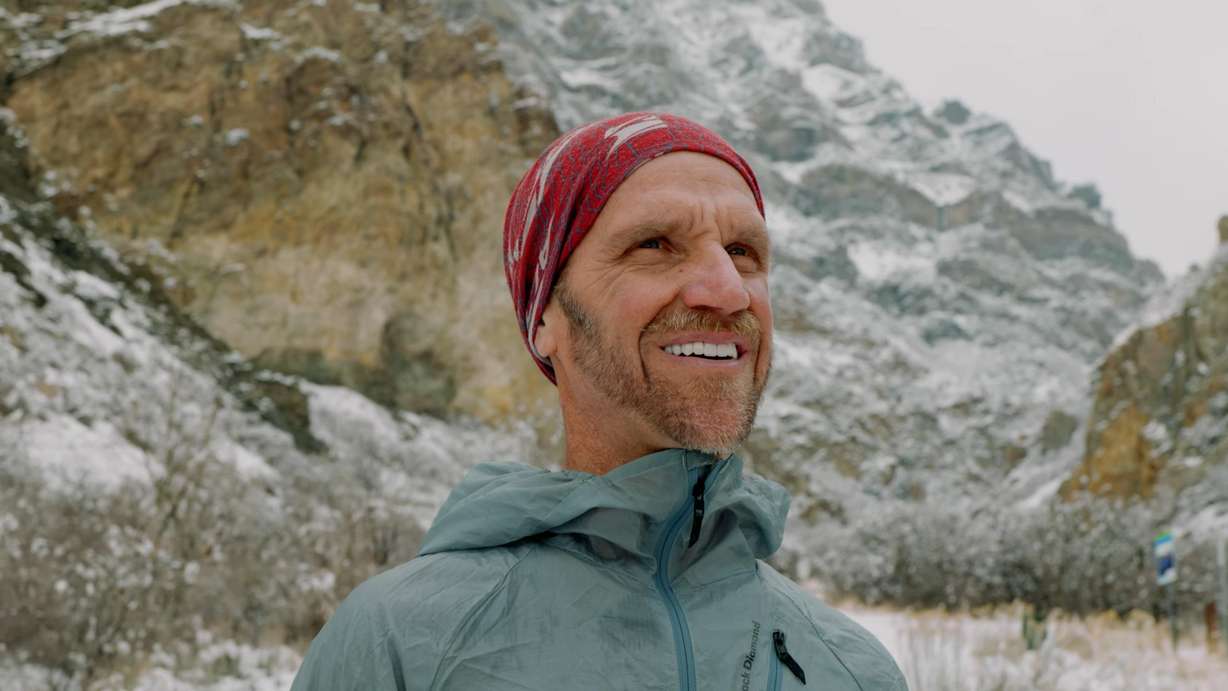
He laughed when recounting how his coworkers have noticed. "They call me 'smiley' at work," he said. "They're like, 'You're always smiling.'"
Paul agreed to film his dental experience and you can watch his full story here.
About Smile Clinic Utah
Smile Clinic Utah is located at 718 W. Coliseum Way in Midvale, in the heart of the Salt Lake Valley. The practice offers full-mouth restoration services including 3 on 6, All-on-4, and individual dental implants. The clinic works with the only authorized facility in the world for manufacturing 3 on 6 smiles — which reduces costs and speeds up treatment timelines.
Free consultations are available in person and virtually. Financing options are also available for qualified patients. Schedule a free consultation by visiting Smile Clinic, or call (385) 406-3488.