- New research suggests Great Salt Lake dust poses broader health risks, affecting food.
- Study finds leafy vegetables exposed to lake dust contain elevated toxic elements.
- Researchers call for expanded dust monitoring to further understand the issue.
SALT LAKE CITY — The threat of toxic dust from the drying Great Salt Lake has been well-discussed and well-publicized.
But new research from scientists at the University of Utah and Utah State University suggests the dust may pose broader health risks than previously understood.
The study, published in the journal Atmospheric Environment, found that the public could potentially be exposed to toxic metals in the dust through food consumption.
Specifically, the study showed leafy vegetables exposed to Great Salt Lake dust contained elevated levels of multiple toxic elements, including arsenic and uranium, even after thorough washing.
The study suggests that dust can adhere to or be absorbed by crops, introducing a potential dietary exposure pathway that has not previously been evaluated for Great Salt Lake dust.
"This research demonstrates the need to restore Great Salt Lake to ensure the longevity and safety of regional agriculture and food production," Ben Abbott, executive director of Grow the Flow, said in a statement. "Saving Great Salt Lake is not a risk to Utah agriculture. It is the only path forward to ensure we can farm forever in the region."
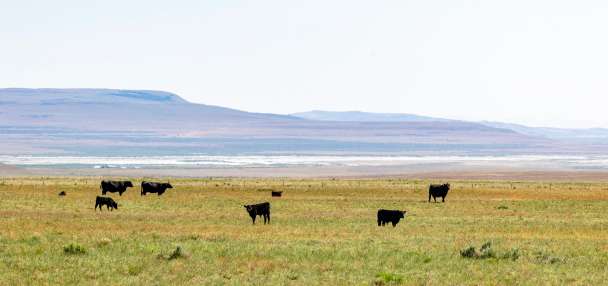
Today, declining water levels have the Great Salt Lake hovering near historic lows, exposing 800 square miles of lake playa (the bottom of an undrained desert basin that becomes, at times, a shallow lake) in the process and becoming a major cause of concern and source of dust pollution blowing into Utah's population centers.
With agricultural zones also exposed to the dust, its potential reach could extend far beyond the Beehive State.
"Declining lake levels are not only a water issue," Molly Blakowski, lead author of the study and senior scientist at Great Basin Unified Air Pollution Control District, said in a statement. "They are also an air quality issue, a food system issue and a public health issue. Efforts to restore water levels and reduce industrial pollution are complementary strategies that should be pursued together."
Going forward, study authors called for expanded dust monitoring, improved exposure modeling and field-based studies on crops grown near the Great Salt Lake.
In February, a study by U. researchers and published in the Nature-affiliated journal Scientific Reports, found a deep freshwater reservoir beneath Farmington Bay — a discovery that could have tremendous implications for mitigating toxic metal-laden dust pollution from the lake's dried areas.
"In principle, you may drill this, and you can pump this water on the surface and use it to mitigate dust pollution blowing from the lake surface and, possibly, in irrigation," Michael Zhdanov, a distinguished professor of geology and geophysics at the U. and director of the Consortium for Electromagnetic Modeling and Inversion, told KSL.
As for the latest study from the U. and USU, researchers emphasized that their work doesn't conclude that dust from the lake alone causes crops to exceed food safety standards. Instead, it "highlights the need for more research under real-world conditions, particularly for farms and gardens located near the lake."
The full study can be found here.