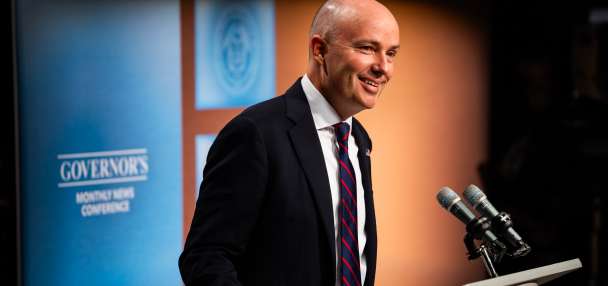
- Utah student Kai Schwemmer's role with College Republicans of America sparks backlash.
- Critics cite Schwemmer's past comments and ties to white nationalist Nick Fuentes.
- Schwemmer denies having racist or antisemitic beliefs, calls past remarks immature.
SALT LAKE CITY — The appointment of a Utah student to a top role with College Republicans of America has prompted backlash from some who say the political commentator has a history of making antisemitic remarks.
Kai Schwemmer, a 23-year-old student at Brigham Young University, was named the political director of the College Republicans of America last month. His appointment was condemned by some who expressed concerns about Schwemmer's ties to Nick Fuentes, a white supremacist and leader of the right-wing "groyper" movement.
For several years, he broadcast his commentary on a streaming platform founded by Fuentes and has occasionally made controversial comments on his broadcast, including in November 2021, when Schwemmer proclaimed the results of an ancestry test showing he was "0% Jewish."
In the video, which KSL viewed through a subscription to Schwemmer's paywalled archive, a guest on the stream asks Schwemmer about his ancestry.
"No, no, I'm 0% Jewish. I've got zero Jewish blood in me despite my high verbal IQ. I am not Jewish."
Later in the same broadcast, Schwemmer read a comment from a viewer who said his ancestry test was updated with new results saying he was "1% European Jewish," after seemingly showing no Jewish ancestry.
"They set your expectations high," Schwemmer said, adding, "Your credit score is improving, what can you say?"
Among those condemning Schwemmer's appointment was Jonathan Greenblatt, the CEO of the Anti-Defamation League, an advocacy group dedicated to combating antisemitism.
"Appointing Kai Schwemmer, a longtime ally of white supremacist Nick Fuentes, as political director signals the College Republicans of America is normalizing antisemitism and white supremacy, full stop," Greenblatt said in a post last month in response to a Jewish Insider story detailing alarm from some conservatives over Schwemmer's new role.
"Fuentes holds strong influence over his fans, the 'Groyper Army,' and regularly jokes about the Holocaust. Schwemmer has appeared at Fuentes' conferences, streams on his platform and has spread conspiracy theories about 'Zionists' in America," he said.
Greenblatt went on to say that "hate and antisemitism must never go mainstream" and urged GOP leaders to "speak out against this decision and make clear there is no place in their movement for those who traffic in antisemitism white supremacy."
Joel Berry, a managing editor at the conservative satirical site the Babylon Bee who recently announced his departure from the site, also chimed in on social media.
"That's Kai's whole game. He's trying to clean up the Nazi groyper image so they can infiltrate conservative institutions," Berry wrote last month.
Schwemmer called Berry's statement "reckless" and said "calling people Nazis is bound to end in violence."
Martin Bertao, the president of College Republicans of America, responded to the controversy early last month, saying he had "done a lot of reflecting on my decision to appoint Kai as CRA's political director. And in that reflection I have came to the decision that I would like to apologize ... to absolutely NOBODY, CRA will never back down to the WOKE mob!"
In response to Greenblatt's statement, Schwemmer said he condemns "all forms of hatred, including antisemitism," and denied being a "groyper."
"Life is a process of growth and refinement," he said on X. "My comments in high school and as a teenager should not be taken to accurately reflect my views or demeanor now."
Schwemmer said he had "spoken in ways that were unnecessarily crass or demeaning" in the past, but said he has "made adjustments to become a better disciple of Christ" after returning from a two-year Latter-day Saint mission in Argentina early last year.
In an interview with KSL, Schwemmer denied having ever held antisemitic or racist beliefs. He later said he "only ever referred to the results of my Ancestry DNA test in a comedic light" and that "none of it was celebratory."
Schwemmer said his political awakening came in large part from wanting to push back against what he called an "incredible amount of political correctness." He said he sees value in pushing the "boundaries of acceptability" and disagrees with trying to "cancel" someone for their political views.
"I think that certainly every edgy joke, for it to be effective, must contain some portion of the truth," he said. "And if we're a truth-seeking society, we have to be able to tolerate offensive jokes and even offensive people in order to maybe get to what the underlying truth of what they're saying is."
Some extremism researchers disagree, however, saying some of the comments are not based in reality and instead stem from long-standing antisemitic conspiracy theories.
Amos Guiora is a professor at the University of Utah's S.J. Quinney College of Law where he leads the Bystander Initiative, which aims to hold bystanders and enablers of abuse accountable. Born in Israel to Hungarian Holocaust survivors, Guiora said he is no stranger to antisemitism and described receiving graphic death threats in response to his research and seeing armed security outside of synagogues to protect worshippers.
Guiora said some of Schwemmer's comments fit squarely into traditional antisemitic tropes and dismissed the idea of downplaying them as edgy trolling.
"I take that ... seriously," he said. "That is no laughing matter."
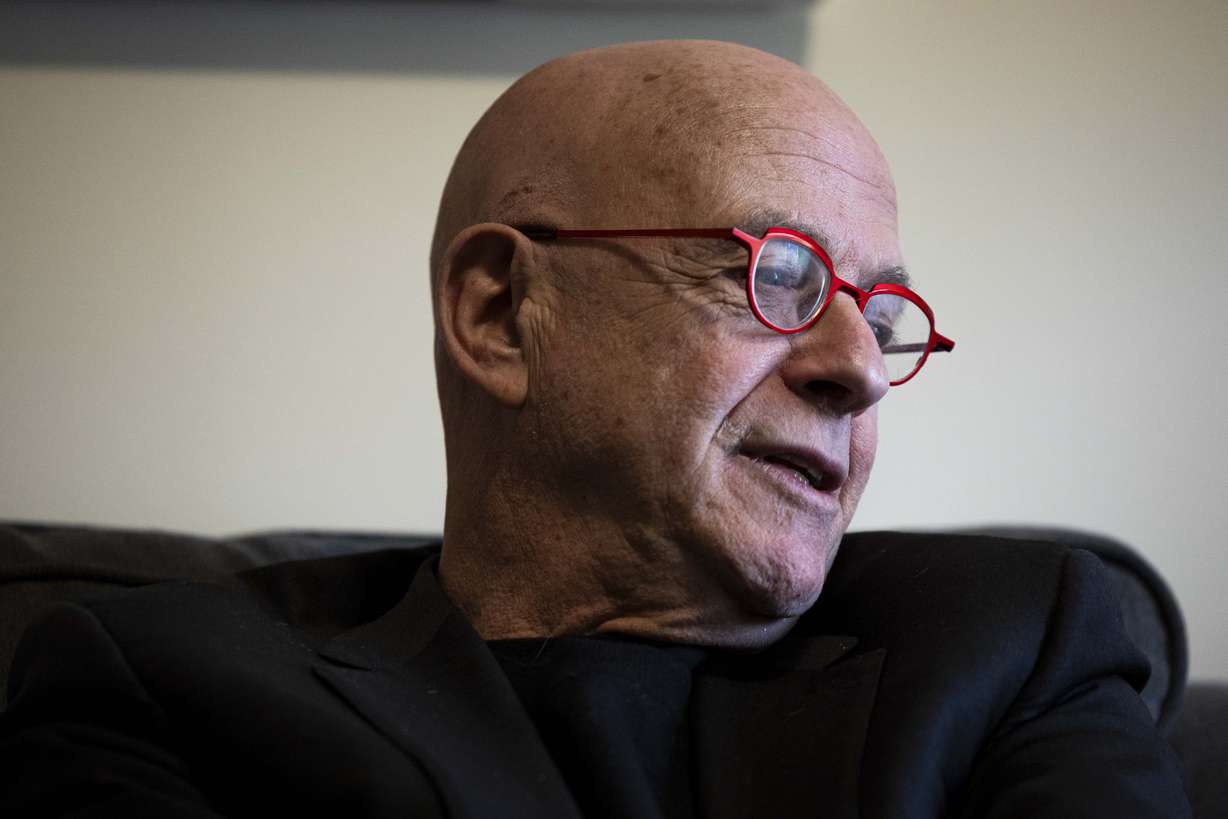
In December, after returning from his mission, Schwemmer did an interview on Reawaken USA and falsely claimed that the top executives of Boeing and Raytheon are Jewish, according to Jewish Insider. The interview has since been removed from YouTube, but Schwemmer reportedly labeled the executives as part of a group of "Zionists in America who no matter what are supportive of — whether it's just military or monetarily — they're going to U.S. involvement and U.S. support for Israel."
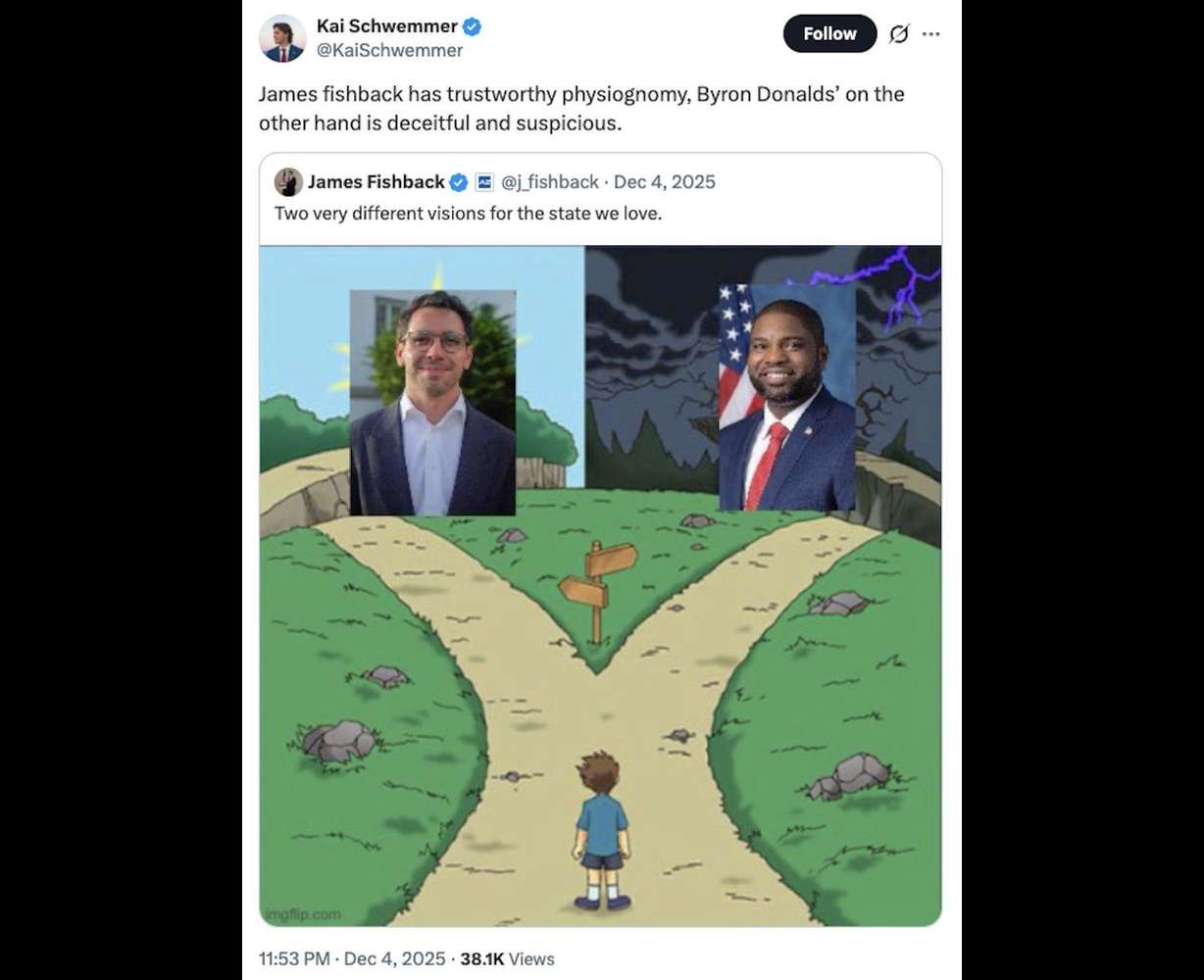
That same month he posted in support of Florida GOP gubernatorial candidate James Fishback over GOP Rep. Byron Donalds, who is Black. Schwemmer said Fishback "has trustworthy physiognomy" — which refers to determining character based on outward appearance — while "Donalds' on the other hand is deceitful and suspicious."
Schwemmer said he had "incorrect information" about the Boeing and Raytheon executives going into the online debate and that his comments were "not malicious."
"My criticisms of the military industrial complex remain the same," he told KSL.
Asked to clarify his post about Donalds' physiognomy, he said the tweet doesn't make "any attempt to seem like a serious political analysis" and pushed back on any assumption that the post had racist overtones.
"If people think race is the most important part of a persons' appearance, of course they'll be inclined to understand my tweet that way," he said, "but I think a person's smile, the light behind their eyes and a cheery disposition are far more telling."
Schwemmer describes himself as "chipper" and "jovial" and his supporters have pointed to his cheery demeanor to defend him amid the ongoing controversy.
"Never seen Kai not smiling once," Riley Beesley, the chairman of the Utah Federation of College Republicans, posted in March. "I stand with Kai."
Guiora said he's seen a normalization of antisemitism online in recent years, particularly following the Oct. 7, 2023, Hamas terrorist attacks and the ensuing Israel-Hamas war. That's been driven in part by social media, he said, which allows for a rapid spread of viral ideas and can numb some users to their insidious origins.
"The power of social media enhances antisemitism because of the speed," he said. "I think the most dangerous thing is it takes on a life of its own, and it's a thin line between words and action."
Schwemmer's online presence has been noticed by some Republican politicians in Utah, including Rep. Burgess Owens, who invited the commentator to this year's State of the Union address. Owens has railed against antisemitism in congressional hearings, calling it a "terrible cancer" and blaming universities, but his spokesperson did not respond to a request for comment on the concerns raised about Schwemmer's statements.
Schwemmer told KSL the way he sometimes presented himself in the past was "immature" and said he is "not perfect," but added: "Certainly I won't go and make a long apology for jokes that I've made in the past because they were jokes."
He said he's trying to engage less in the "trolling" common among young online provocateurs and said he tries to align what he expresses online with his true beliefs, but seemed to differentiate some of what he says.
"If you watch a livestream where I'm playing video games and chatting with a bunch of people with ridiculous usernames, it's less likely that that is a context for serious political discussion or deliberation," he said.
But the nature of online discourse where every statement could potentially be taken as a tongue-in-cheek effort to needle political opponents — rather than reflect a deeply held belief — allows commenters to flirt with more radical ideas.
In one controversial conversation from last July reported by the Guardian, Schwemmer was asked if he believes married and single women have the right to vote. He responded by expressing support for "family voting," a Christian nationalist proposal to limit voting rights to male heads of households.
"I believe they currently have the right to vote," Schwemmer said. "But I'm in favor of probably like a family voting thing. I think that'd probably be a better way to do it."
He added that he is "very much an anti-universal suffrage guy."
"I don't think there's a good defense for allowing people to vote who don't take the time to return shopping carts," he said. "I think that's a huge issue. Allowing those people the same leverage in your electoral system as a homeowner — that's crazy to me."
Asked if he truly believes that, he called it an interesting "philosophical question" but said he's not advocating for stripping voting rights from anybody. He added that he is against letting people convicted of felonies register to vote and against lowering the voting age.
Still, he didn't fully dismiss the idea, even when pressed about how he would respond to people who feel their right to vote might be threatened by some of the proposals he has floated.
"It seems interesting to me that in the world, we have people who just turned 18, who have never read a single policy in their life, who don't know the differences between the parties but prefer the color blue to red, or red to blue and will vote on that basis — it is remarkable that those people have the exact same electoral power as a man or woman who has created a company and employed thousands of people and participated in their local community for years," he said.
He added: "I'd say, as long as that person is returning their shopping cart, they don't have anything to worry about."
Correction: An earlier version incorrectly stated Riley Beesley's role with the Utah Federation of College Republicans. Beesley is the chairman, after previously being the vice chairman.