
Estimated read time: 5-6 minutes
Technology shapes nearly every part of daily life — from how people communicate to how they work and interact with the world around them.
And as expectations for digital experiences continue to rise, so does the demand for professionals who can build and design technology that keeps up.
Researchers at the Johns Hopkins Whiting School of Engineering say that software engineering is "one of the most in-demand and exciting fields today," with a projected job growth of 17% from now through 2033. That's faster than the average for all other occupations.
For user experience designers, the outlook is also positive. The U.S. Bureau of Labor Statistics projects a 7% growth in employment in this field from now until 2034, which is still much faster than average.
Put simply: If you've ever considered breaking into this industry, now may be a great time to take that leap.
And thanks to two new Utah Tech University graduate programs, enhancing your skills or breaking into this market may be easier than you think.

Two programs, one purpose
In the fall of 2024, Utah Tech University launched two graduate programs to prepare students to meet growing technology demands: Master of Software Development and Master of User Experience Design.
While the degrees are separate, the school intentionally built these programs to reflect how development and design teams collaborate in the industry.
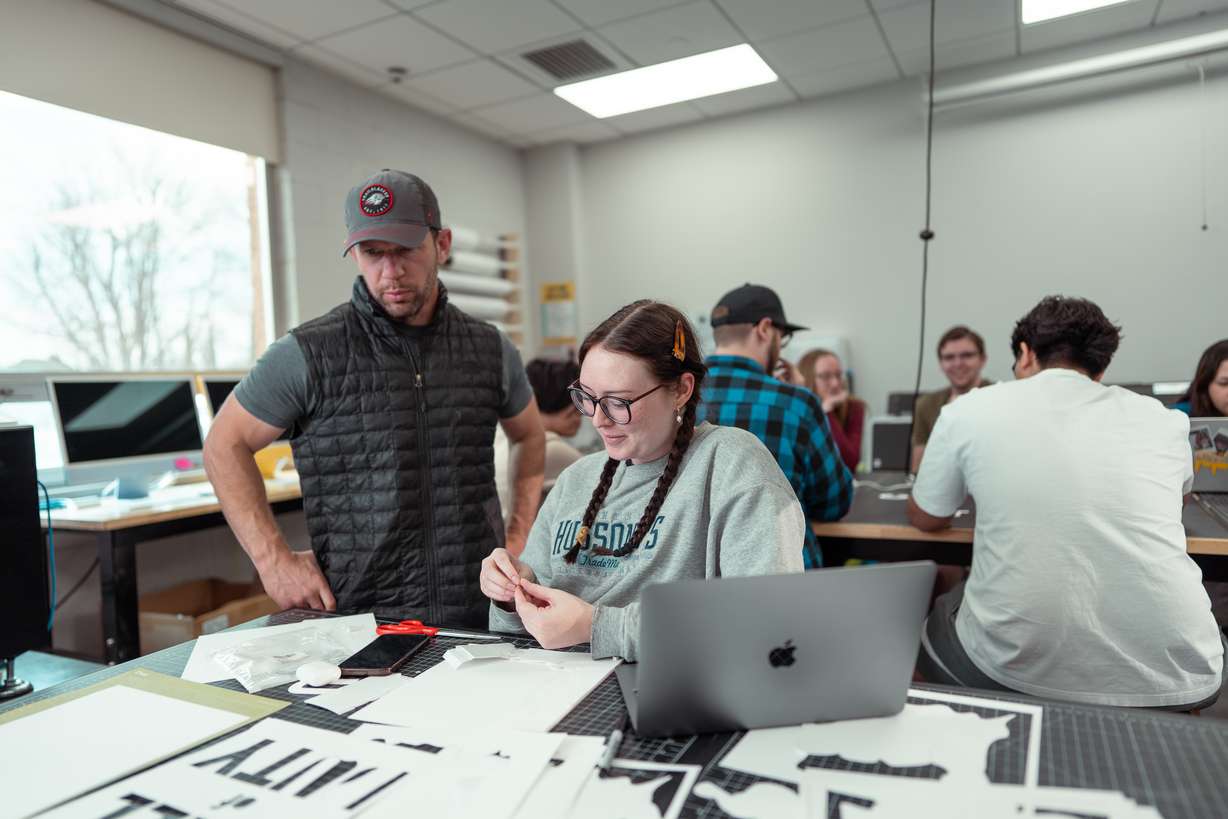
Students from both disciplines work together, allowing them to learn alongside one another while developing their own technical expertise.
Faculty member Andrew Wilson explained the importance of this collaboration early in the learning process.
"As a designer, you will be working with developers and vice versa," Wilson said. "Industry needs UX designers who understand the development process and developers who appreciate the role design plays in creating effective technology."
Having these two perspectives gives graduates an advantage when it comes to the workforce. You don't just have the skills you need in your specific field — you already understand the people you'll be working with.
Master of User Experience Design: Taking design skills to the next level
The Master of User Experience Design program is project-based, uses real-world tools and emphasizes human-centered research. While this degree is best for students with a background in design, industrial design or service design, the program also welcomes pivot learners.
Students say the hands-on environment and mentorship from faculty have been key parts of their experience.
"You get to explore what interests you and what excites you in the field," Alaina Jardine, a graduate of the UX design program, said. "The professors are able to help push me to be the best designer that I can be — and that's been awesome."
Master of Software Development: Meeting the demands of a rapidly changing field
The Master of Software Development program was designed as a pivot degree, giving students
the opportunity to expand their technical expertise or shift their career path toward software engineering. The program also incorporates emerging industry trends, including artificial intelligence and modern software tools.
"Software development is a growing field with the expansion of AI," program graduate Brooklyn Price-Thompson said. "I've really enjoyed that focus on AI in our classes — it's a really great setup here."
For some students, the program represents an opportunity to change careers and build entirely new technical skills.
Nicholas Saldana, a graduate of the Master of Software Development program, previously worked as a process engineer in the automotive industry before returning to school.
"I've always been a bit nervous about software development," Saldana said. "I've been a process engineer in automotive for about ten years and I've been really looking for a change of pace. This challenged me in different ways. To go from nothing to being able to do something — that can be powerful."
Another software development graduate, Stephen Bessey, said the program's entrepreneurial mindset and engaged faculty helped shape his experience.
"The professors are experts in their fields, and they understand what is currently going on out there — they genuinely care," Bessey said. "I didn't realize this program would be so entrepreneurial, but the more you put into it you get way more back."
What they have in common: Flexibility and affordability
Both graduate programs are delivered in a HyFlex format, which means that students can attend in person or participate remotely.
Not only does this make things easier for working professionals, but it helps those who are looking to transition into technology-focused careers from another line of work.
You also don't have to worry about a thesis for graduation. Instead, both programs feature a capstone project.
But one of the biggest advantages of these graduate programs is the cost. At just $420 per credit, either of the 30-credit programs total only $12,600 over four semesters. By comparison, Bestcolleges.com states that the average total for a master's degree is about $36,760 per year — or about $74,000 for a two-year degree.
Additionally, tuition is the same for both in-state and out-of-state residents and a limited number of one-year scholarships are available for accepted applicants.
How to apply
If you think now may be the right time to further your technical skills or pivot into a new career, applications are currently open until July 15 for the Fall 2026 cohort. You can learn more about the programs and admission requirements by visiting Utah Tech's graduate program website.