- Utah Rep. Burgess Owens proposed the "No Aid for Ghost Students Act" to combat fraud.
- The bill mandates enhanced FAFSA reviews to prevent identity theft and fraud.
- Rep. Kevin Kiley, R-Calif., supported the bill despite concerns about potential aid disbursement delays.
SALT LAKE CITY — Ghosts are typically the spooky residents of haunted houses, horror flicks and Halloween parties.
But "ghosts" are also finding their way into America's higher education system — swiping identities and stealthily shifting federal financial aid dollars into criminals' pockets.
These so-called "ghost students" use stolen identities to enroll in colleges and secure and collect federal financial aid money. And then they vanish.
It's reportedly happening across the country, with fraudsters, aka "ghost students," exploiting weaknesses in the student aid system.
"It's a huge issue," Jason Williams, the assistant inspector general for investigations at the Department of Education's Office of Inspector General, told the Sanilac Broadcasting Company.
"As they're stealing identities … these loans are not being repaid. They're being assigned to people (who) don't even know they have a debt with U.S. Department of Education … (until) the Internal Revenue Service says you owe the Department of Education money."
The incidents connected to the sophisticated criminal scamming enterprise, say higher education watchers, "are staggering."
A Forbes report noted that in 2024, California's Foothill-De Anza Community College District received roughly 26,000 applications, of which about 10,000 were flagged for possible fraud.
Meanwhile, the College of Southern Nevada accumulated over $7 million in debt during the fall 2024 semester due to fraudulent student enrollments — money they were required to repay to the Department of Education.
Utah congressman calls for enhanced federal student loan review
Now Utah Rep. Burgess Owens is proposing legislation to help prevent scammers from successfully submitting fraudulent applications for federal student aid, or FAFSA.
Call it an act of legislative ghostbusting.
Owens passed his "No Aid for Ghost Students Act" on Tuesday through the House Committee on Education and Workforce. His measure seeks to amend the Higher Education Act of 1965 by requiring the DOE to enhance its reviews of all FAFSA applications — and snag possible identity fraud.
The "No Aid for Ghost Students" bill is designed to remedy a "serious problem" facing today's higher education, Owens said during Tuesday's committee hearing.
"These fraudsters are often called 'ghost students' — and leave taxpayers to foot the bill while crowding out real students," he said. "It's time we strengthen protections for federal funding to stop them from profiting."
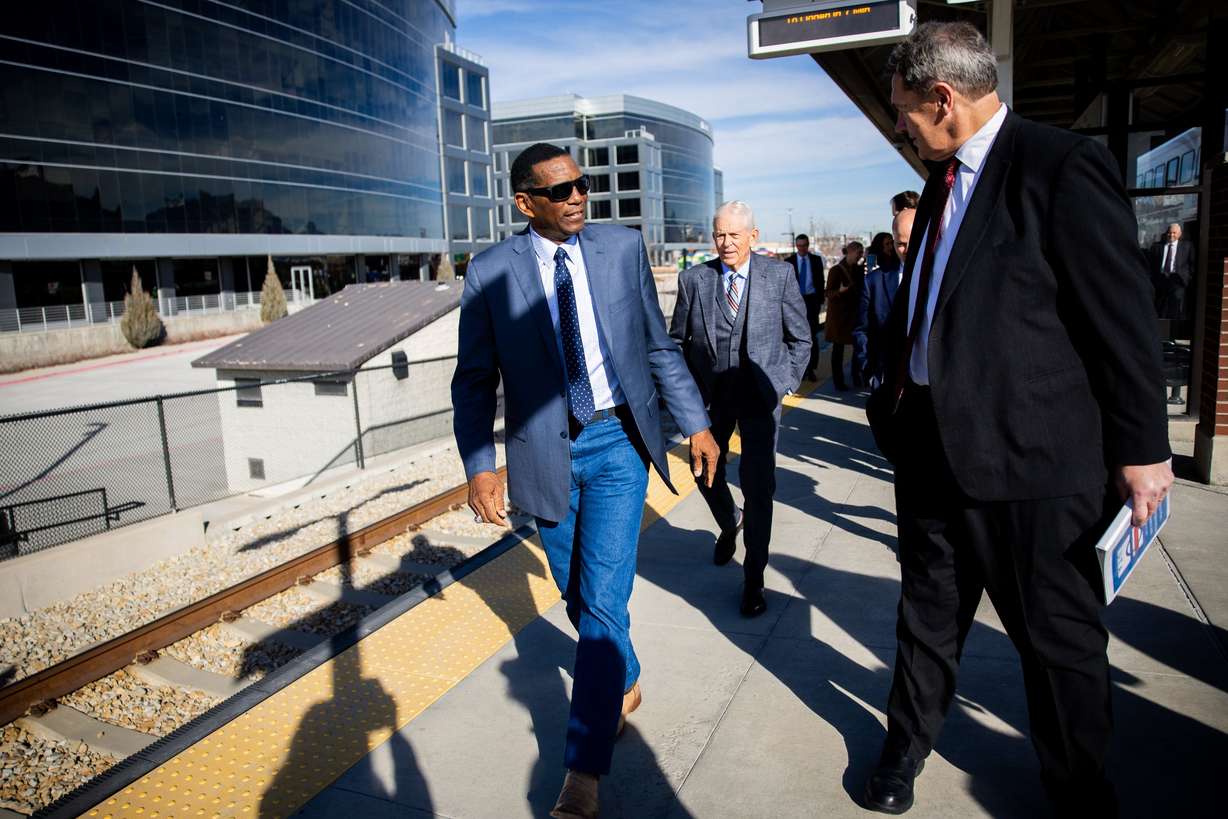
The Utah congressman's proposal, which is now in front of the House, would require the DOE to use identity fraud detection systems to screen every FAFSA application "to determine whether the application presents a reasonable suspicion of identity fraud."
If a FAFSA application is flagged, the applicant and his or her designated higher education institution would then be notified. "For institutions to disperse federal student aid to these applicants, institutions must verify the identity of the applicant — either in person or on a live video call," said Owens.
The "Ghost Students" bill would also require the DOE to establish verification process guidelines and report back to Congress on its system's use and effectiveness.
Owens called his measure "commonsense legislation," ensuring federal dollars are benefiting legitimate students — and remain out of reach of sophisticated fraudsters.
"Every cent that is defrauded represents a lost opportunity for students in need, and a serious offense to the American taxpayer."
Lawmakers: 'Ghost students' swiping millions of tax dollars
During Tuesday's committee hearing, Rep. Kevin Kiley, R-Calif., supported Owens' bill, saying his state has been "attacked by a staggering amount of fraud."
Kiley noted that ghost students are frequently targeting community colleges.
"We saw a staggering 1.2 million fake community college applications," he said. "That's about a third of the applications that were simply used to commit financial aid fraud where fraudsters would pose as applicants."
The cost to taxpayers? "Millions and millions of dollars."
Kiley added that Owens' legislation would support existing DOE ID verification and validation requirements. "Today's bill is simply codifying these practices to make sure that they remain in place and that fraudsters can't simply wait for a future administration to pull back these requirements."
Rep. Bobby Scott, D-Va., ultimately voted in favor of Owens' bill — but not before voicing concerns that the proposed verification processes might result in confusion and slow aid disbursement to legitimate FAFSA applicants.
"Additionally, we have seen significant discrimination from the Department of Education to many student populations and students — including students of color and students with legal permanent residence.
"(I'm) concerned that this administration may attempt to twist what constitutes reasonable suspicion of identity fraud to attack colleges or students."
It's critical, Scott added, that the bill articulates clear guidance on how colleges should comply with the law and how to determine which students are subject to additional verification.
Owens' "No Aid for Ghost Students" bill was one of three bills designed to prevent federal student aid fraud that was advanced by the congressional committee on Tuesday.
Earlier this week, President Donald Trump issued an executive order to create an anti-fraud task force across federal benefit programs that will be led by Vice President JD Vance.

Most recent Utah congressional delegation stories
Related topics
 Jason Swensen