- U.S. consumer prices rose 0.3% in February, driven by rent and gasoline.
- Economists expect March inflation to rise due to the escalating Iran conflict.
- The Federal Reserve is likely to keep interest rates unchanged next week.
WASHINGTON — U.S. consumer prices rose moderately in February as rents maintained a steady pace of increases, though households paid more for gasoline and at the supermarket.
The Consumer Price Index report from the Labor Department on Wednesday also showed underlying inflation muted last month. It was, however, overshadowed by an escalating war in the Middle East, which has boosted oil and gasoline prices.
Economists anticipated an acceleration in inflation in March because of rising energy costs, and expected the Federal Reserve to keep interest rates unchanged next week.
"Due to the events in the Persian Gulf, policymakers and the public can effectively ignore the February CPI due to the energy shock that is cascading through the U.S. and global economies," said Joseph Brusuelas, chief economist at RSM. "Forward-looking investors should anticipate an increase in top-line inflation of 0.6% in March."
The Consumer Price Index rose 0.3% last month after gaining 0.2% in January, the Labor Department's Bureau of Labor Statistics said. Economists polled by Reuters had forecast the CPI climbing 0.3%.
Rents climbed 0.1%, the smallest gain since January 2021. Gasoline prices increased 0.8% after declining for two straight months. The rise in prices was in anticipation of an escalation in tensions between the U.S. and Iran.
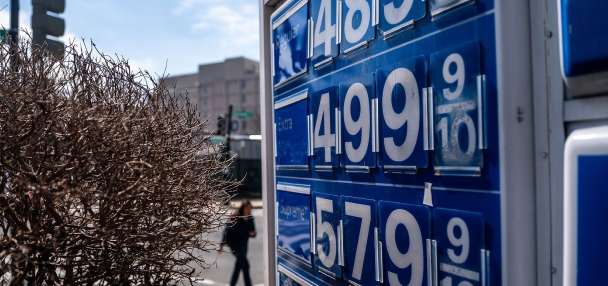
Prices at the pump have jumped 20% to $3.58 per gallon since the U.S.-Israeli war on Iran started at the end of February, data from motorist advocacy group AAA showed. Oil prices shot up well above $100 per barrel, before pulling back on Tuesday after President Donald Trump stated the war could end soon. Brent crude was trading higher on Wednesday.
The CPI also rose amid the continued, but staggered pass-through from Trump's sweeping tariffs, which he pursued under a law meant for use in national emergencies that has since been struck down by the U.S. Supreme Court.
Food prices shot up 0.4% last month, lifted by a 3.7% jump in candy and chewing gum prices. Fruit and vegetable prices increased 1.4%; nonalcoholic beverages cost 0.8% more. But prices for dairy and related products dropped 0.6% and the cost of cereals and bakery products fell 0.2%. Food prices are 3.1% higher than a year ago.
In the 12 months through February, the CPI advanced 2.4%, matching January's increase, and reflecting last year's high readings dropping out of the calculation.
The Federal Reserve tracks the Personal Consumption Expenditures price indexes for its 2% inflation target, and is expected to keep interest rates unchanged next week.
Though businesses have absorbed much of the import duties, economists said they were unlikely to continue doing so, citing among others persistently higher readings of input costs in the Institute for Supply Management surveys. Trump has responded to the Supreme Court ruling by imposing a 10% global tariff, which he said would rise to 15%.
The dollar was trading higher against a basket of currencies. U.S. Treasury yields rose.
Core inflation muted for now
Excluding the volatile food and energy components, the CPI gained 0.2% after rising 0.3% in January. The so-called core CPI inflation was curbed by a third straight monthly decline in used motor vehicle prices, as well as the smaller increase in rents.
But apparel prices surged 1.3% while the cost of household furnishings and operations rose 0.3%, reflecting the pass-through from import duties. Health care costs increased 0.5%, with hospital services shooting up 0.6% and prices for physicians' services rising 0.3%.
In the 12 months through February, the core CPI increased 2.5% after rising by the same margin in January, also reflecting favorable base effects.
Economists said the tame core CPI readings were unlikely to translate into moderate core PCE inflation gains in February because of different weights and unexpected strength in services prices in the January Producer Price Index report.
January's delayed PCE price index data due on Friday is expected to show a solid increase in core inflation. February's PCE inflation data will be released on April 9.