- Some Scofield residents are pushing back against a proposed coal mine that would infringe into town limits.
- Community concerns include potential business disruption, health risks and impact on tourism.
- Some are asking for the mine to consider relocating, citing environmental, economic and quality of life implications for the town.
SCOFIELD, Carbon County — Some residents in the small town of Scofield are pushing back against a proposed coal mine that they feel would upend the quiet, rural community's way of life.
A Utah Division of Oil, Gas and Mining filing shows a nearly 4,000-page coal mine permit application in October 2025 from Florida-based Coal Energy Group 3 LLC for a proposed operation near Scofield called the Kinney No. 2 Mine.
Scofield resident Scott Holman said the saga between the town and the proposed mine goes back nearly two decades. In fact, he was a member of the Scofield Town Council in 2008 when the mine was first presented.
"Carbon County has long had it in their head that they're coal country," Holman said. "Even though the last few years, they haven't technically had any open coal mines, they still hang on to, 'We're coal country,' not looking to the future when that whole valley might be, you know, a multimillion-dollar centerpiece and gem of the entire state of Utah."
Coal was indeed king in Carbon County for 130 years, local historians said. But with the transition to cheaper and cleaner forms of energy, it was no longer profitable for companies to maintain their mines, and the county's last active mine closed in 2019.
Holman said that with the depletion of the county's coal resources, the area has transitioned into a recreational hotbed and tourist destination.
Community concerns
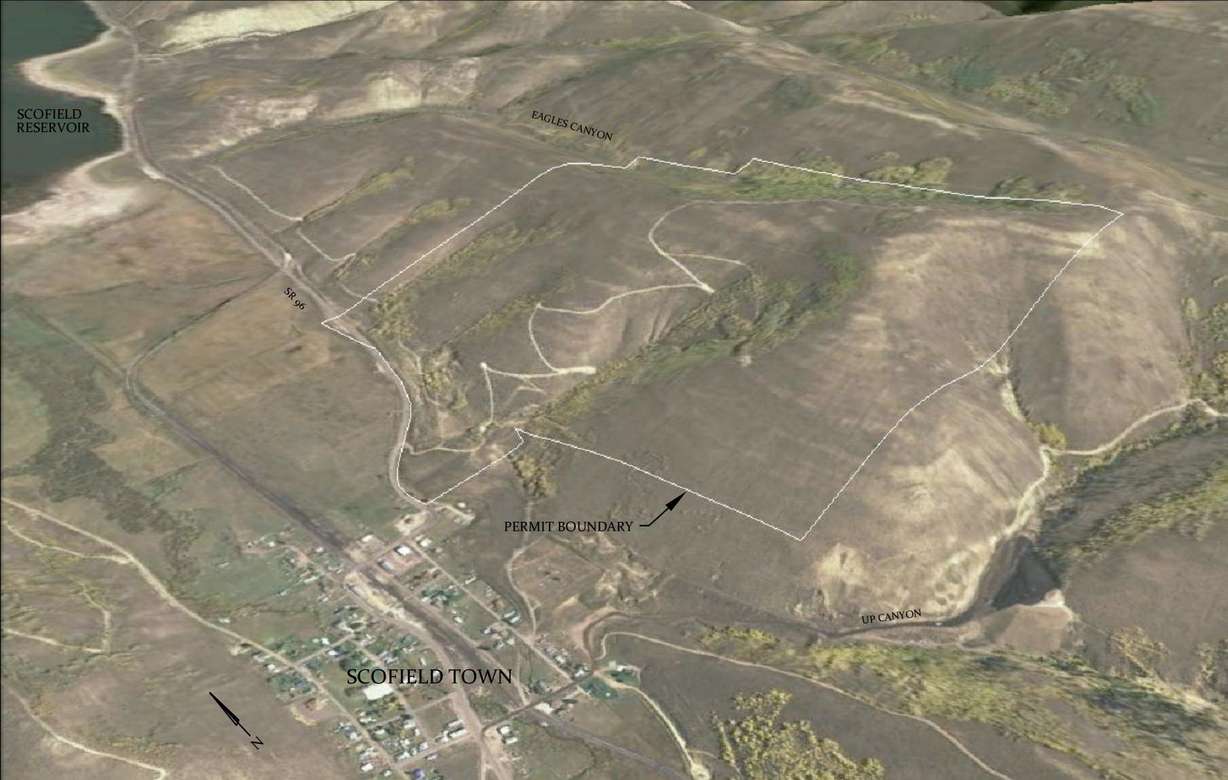
According to the mine permit application, "one occupied structure exists within 300 feet horizontally of the mine permit area."
That structure just so happens to be the town's only business: KJ's Catch n' Shack and the adjacent Lazy Anchor Campground, the latter of which sits within the mine's proposed boundary. The convenience store and campground are owned by Jerry and Kathy Lynch, two of just 26 full-time residents.
"They want to put it on top of my campground and right in my face at the store," Jerry Lynch said, not mincing words when talking about how the mine could impact him.
"It'll put me out of business. That's the way I see it. My campground will be out of business immediately, and I can't see where my store will survive long after," he said.
Lynch's contention with the mine gets to the heart of the issue for some Scofield residents who remain adamant that they aren't against coal, simply against the proposed location of the mine.
A fact sheet from the Utah Division of Oil, Gas and Mining says the proposed Kinney mine is one-half mile north of Scofield and east of state Route 96.
The total mine permit area covers approximately 452 acres; however, only 27.6 acres will comprise surface disturbance, said the division.
"I am 1,000,000% pro-coal. I hate to see coal getting phased out of anything, but it doesn't fit inside town limits in this valley. This is a recreational valley, and it doesn't fit," Lynch said. "I want them to do their coal mine, I just want them to move it to the other side of the hill. It'd be safer for Carbon County's drinking water. It would be safer for ... the traffic, everything."
Cherri Green said she's concerned for her father and others living in Scofield
"That's an elderly community, and what about the coal dust? We all know coal dust can cause lung issues," Green said. "Carbon County might get some royalties or whatever out of it, but what about the health of the citizens? My dad lives there full-time, and he's on oxygen. The dust is going to move around, and that's going to travel."
'They don't care'
Lynch said he's met with mine representatives in the past but is worried that "they don't care about my little business."
It's a sentiment shared by a handful of the town's residents.
With the county's population mainly divided between Price and Helper, Holman said Scofield often feels ignored — or resident concerns brushed aside — despite the town playing an important role in the county's tourism sector, with Scofield State Park seeing over 43,000 visitors in 2025, according to data from the Utah Department of Natural Resources.
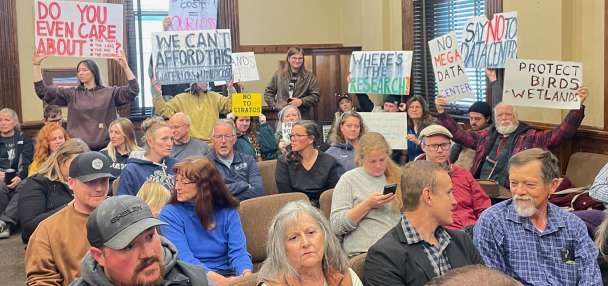
Many residents, Holman and Lynch said, were looking forward to a Scofield Town Council meeting on Monday that was supposed to include a segment where residents could ask questions — or at least voice concerns — to Kinney Mine and Coal Energy Group 3 LLC representative Greg Hunt.
But Hunt never showed up, much to the ire of some attendees. One resident asked Carbon County Commissioner Larry Jensen if he knew why Hunt canceled his planned appearance.
"I don't," Jensen said.
Hunt and Coal Energy Group 3 LLC didn't respond to multiple requests for comment from KSL.
At Monday's meeting, Jensen told residents that if Scofield doesn't issue a conditional use permit for the mine, the county won't, either.
Scofield Clerk Debbie Redford said the use permit will have to go through the Scofield Board of Adjustments, which "will make their decision based on guidelines from Utah State Code and compliance with Scofield town land use ordinances."
Still, Jensen said the closure of mines impacts tax revenue for the county.
"And as the mines close, for example, Skyline mine, they paid into the taxes about a million dollars. If they don't do much mining this year, that million dollars could be ($200,000) or $300,000, so what that means is that every one of us are going to have to pay more in our home taxes to make (up for) all the tax amenities," Jensen said. "For seven years that I've been in office, the goal and the effort ... is to bring new industry. There is a value in having a mine right here," Jensen said.
Lynch, like many of the residents who spoke at the meeting, agreed that the tax money from coal could be helpful for the county, saying it would be "so fantastic" if a mine were built elsewhere in the county.
"The placement of that mine is just absolutely wrong. We built a little store up. We've done OK, but we can't survive a coal mine in our face, and the town can't survive it. It's not 100, 120 years ago. It's a different age," Lynch said.