'%3e%3cpath%20d='M34.1406%205.85938C30.3906%202.10547%2025.3047%200%2020%200C14.6953%200%209.60938%202.10547%205.85938%205.85938C2.10938%209.61328%200%2014.6953%200%2020C0%2025.3047%202.10547%2030.3906%205.85938%2034.1406C9.61328%2037.8906%2014.6953%2040%2020%2040C25.3047%2040%2030.3906%2037.8945%2034.1406%2034.1406C37.8906%2030.3906%2040%2025.3047%2040%2020C40%2014.6953%2037.8945%209.60938%2034.1406%205.85938ZM37.0117%2023.543H31.1602V13.5391H27.6328V19.9414C28.1211%2020.6914%2028.3711%2021.582%2028.3711%2022.5625V22.625C28.3711%2023.668%2028.1172%2024.6055%2027.6328%2025.4297V26.6094H36.082C33.4883%2032.9375%2027.2891%2037.3789%2020.0039%2037.3789C10.3711%2037.3789%202.62109%2029.6289%202.62109%2020C2.62109%2010.3711%2010.3711%202.62109%2020%202.62109C29.6289%202.62109%2037.3789%2010.3711%2037.3789%2020C37.3789%2021.1484%2037.2617%2022.2656%2037.0508%2023.3477C37.0391%2023.4141%2037.0234%2023.4766%2037.0117%2023.543Z'%20fill='white'/%3e%3cpath%20d='M22.3086%2018.5352C20.4336%2018.125%2019.9531%2017.8398%2019.9766%2017.1836V17.1406C19.9766%2016.6992%2020.3477%2016.2148%2021.4023%2016.2148C22.582%2016.2148%2023.8867%2016.6797%2025.0781%2017.4766L26.8516%2015.0195C25.4453%2013.8906%2023.707%2013.3398%2021.5547%2013.3398C18.5195%2013.3398%2016.4375%2015%2016.4063%2017.4766V17.5352C16.3633%2020.2617%2018.5859%2020.9805%2021.293%2021.6016C23.0391%2021.9766%2023.5703%2022.3164%2023.5703%2022.9609L23.5469%2022.9766C23.5469%2023.3906%2023.2578%2023.7031%2022.7852%2023.8359C22.5742%2023.9062%2022.1289%2023.9727%2021.5156%2023.9727C20.7617%2023.9727%2019.7539%2023.8633%2018.6328%2023.4844C18.0898%2023.2891%2017.4727%2023.0039%2016.8047%2022.6133L20.1406%2026.625C20.2813%2026.6602%2021.0977%2026.8516%2021.7734%2026.8516C25.0039%2026.8516%2027.0859%2025.2461%2027.1094%2022.6328V22.5703C27.1602%2020.1133%2025.2148%2019.1719%2022.3086%2018.5352Z'%20fill='white'/%3e%3cpath%20d='M5.24219%2013.5664V26.6133H8.75391V23.7578L10.2969%2021.9531L14.2031%2026.6133H18.3867L12.3555%2019.5195L17.4023%2013.5664H13.4531L8.75391%2019.0586V13.5664H5.24219Z'%20fill='white'/%3e%3c/g%3e%3cdefs%3e%3cclipPath%20id='clip0_97_2430'%3e%3crect%20width='40'%20height='40'%20fill='white'/%3e%3c/clipPath%3e%3c/defs%3e%3c/svg%3e)



- Utah's 2025-2026 ski season faces challenges due to record-warm temperatures and low snow.
- Snowmaking investments are crucial, a lesson highlighted by Utah's 1976-1977 winter.
- Despite poor snow, Utah resorts remain open because of the investments over the past five decades.
SALT LAKE CITY — It's too early to project visitation at Utah's 15 ski and snowboard resorts this year, but Nathan Rafferty knows the final number will not be quite as high as recent years.
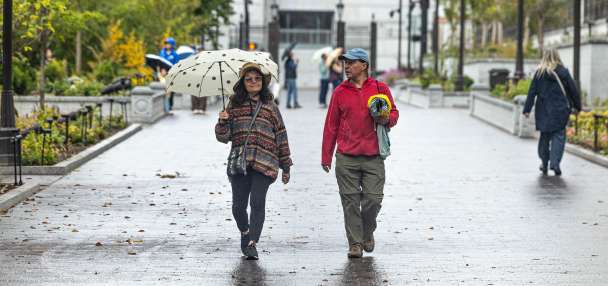
Utah's record-warm temperatures this winter have created more recreation options for Utahns. It's warm enough for people to walk around the park, ride their bike or play golf — not just ski or snowboard to pass the time. Utahns are often spoiled with the "greatest snow on Earth," and this year's lackluster snowpack is uninspiring, even if it's still attracting out-of-state visitors.
"For locals, it's not what they're used to," says Rafferty, president and CEO of Ski Utah, a nonprofit that promotes the state's resorts. "It's too early ... but (ski days are) not going to be like last year. It's not going to be like the year before."
It's definitely not going to top the numbers reported during the record 2022-2023 season, either.
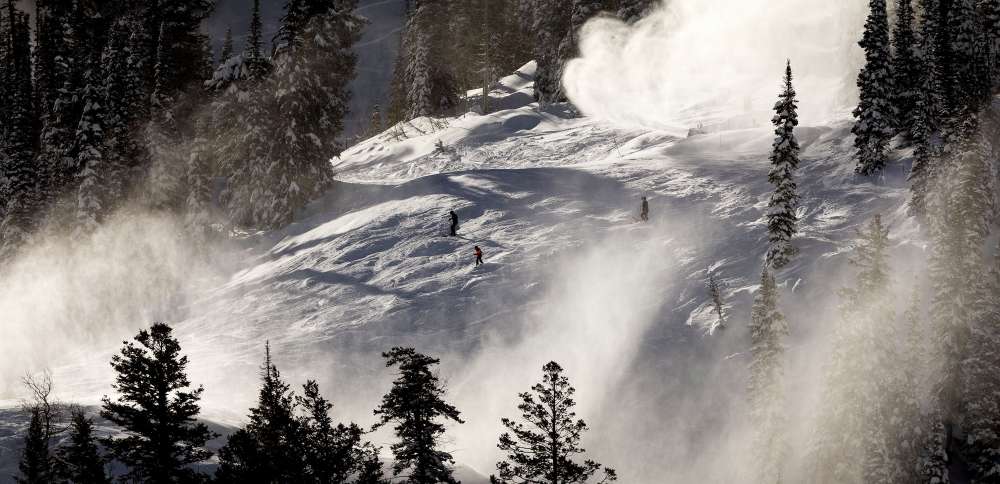
The 2025-2026 winter has been a challenging season for everyone, but it's probably not going to be a catastrophic one. If anything, it's the type of winter that underscores the importance of investing in snowmaking equipment.
That's often lost in the shuffle, especially when compared to investments in new lodges, gondolas or routes, he told KSL. A handful of resorts would likely be closed right now without those efforts because of how poor the snow conditions are in areas below 9,500 feet across Utah.
Alta Ski Area, often Utah's snowiest resort, has only reported 143 inches of snow this season, as of Friday. That's nearly half of the total that it normally collects between October and January every year. It has a long way to go to touch the record 903 inches it received during the record-breaking 2022-2023 winter.
"Snowmaking always seems to get buried or lost because it's not that sexy, but it's years like this where it really pays off," he adds. "We're making the best of it."
The winter that changed everything
Utah's resorts began making these investments decades ago, largely because Utah's winters are notoriously unpredictable. And there's one winter in particular that forced resorts to think about making snow when there isn't much falling from the sky.
The 1976-1977 winter stands out in Utah's visitation data on a chart that hangs in Ski Utah's headquarters. Ski days increased in the 1970s before dropping significantly that year. Only 237 inches of snow were reported at one site in Alta all winter, per National Weather Service data.
Park City Mountain Resort, at a lower elevation, dove headfirst into snowmaking in the middle of the season, seeking to spend approximately $50,000 to rent snowmaking equipment, the Park Record reported on Jan. 27, 1977.
"It's something we should have started a month ago, but hindsight is twenty-twenty," the resort's present told the newspaper at the time.
A late-season storm aided Park City that winter, but not enough to save the season. The lesson was learned, and resorts began to invest heavily in snowmaking equipment.
It's a much different situation today in Park City, Alta and across the state. While this year's record-low snowpack was a topic of discussion during the annual "tourism day" during the Utah legislative session on Friday, Brian Head Ski Resort general manager Tom Pettigrew wasn't sweating it.
If this is the worst it gets, boy, we're in pretty good shape. There's still lots of skiing available.
–Nathan Rafferty, president and CEO of Ski Utah
Brian Head, in Iron County, has the highest elevation of the state's resorts, helping it retain the snow it receives from the sky and what it cultivates on its own. That's kept all its lifts and conveyers open this winter, as well as most of its terrain, he says.
"We're having a wonderful season," he said, pointing out that many other resorts in surrounding states are dealing with the same problems, which has helped drive traffic, too.
Finding silver linings
State tourism officials are monitoring the conditions, so they can pivot quickly to protect Utah's vast tourism industry. Skiing and snowboarding are a key piece of the puzzle, accounting for approximately $2.51 billion of the overall tourism economy that generated $13.3 billion in spending, which supported over 160,000 jobs last year, said Natalie Randall, managing director of the Utah Office of Tourism and Film.
Weather conditions are one of the variables that can impact the sensitive industry. Although this winter is shaping up to be a rough one for skiers and snowboarders, Utah is home to many other recreation opportunities that the state can highlight. That could mean promoting more park visits, rock climbing adventures, dark-sky viewing spots or mountain biking routes, Randall adds.
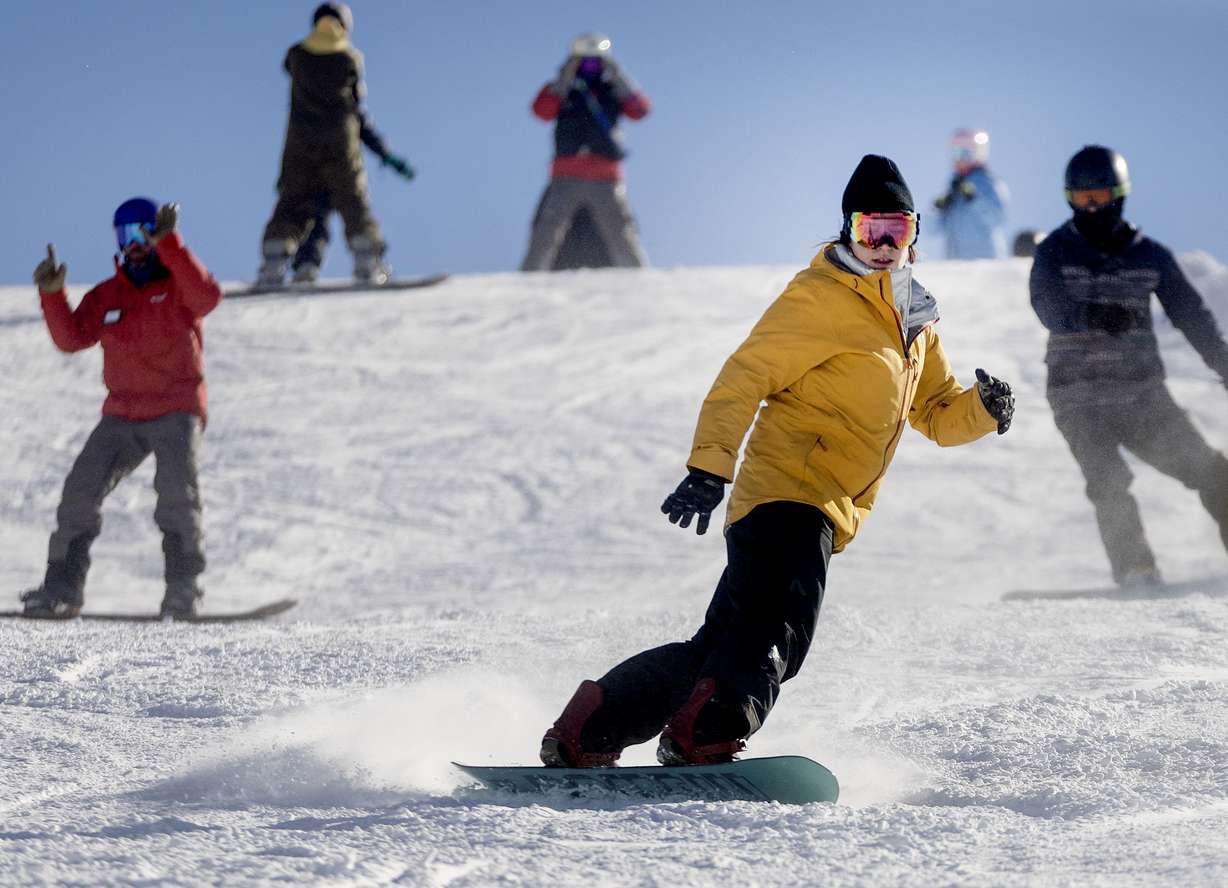
The snow season is far from over, too. Brian Head is making snow and hoping for more so that it can remain open through Mother's Day like it did last year. Utah's 14 other resorts are also seeking to stay open as long as possible.
Having snowmaking operations on hand helps make that happen.
"If this is the worst it gets, boy, we're in pretty good shape," Rafferty said. "There's still lots of skiing available."